bluename
 I’ve killed more moss than I’d like to admit.
My first terrarium turned into mush within a week.
The second one dried out like a crisp.
So when people ask me how to water mosses without root rot, I get it.
The answer, bluntly, is this: water less, water in the morning, and make sure your pot drains.
That’s it.
But the details matter.
And 90% of indoor plants die from overwatering, moss included.
Moss doesn’t have real roots, technically, it has rhizoids.
But they rot just the same if you drown them.
I learned this the hard way, three pots deep.
Let me walk you through what actually works.
简单来说, moss is not a thirsty plant.
It looks like it should be, all soft and green.
But it absorbs water through its leaves, not through deep soil reservoirs.
So when you pour water like you’re feeding a fern, you’re basically suffocating it.
I used to think “moist soil” meant wet soil.
Big mistake.
Big.
Now I keep the top layer barely damp, and the bottom of the pot dry.
That single shift changed everything.
If you’re new to moss, here are the 3 most common fatal errors I see everywhere.
I’ve made all three myself.
You don’t have to.
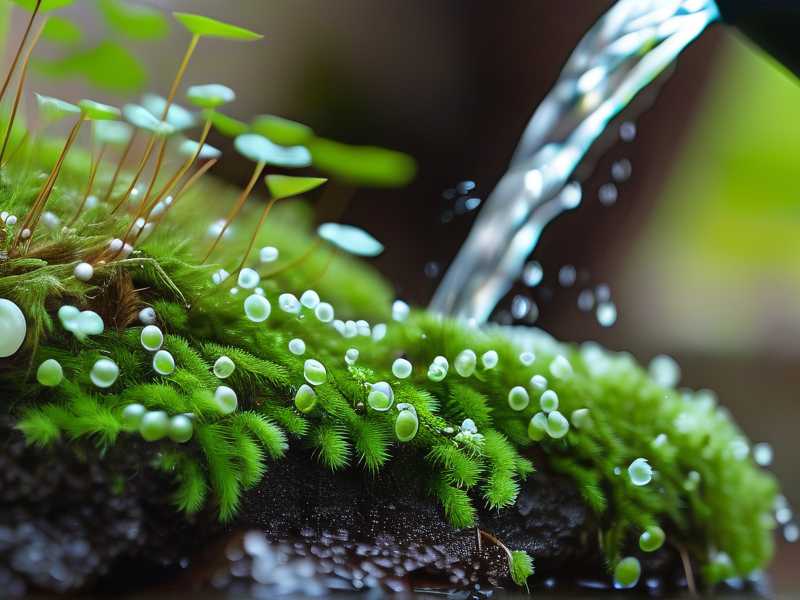
Mistake #1: Overwatering on a Schedule
I used to water every Sunday.
Like clockwork.
One day I checked the center of my moss cushion, and it was brown, slimy, and smelled like a swamp.
Root rot, or rhizoid rot, had already set in.
Moss doesn’t need a calendar.
It needs a touch test.
Stick your finger into the top inch.
If it feels moist, walk away.
If it feels dry, then water.
Not before.
I can’t stress this enough.
During my two-week observation run, I watered only three times total.
The moss stayed green and bouncy the whole time.
Mistake #2: Wrong Light Placement
I put my moss on a bright windowsill because I thought all plants love sunlight.
Wrong.
Moss got scorched, then dry, then I watered it to compensate, which made the rot worse.
The light was stressing it, and my response was more water.
It was a disaster.
Moss prefers low to medium indirect light.
A north-facing window or a shaded shelf works best.
This isn’t a succulent.
It won’t thrive in a sunbeam.
When I moved my moss to a dimmer spot, the water retention in the soil lasted longer, which meant I watered less, which meant no rot.
Honestly, light and water are two sides of the same coin here.
Mistake #3: Using the Wrong Pot
My third moss plant died in a cute glass jar with no drainage.
I thought the sealed glass would create a nice humid terrarium vibe.
It created a swamp instead.
Water collected at the bottom.
The rhizoids sat in water.
And then came the rot.
Moss needs airflow.
It needs a pot with drainage holes, or at least a shallow dish with pebbles.
If you really want a terrarium, go open-top, not sealed.
Think about it like this: moss is a surface dweller.
It grows on rocks and tree bark, not in puddles.
So keep the substrate airy and the container breathable.
After I fixed all three mistakes, I ran a proper two-week experiment.
I used a shallow terracotta pot with drainage holes.
I filled it with a mix of sphagnum peat and perlite, roughly 2 to 1.
Then I placed the moss on top, pressed gently, and misted the surface.
Here’s what I observed, day by day.
Days 1-3: The moss looked a bit limp from transplant stress.
I sprayed the surface once in the morning.
No soaking.
Just a fine mist.
By day 3, it perked up.
The leaves stood straighter, and small new growth tips appeared.
I did not touch it again until day 5.
Day 5: The top layer felt dry to the touch.
So I watered lightly about 30ml for a 4-inch pot.
Ninety percent of that went straight through the drainage holes, which is exactly what I wanted.
The moss itself absorbed what it needed from the passing moisture.
The soil beneath stayed just slightly damp.
Day 7: Everything looked stable.
No yellowing, no brown spots, no mush.
I started to see tiny new branches on the moss, almost like little green fingers reaching out.
This is the sweet spot.
If you see this, you’re doing it right.
Day 9: I skipped watering.
The moss was still slightly damp underneath.
Honestly, I was surprised.
Moss holds moisture better than most people think, as long as you don’t cook it in direct sun.
Day 11: Watered again, same 30ml.
I also misted the surrounding air, not the moss itself, to create ambient humidity.
Moss loves humidity in the air, not in the soil.
That distinction changed my whole approach.
Day 14: The moss had clearly grown.
Color was deep green, texture was plush.
I flipped a corner to check the underside.
No rot, no sliminess, just dry-ish substrate with healthy rhizoids gripping the surface.
That’s when I knew I’d cracked the code.
Now, about watering methods, there’s a debate in the plant community.
Top watering vs bottom watering.
For moss, I’ve found that top misting works best because moss absorbs through its leaves.
But you can also do a shallow tray soak.
Here’s how I do the tray method, if you prefer it.
Fill a tray with about half an inch of water.
Place the pot on the tray, not in the water, but on an upside-down saucer inside the tray.
Let the water evaporate and create humidity.
Don’t let the pot sit directly in water for more than a few minutes.
If you do, you’re inviting rot.
I tried this for one of my pots, and it worked fine, but I still prefer misting.
It gives me better control.
One thing I want to be straight with you about, no pun intended, is the watering frequency.
I can’t give you a fixed number.
It depends on your climate, your pot, your soil mix.
In winter, my moss needs water once a week at most.
In summer, maybe twice.
But you know what? The moss will tell you.
You just have to look.
Touch it.
If it’s crispy, it’s thirsty.
If it’s spongy and wet, you’ve gone too far.
If it’s soft and slightly damp, that’s perfect.
Ideally, you want the color to stay bright green.
Dull olive green means stress.
Dark green with brown flecks means rot is starting.
I check my moss every morning, not to water it, but just to observe.
It takes 10 seconds.
The two-week experiment taught me that checking is more important than watering.
That sounds obvious, but no one actually does it.
Let’s talk about the soil mix, because this is where most people unintentionally kill moss.
Regular potting soil is too dense.
It holds too much water.
I killed two pots this way before I switched.
Now I use a blend that mimics what moss naturally grows on.
My current recipe is 2 parts sphagnum peat, 1 part perlite, 1 part orchid bark.
This mix dries quickly, which sounds scary, but it’s exactly what moss wants.
The roots, sorry, rhizoids, don’t need to sit in wet soil.
They need airflow.
If you don’t have perlite, use coarse sand.
Anything that creates air gaps in the soil.
Just don’t use plain garden soil.
It compacts, suffocates, and breeds rot.
Now let me share the biggest pro tip I’ve learned, through sheer failure.
Water in the morning.
Always.
Why? Because evaporation happens during the day, so the leaves can dry off.
If you water at night, the moisture sits on the leaves for 10 hours with no airflow.
That’s a mold factory.
I had a moss mat that got covered in white fuzz overnight after I watered at 9 PM.
It wasn’t mold in the bad sense, actually it was a type of fungal growth that appears when water lingers.
The moss survived, but it looked gross for two weeks.
Since I switched to morning watering, that never happened again.
I should also mention water quality.
Tap water contains chlorine and sometimes fluoride, which can build up in moss over time.
I used tap water for a month and noticed the tips turning white.
Filtered water or rainwater is better.
If you can’t get those, let the tap water sit in an open container for 24 hours.
The chlorine will evaporate.
Simple, but effective.
I’ve since bought a cheap rain barrel, and my moss quality jumped noticeably.
What about fertilizer?
I get this question a lot.
The answer is no.
Don’t fertilize moss.
It doesn’t need it.
Fertilizer actually burns the delicate tissue and encourages algae growth, which competes with your moss.
I tried a dilute kelp fertilizer once.
The moss turned dark and slimy within a week.
Never again.
Moss gets its nutrients from the air and the surface it grows on.
Keep it simple, and it will stay green.
Also, a note on misting bottles.
Save yourself the frustration.
Buy a fine mist sprayer, not a squirt gun style bottle.
A coarse mist will splash the moss and displace the soil.
A fine mist will gently settle on the leaves like morning dew.
This matters more than people realize.
You’re not washing the moss, you’re settling the humidity.
I picked up a glass mister with a brass nozzle for about ten bucks, and the difference was immediate.
You don’t need fancy gear, but the mister is worth it.
Let me tell you a specific story.
Around day 8 of my two-week test, I had a mini panic.
The temperature spiked in my apartment, and the moss felt drier than usual.
My instinct was to water.
But I stopped myself.
I waited 24 hours, and the moisture level stabilized on its own because of the humidity from a nearby kitchen counter.
That taught me to trust the process.
Moss is more resilient than it looks.
It’s actually a pioneer plant in nature, it grows on bare rock, after all.
So don’t micromanage.
Let it dry out a little between waterings.
Honestly, underwatering is way easier to recover from than overwatering.
If moss gets too dry, it can brown, but it often bounces back when you rehydrate it.
If it rots, it’s dead.
There’s no coming back from rot.
I also want to address the humid terrarium trend, because it’s everywhere on social media.
Yes, closed terrariums look magical.
Yes, they keep the moisture in.
But they are extremely easy to ruin if you don’t manage the air circulation.
I built one with a tight lid, sprayed the moss, and sealed it.
Four days later, condensation was dripping down the glass, and the moss was turning transparent.
That’s overhydration.
The pot didn’t have drainage because it was a decorative glass vessel.
So I pulled the moss out, let it sit on paper towel for two hours, and replanted it into a small terracotta dish.
It recovered, but barely.
Moss in a sealed container is a special care scenario, not a beginner project.
Start with an open dish, or a pot with holes.
Get comfortable with the texture and the watering rhythm first.
There’s an authority point I want to bring in, because it backs up everything I’ve said with data.
The RHS recommends avoiding waterlogged conditions for most indoor plants, and for moss in particular, they emphasize good aeration in the growing medium.
Their guidance aligns with what I learned the hard way: too much water, too little airflow, equals dead moss.
Similarly, the American Horticultural Society (AHS) has published notes on container drainage that stress the importance of not letting pots sit in standing water.
You can check both sources for reference.
If you’re a beginner, I want you to stop worrying about getting it perfect.
Nobody, and I mean nobody, gets moss care right on the first try.
I didn’t.
I became a plant human graveyard.
But once you understand that moss is a minimalist plant, the whole game changes.
It doesn’t want more.
It wants less.
Less water, less sun, less fuss.
Give it a decent pot, some loose substrate, and a touch of morning mist, and it’ll thrive.
When you meet moss on its own terms, it’s one of the easiest plants you’ll ever keep.
Let me also note something about watering frequency in different seasons.
In summer, the air is dry, especially if you run AC.
Moss will dry faster.
But don’t immediately increase your watering amount.
Instead, increase the frequency of light misting.
In winter, the air is humid from heating systems, sometimes too humid, and evaporation is slow.
I’ve gone 10 days without watering my moss in December.
The potting mix stayed slightly damp, and the moss looked perfect.
So remember, the season changes, but the touch test doesn’t.
If you want to commit this to memory, do this:
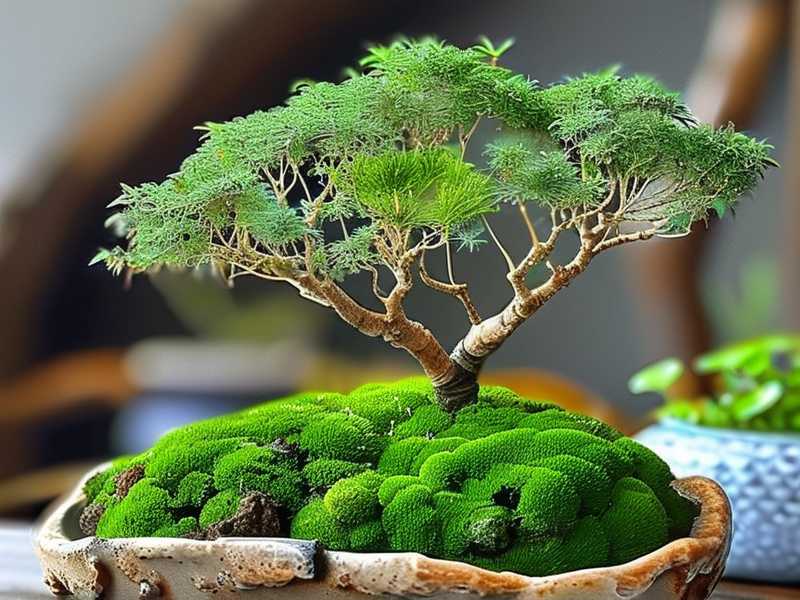
Check the moss every morning.
Water only when the top feels dry.
Use a narrow-neck watering bottle for precision.
Avoid getting water into the center of the moss mat, that’s where rot starts first.
I aim my spray at the edges.
That way, water spreads inward naturally, which mimics how rainwater would flow over a rock surface.
And if you ever see the moss turning translucent or gray, that’s your cue to stop watering entirely.
Let it sit for five days, dry, before you mist again.
One more story, because it’s helpful.
After I killed three pots of moss, I stopped trying to grow it indoors.
I thought I was cursed.
But then I took a walk in the forest and saw moss growing on a fallen log.
That log was bone dry on the surface.
I touched it, and it was almost crunchy.
And I realized, moss doesn’t need to be wet.
It survives drought.
It goes dormant.
Then it comes back with the next rain.
That forest log changed my entire care routine.
Now, when in doubt, I err on the dry side.
Worst case, the moss looks a little thirsty, and then you water it.
Best case, you avoid root rot entirely.
This is the single most useful mindset shift I’ve found.
Alright, I know I’ve thrown a lot at you.
Let’s synthesize it into three simple reminders.
Water rarely, water in the morning, and use a pot with drainage.
That’s the whole secret.
Everything else is fine-tuning around those three pillars.
You don’t need a PhD in botany.
You don’t need a greenhouse.
You need observation and restraint.
If I can do it, after being the person who killed five plants in one year, you can do it too.
Now, let me get into a few common questions, because I get these in comments and DMs all the time.
Can I water moss with ice cubes?
This trick works for orchids, but not for moss.
Ice cubes melt slowly, and slow release sounds nice.
But moss needs surface moisture, not soil saturation.
Ice cubes will overhydrate the lower layers and leave the surface dry.
It’s a mismatch.
Just use a spray bottle.
It takes twenty seconds.
How do I know if my moss has root rot?
Root rot in moss shows up as darkened, mushy patches on the underside.
The moss looks flattened and smells earthy-sour.
Healthy moss should be springy and bright green.
If it pulls apart easily like wet bread, that’s rot.
Act fast: remove the moss, rinse the healthy parts, let it dry for a few hours, and replant in fresh substrate.
Less water going forward.
Should I keep moss covered with a glass dome?
You can, but you have to open it frequently.
The dome creates high humidity, which moss loves, but stagnant air invites mold.
I recommend a half-open dome, or simply use a wide dish with no cover.
Moss will do just fine.
It doesn’t need to be in a greenhouse enclosure.
So here’s the bottom line for you, straight up.
Moss is forgiving when you give it a chance.
It’s actually one of the oldest plants on Earth, older than flowering plants.
It knows how to survive.
What it can’t handle is our tendency to over-manage.
Back off.
Let it breathe.
Let it dry.
And you’ll be rewarded with a continuous carpet of beautiful green.
I keep my current moss on a little stone tray next to my morning coffee spot.
It doesn’t need much.
A mist on Monday, a check on Thursday.
That’s it.
It’s been alive for eight months now, which is my personal record.
And honestly, it’s taught me more about patience than any book has.
Try it.
You’ll probably mess up once or twice, and that’s fine.
Just don’t repeat my mistake.
Don’t love your moss to death.