bluename
 How to Water Colocasias Without Root Rot (Pro Tips)
I killed three colocasias before I learned how to water colocasias without root rot. That's the honest truth. My first one drowned in a decorative pot with no drainage holes. My second one got crispy edges from bone-dry soil. My third one rotted from the bottom up because I panicked and watered it every day. Now I have five thriving colocasias, including a massive 'Black Beauty' that pushes out a new leaf roughly every ten days during summer.
Here's the short answer up front. Water when the top 2 to 3 inches of soil feel dry. Water deeply until it runs out the drainage holes. Then dump the saucer. Never let the pot sit in standing water. That's it. Everything else in this article is about reading the signs your plant gives you so you never have to guess.

The Royal Horticultural Society (RHS) is clear on this point: colocasias want consistent moisture but absolutely hate waterlogged roots. The RHS also notes that good drainage matters more than watering frequency. The American Horticultural Society (AHS) backs this up in their growing guides too. AHS recommends allowing slight drying between waterings for most aroids. So the goal isn't "keep it wet." The goal is "keep it evenly moist but never soggy."
Why Colocasias Are Tricky With Water
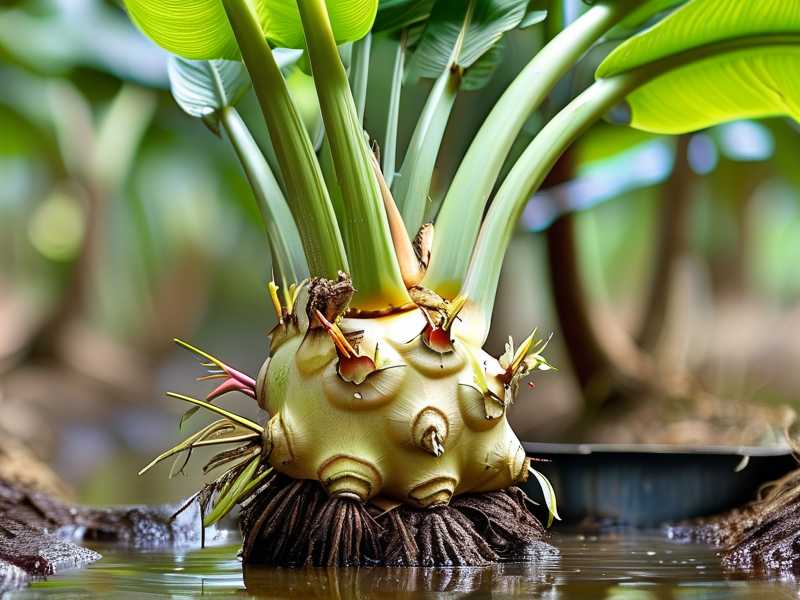
Colocasias grow from tubers. Those tubers store water and nutrients. But they also rot fast when sitting in saturated soil.
In their native habitat, these plants grow along stream banks and in monsoon-prone regions. They get heavy rain, then the water drains away. They never sit in stagnant puddles. That's the pattern you want to copy at home.
Here's what most beginners miss. Colocasia leaves transpire a lot of moisture. On a hot day, a large plant can drink surprisingly fast. But when temperatures drop or light levels fall, that same plant barely drinks at all. Same plant, same pot, completely different water needs. If you water on a fixed schedule, you'll overwater in cool weather and underwater in heat.
That's why "water every three days" advice fails. You need to check the soil, not the calendar.
Light Requirements That Affect Watering
Before I get deeper into watering, let's talk light. Light and water are joined at the hip. A colocasia in bright light drinks faster and grows faster. A colocasia in dim light drinks slowly and sits wet longer.
Colocasias want bright, indirect light. A few hours of gentle morning sun is great. Harsh afternoon sun in a south-facing window can scorch the leaves, especially in summer.
If the light is too weak, you'll notice leggy stems and small new leaves. The plant also stops pulling water from the soil quickly. That's a recipe for root rot even if you're not watering much.
If the light is too strong, you'll see bleached or crispy patches on the leaves. The leaf edges may curl inward. In that case, move the pot back a few feet from the window or hang a sheer curtain.
My rule of thumb: if I need sunglasses to sit near the window comfortably, the colocasia probably needs a step back from the glass.
The Complete Watering Guide
Grab a moisture meter if you're new to this. They're cheap and they remove all the guesswork. I resisted buying one for years because I thought I could "just tell" by touching the soil. I was wrong. My finger kept saying "it's dry" when it was damp two inches down.
Step one. Push your finger or the meter two to three inches into the soil. Skip the top inch. It dries out first and lies to you.
Step two. If it feels dry at that depth, water. If it feels cool and damp, wait another day or two. This is the whole game.
Step three. Water slowly and evenly around the rim of the pot. Don't dump a gallon in one spot. Let it soak in.
Step four. Water until it trickles from the drainage holes. This flushes out salt buildup and ensures the whole root ball gets moisture, not just the top layer.
Step five. Wait 15 minutes. Then empty the saucer. Every single time.
In summer, my large colocasias in 12-inch pots sometimes need water every other day. In winter, that same plant might go ten to fourteen days between waterings. That's not an exaggeration. The difference is that dramatic.
One more thing. Colocasias in terracotta pots dry out much faster than those in glazed ceramic or plastic. Terracotta breathes. That's great for preventing rot but means you'll water more often.
"Soil, Pots, and Repotting"
The right soil mix matters as much as your watering habits. I use a chunky aroid mix. Roughly 40% potting soil, 30% perlite, and 30% orchid bark. Some people add a handful of charcoal. That works too.
The point is drainage. If your soil compacts into a dense brick, water sits around the roots and rot sets in. I tried plain potting soil once. Just once. The tuber turned to mush in three weeks.
Pot selection is just as important. Always choose a container with drainage holes. I don't care how pretty the cachepot is. If it has no holes, it's a death sentence.
When it comes to pot size, don't go too big. A colocasia in a pot that's way oversized will sit in wet soil for too long. A pot that's 2 to 3 inches wider than the root ball is plenty.
Repot every one to two years in early spring. If you see roots circling the drainage holes or pushing out of the top, it's time. I repot when the plant starts drying out suspiciously fast, sometimes within a day of watering. That tells me the pot is packed with roots and there's barely any soil left to hold moisture.
Fertilizing Without Making Things Worse
Colocasias are heavy feeders during the growing season. But over-fertilizing can burn the roots and cause leaf tip browning that looks a lot like disease.
I use a balanced liquid fertilizer diluted to half strength. I feed every two weeks from early spring through late summer. That's it. No feeding in fall or winter.
The "weakly, weekly" approach works well here. Mix your fertilizer at quarter strength and feed every week instead of full strength every two weeks. It's gentler on the roots.
Never fertilize a dry plant. Always water first, then feed. Fertilizing dry roots can cause serious damage. I learned that lesson with a philodendron, not a colocasia, but the principle is the same.
Also skip fertilizer if the plant is struggling. If it's dropping leaves or looks sad, fertilizer won't fix it. Figure out the real problem first.
Seasonal Care: What Changes and When
Spring is when things wake up. I start watering more frequently as new growth appears. This is also when I repot, divide tubers, and resume fertilizing. I trim any dead or mushy roots before repotting. Clean cuts, sharp scissors, done.
Summer is peak growing season. The plant drinks fast. Check the soil every day or two during heat waves. I move pots out of direct afternoon sun. I also keep a small fan running nearby for airflow, which helps prevent fungal issues. If you see spider mites, rinse the leaves with a strong spray of water and treat with neem oil.
Fall is the transition. Growth slows. I cut back on fertilizer first, then reduce watering. The soil can stay drier between waterings now. I also trim yellowing leaves so they don't attract pests. If you plan to overwinter indoors, bring the plant in before nighttime temperatures drop below 50°F (10°C).
Winter is survival mode. I stop fertilizing completely. I water maybe every ten to fourteen days, sometimes less. The soil should be barely moist, not wet. I keep the plant in the brightest spot I can find indoors. If leaves die back entirely, don't panic. The tuber is dormant. As long as it doesn't rot, it'll come back in spring.
"Common Problems and What They Actually Mean"
Yellow leaves usually mean overwatering. If the yellow leaves are soft and mushy at the base, it's definitely rot. Pull the plant out, cut away the mushy parts, let the tuber dry for a day, and repot in fresh dry mix.
Brown, crispy leaf edges usually mean underwatering or low humidity. Colocasias love humidity above 60%. I run a humidifier nearby in winter when indoor air gets dry. A pebble tray works too, though it's less effective.
Root rot smells bad. You'll know it when you smell it. The tuber feels soft and the roots are black or brown instead of white and firm. Cut everything mushy off. Dip the healthy tuber in a fungicide if you have it. Repot in fresh dry mix and don't water for three or four days.
Spider mites show up as fine webbing and stippled leaves. They thrive in dry conditions. Raise humidity and treat with insecticide soap.
Fungus gnats are a sign of consistently wet soil. Let the top layer dry out more between waterings and use sticky traps. The gnats themselves aren't harmful, but they're a warning that your soil is too wet.
Three Mistakes That Kill Most Colocasias
Mistake one: watering too much. I know I've said it five times already, but it matters. I lost an entire collection of aroids one winter because I kept watering on autopilot. 90% of indoor plants die from overwatering. That number isn't made up. It's the single biggest killer.
Mistake two: putting the plant in the wrong light. Too dark and it rots. Too bright and it scorches. Find the sweet spot and adjust with the seasons.
Mistake three: using a pot without drainage. I don't care how beautiful that ceramic cachepot is. If it has no holes, use it as a cover pot only. Take the inner pot out to water, let it drain, then put it back.
Two Weeks of Watching: My Real Test
When I first set up my current colocasia, I committed to a two-week observation period. I checked the soil every morning with a moisture meter. Days one through five, the soil stayed moist at two inches deep. I didn't water. Day six, it read dry. I watered until runoff. Days seven through eleven, same pattern. Dry by day eleven. Watered again. By day fourteen, the plant had pushed out a new leaf and the soil had dried exactly on schedule.
That rhythm is what you're looking for. A consistent wet-dry cycle that matches the plant's growth rate. Once you find it, everything else gets easy.
Quick FAQ
How often should I water my colocasia indoors? There's no fixed schedule. Check the soil every few days. Water when the top two to three inches feel dry.
Can colocasias recover from root rot? Sometimes, if you catch it early. Cut away all mushy roots and tubers, repot in fresh dry mix, and hold off watering for several days.
Should I mist my colocasia leaves? Misting raises humidity briefly but doesn't do much long term. A humidifier is more effective.
The bottom line is this. Colocasias aren't hard to grow. They're just easy to over-love. Once you understand that these plants want moisture, not saturation, you'll stop drowning them. Check the soil. Water deeply. Dump the saucer. Give them bright light and a chunky mix. Do that, and your colocasia will reward you with leaves the size of dinner plates.