 bluename
 How to Grow Large vs Small Peony Varieties: A Gardener's Care Guide
I've always been fascinated by the sheer diversity of peonies. For years, I struggled with a common dilemma many gardeners face: why do some of my peonies produce massive, dinner-plate sized blooms while others remain charmingly petite, and how can I intentionally cultivate each type for its best show? The desire to grow both large-flowered and small-flowered peonies successfully is a journey of understanding their distinct needs. Through trial, error, and meticulous observation over multiple seasons, I've distilled the care strategies that make all the difference. Whether you're dreaming of gigantic, fragrant bombshells or delicate, fairy-tale clusters, this guide walks you through the precise steps I took, the mistakes I made, and the solutions that finally led to a spectacular peony display.
Understanding the Fundamental Difference: It's More Than Just Bloom Size
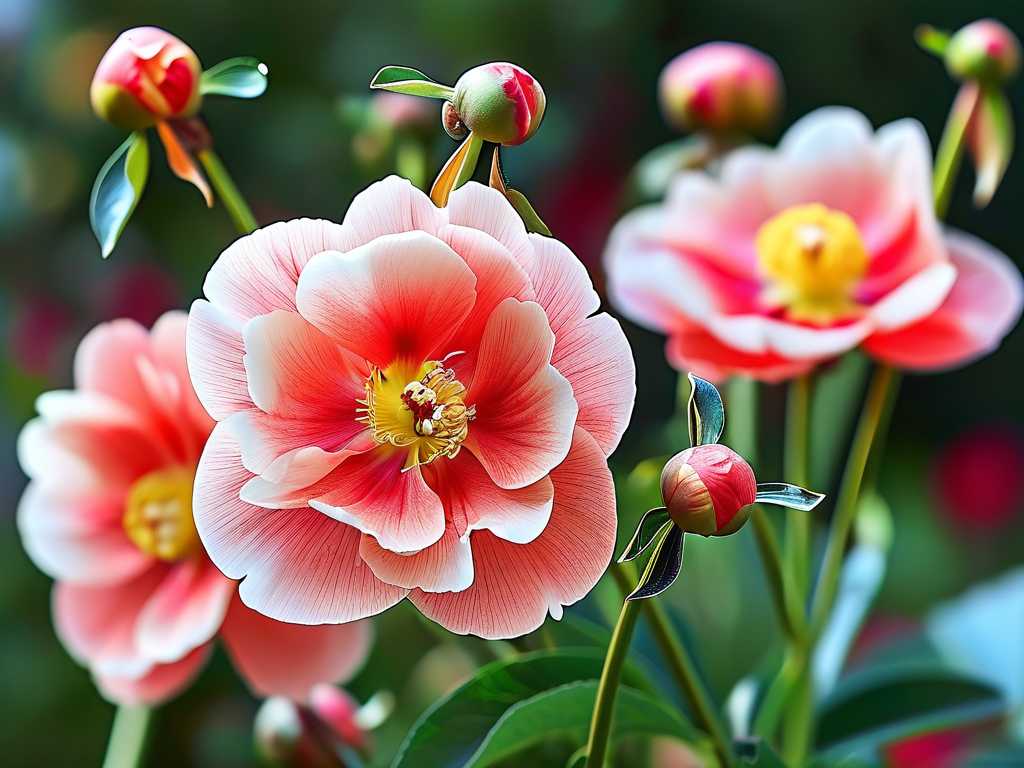
Before we dig into the care specifics, it's crucial to recognize that the potential size of a peony bloom is largely determined by its genetics and type. Herbaceous peonies, like the classic 'Sarah Bernhardt', are often bred for those iconic, large double blooms. Tree peonies can produce equally massive flowers. On the other hand, species peonies (like Paeonia tenuifolia) or certain intersectional hybrids naturally bear smaller, more numerous flowers. My first big mistake was treating a delicate fern-leaf peony the same as a robust hybrid, expecting giant blooms and then wondering why it wasn't thriving. The goal isn't to force a small variety to produce large blooms, but to provide optimal care so that any peony reaches its maximum genetic potential for health, vigor, and floral display.
The Critical First Step: Planting for Success
This is where the foundation is laid for all future growth, and getting it right is non-negotiable.
Site Selection and Soil Preparation Both large and small peonies demand excellent drainage. They despise "wet feet." I learned this the hard way when a prized 'Karl Rosenfield' succumbed to root rot in a slightly low spot. Now, I always choose a site with at least 6-8 hours of full sun. More sun generally supports stronger stems for heavy large blooms and richer coloration in smaller varieties.
Soil preparation is my secret weapon. I dig a wide, shallow hole—about 18 inches across and 18 inches deep. For the backfill, I mix the native soil with a generous amount of well-rotted compost and a handful of bone meal or a balanced, slow-release fertilizer low in nitrogen. The American Peony Society (APS) consistently emphasizes the importance of proper planting depth: for herbaceous peonies, the "eyes" (pink buds on the root) should be no more than 2 inches below the soil surface. Planting too deep is the single most common reason for a peony to fail to bloom. I measure this meticulously.
The Two-Week Observation: Patience is Key Right after planting, I water deeply to settle the soil. For the next two weeks, my routine is simple but critical. I check the soil moisture every other day by sticking my finger an inch into the ground. The goal is consistent moisture, not sogginess. I observed that in my well-amended soil, I only needed to provide supplemental water twice during this period, as we had some light rain. No shoots emerge this quickly, but this period is about ensuring the roots make good contact with the soil and begin establishing without stress. A common pitfall is overwatering out of anxiety, which can lead to rot before the plant even starts.
Ongoing Nutrition: Feeding for Size and Strength
Feeding strategies subtly differ based on your floral goals. A study referenced by the Royal Horticultural Society (RHS) notes that excessive nitrogen promotes lush foliage at the expense of blooms.
For Large-Bloom Peonies My objective with large-flowered varieties is to support those enormous, energy-intensive blooms. In early spring, as the red shoots emerge, I apply a fertilizer higher in phosphorus and potassium (like a 5-10-10 formula) to promote strong root development and prolific flowering. I lightly scratch it into the soil around the drip line and water it in. A second, lighter application can be given after blooming to help the plant rebuild its energy stores. I also swear by a top-dressing of compost in the fall. This regimen builds the plant's stamina.
For Small-Bloom Peonies With naturally smaller-flowered varieties, my focus shifts slightly towards overall plant health and longevity, as many of these are species types. I use a more balanced, organic approach. A single application of a balanced organic fertilizer or compost in early spring is usually sufficient. The goal is to avoid forcing excessive, soft growth that can make the plant vulnerable to disease. These peonies often thrive on a bit of "leaner" living, which encourages their characteristic delicate form and abundant smaller flowers.
The Art of Disbudding: A Game-Changer for Bloom Size
This was the technique that transformed my large-flowered peonies from "nice" to "spectacular." Disbudding is the selective removal of side buds to channel all the plant's energy into the terminal (main) bud. It sounds simple, but timing is everything.
My Process and Two-Week Experiment On a mature 'Festiva Maxima' plant, I decided to conduct a clear experiment. On one half of the plant, I left all buds intact. On the other half, I carefully pinched off the smaller side buds clustered around the main central bud on each stem, leaving only the largest one. I did this when the buds were about the size of a pea.
For the next two weeks, I monitored both sides daily. The difference became apparent quickly. On the disbudded side, the terminal buds swelled noticeably larger and faster. The stems also seemed sturdier, perhaps concentrating resources. On the untreated side, the buds remained smaller and more numerous. At bloom time, the contrast was staggering: the disbudded side produced a lower number of blooms, but each was easily 2-3 inches wider, with more layers of petals and a more intense fragrance. The untreated side was a cloud of smaller, still beautiful, but undeniably less impressive flowers. The pitfall here is being too timid or doing it too late. You must remove the side buds early and decisively.
For small-flowered peonies, I almost never disbud. The charm of these plants, like the lovely Paeonia mlokosewitschii (Molly the Witch peony), is in their cloud of smaller, graceful blooms. Removing buds would ruin their natural habit. This distinction in care is vital.
Watering Wisdom: Consistency Over Quantity
Peonies are drought-tolerant once established, but consistent moisture during key periods is crucial. My rule is deep, infrequent watering. I use a soaker hose to deliver water directly to the root zone, avoiding wetting the foliage, which can invite fungal diseases like botrytis.
During the critical periods of spring growth and bud formation, I ensure the plants receive about an inch of water per week from rainfall or irrigation. I observed that during a dry spell in the bud-swelling phase, a deep watering immediately plumped up the buds on both large and small varieties. The common mistake is frequent, shallow sprinkling, which encourages weak surface roots.
Winter Care and Division: Ensuring Long-Term Health
Peonies need a period of winter chill to bloom well. After the first hard frost, I cut herbaceous peonies back to the ground to prevent disease overwintering. For tree peonies, I simply clean up fallen foliage. A light mulch after the ground freezes can help prevent frost heaving, especially for newly planted peonies. I avoid heavy, dense mulches right over the crowns.
Division is necessary only every 10-15 years if clumps become overcrowded and blooming declines. The best time is in the fall. I use a sharp spade to lift the entire clump, wash off the soil to see the eyes clearly, and cut it into divisions with 3-5 eyes and ample roots. This is also the perfect time to amend the soil again before replanting.
Why are my peonies not blooming at all? The top three reasons are: planting too deep, insufficient sunlight (less than 6 hours), and excess nitrogen fertilizer. Check your planting depth first—it's most often the culprit. Young plants may also take 2-3 years to settle in before blooming.
Should I deadhead my peonies? Yes, for both large and small types. I remove spent flower heads after blooming, cutting back to a strong leaf. This prevents the plant from wasting energy on seed production (unless you want to save seeds) and keeps the plant looking tidy. For herbaceous peonies, never cut the foliage back until fall, as it's essential for photosynthesis and building energy for next year.
What's the best way to support heavy peony blooms? For large-flowered varieties, staking is essential. I place peony rings or grid supports over the clump in early spring when shoots are about 6 inches tall. The plant grows up through the support, which holds the stems upright during rain and wind. It's invisible by bloom time. Small-flowered varieties rarely need staking due to their lighter blooms and often more wiry, sturdy stems.
Growing peonies, whether you're drawn to the majestic grandeur of large varieties or the refined elegance of smaller ones, is a profoundly rewarding practice. It teaches patience, observation, and the subtle art of tailoring care to a plant's innate nature. By starting with impeccable planting, providing targeted nutrition, mastering techniques like disbudding for large blooms, and practicing consistent, thoughtful watering, you empower these perennial treasures to become the undisputed stars of your garden for decades. The key is to work with their genetics, not against them, and to enjoy every step of the process—from the first red spear of spring to the last glorious bloom.





