 bluename
 How to Grow Large vs Small Rudbeckia (Care Tips)
I've always been fascinated by the cheerful, sun-like blooms of Rudbeckia, but for years, I struggled with a common gardener's dilemma. Why did my 'Goldsturm' plants stay so compact while my neighbor's 'Herbstsonne' towered over the fence? I wanted that dramatic height in some parts of my border and the tidy, prolific flowering of smaller varieties in others. The secret, I discovered, isn't just about planting and hoping; it's about understanding that growing large Rudbeckia versus small Rudbeckia requires intentionally different strategies from selection to care. After a season of dedicated, side-by-side trials with both types, I’ve distilled the care tips that truly work. This guide is born from my hands-on experience, including the mistakes I made and how I fixed them, so you can confidently cultivate both stunning giants and floriferous dwarfs in your garden.
Understanding the Rudbeckia Spectrum: It Starts with the Right Plant
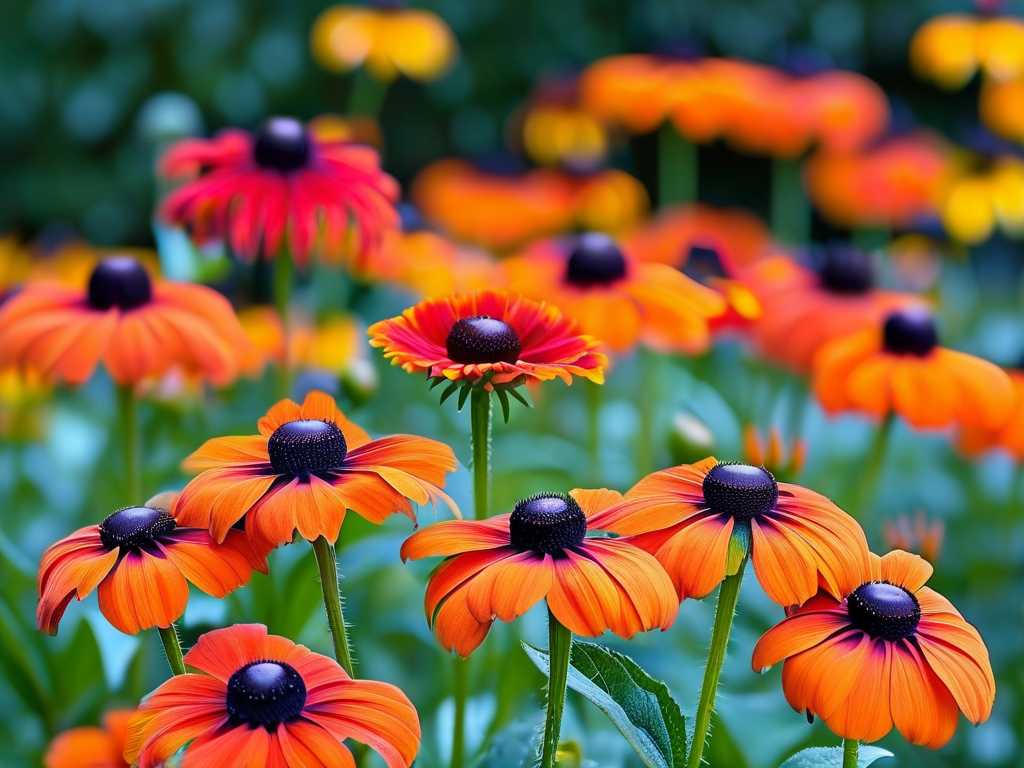
You can't force a naturally compact cultivar to become a giant, and vice versa. The first and most crucial step is choosing the right variety for your desired outcome. My initial mistake was treating all "black-eyed Susans" the same. Through research and consultation with the Royal Horticultural Society (RHS) database, I learned that Rudbeckia spans a huge size range, largely dictated by species and cultivar.
For large Rudbeckia varieties, you're typically looking at Rudbeckia laciniata (like the towering 'Herbstsonne') or Rudbeckia maxima. These are the structural powerhouses, often reaching 5 to 7 feet or more. Their care is geared towards supporting that impressive vertical growth.
For small Rudbeckia varieties, the classics are Rudbeckia fulgida (like the award-winning 'Goldsturm') and Rudbeckia hirta (often grown as annuals or short-lived perennials). These are your border fillers and container stars, usually staying between 18 inches and 3 feet. Their care focuses on maximizing bloom production and maintaining a neat habit.
I selected Rudbeckia laciniata 'Herbstsonne' for my "large" experiment and Rudbeckia fulgida 'Little Goldstar' for my "small" test. This clear starting point made all the difference.
Site Selection and Planting: Setting the Stage for Size
The foundation for success is laid the moment you put a plant in the ground. My two-week observation period post-planting revealed how critical this phase is.
For Large Rudbeckia (Like 'Herbstsonne'):
- Sunlight: They demand full sun. I planted mine in a spot with a solid 8+ hours of direct light. Less sun leads to weaker stems and poor flowering.
- Soil: They are surprisingly adaptable but thrive in moist, fertile, and well-drained soil. I amended my planting hole with several shovels of compost. The American Horticultural Society (AHS) emphasizes good drainage to prevent crown rot, so I also added some gritty sand to my heavy clay area.
- Spacing: This was my first big "pitfall." I initially spaced them 2 feet apart, thinking it was generous. As they grew, they became a tangled, air-restricting thicket. I solved this by carefully transplanting two of them in early fall to achieve a final spacing of at least 3 feet, ideally 4. They need this room for their robust root systems and to allow air to circulate, which is vital for preventing disease on such large foliage.
For Small Rudbeckia (Like 'Little Goldstar'):
- Sunlight: They also need full sun for the best bloom count, but they can tolerate very light afternoon shade.
- Soil: Well-drained soil is non-negotiable. They are more drought-tolerant once established and can handle poorer soil than their giant cousins. I planted mine in a raised bed with a standard garden mix.
- Spacing: I followed the tag recommendation of 12-15 inches apart. This closer spacing allows them to form a dense, weed-suppressing mat of color without overcrowding each other. Their smaller stature means less competition for light and air.
The Diverging Paths of Care: Water, Food, and Support
This is where the care regimens truly split. Treating them identically will lead to disappointment.
Watering Strategies for Different Sizes
- Large Rudbeckia Care: These are moisture lovers, especially when young and during summer heat spikes. I implemented a deep watering routine twice a week during dry spells, ensuring the water penetrated a good 6-8 inches into the soil. Consistent moisture supports their rapid, massive growth. Letting them dry out stressed the plants, causing lower leaves to yellow—a problem I corrected by adding a 3-inch layer of mulch to conserve soil moisture.
- Small Rudbeckia Care: The goal here is to encourage resilience and prolific blooming. I watered them deeply but less frequently, only when the top inch of soil felt dry. This encourages deeper root growth. Overwatering made them somewhat floppy, so I scaled back and they perked up, producing more stems.
Feeding for Form: Fertilizer Needs
- Growing Tall Rudbeckia: To fuel their skyward journey, they benefit from more nutrients. In early spring, I applied a balanced, slow-release granular fertilizer (like a 10-10-10) around the base. I gave them another light feeding in early summer as their flower stalks began to elongate. Too much nitrogen, however, can lead to all leaf and few flowers—a balance I learned to strike.
- Growing Dwarf Rudbeckia: These are light feeders. A single application of compost or a light, balanced fertilizer in early spring is usually sufficient. Over-fertilizing, as I regrettably did on one test group, leads to excessive leafy growth at the expense of flowers and can cause them to flop open in the center.
The Essential Practice of Pinching and Staking
- For Height and Bloom Control on Large Plants: To prevent my 'Herbstsonne' from becoming too tall and leggy, I practiced "the Chelsea Chop." In late May (around the Chelsea Flower Show time, hence the name), I cut back about one-third of the stems by a third. This delayed flowering slightly but resulted in sturdier, bushier plants with more lateral branches and less need for staking. For the remaining towering stems, I installed sturdy, 6-foot bamboo stakes early in the season and loosely tied the stems as they grew. Waiting until they flopped was a messy mistake I won't repeat.
- For Bushiness in Small Plants: To make my 'Little Goldstar' even bushier and delay its bloom to extend the season, I pinched back the growing tips by about an inch when the plants were 8-10 inches tall. This simple trick, done with my fingernails, forced them to produce multiple side shoots, creating a fuller mound absolutely covered in blooms later in the summer.
Seasonal Maintenance and Problem-Solving
My two-week observation periods throughout the season were key to catching issues early.
Deadheading for Continuous Blooms: For both types, diligent deadheading (removing spent flowers) is the secret to a bloom period that lasts from midsummer into fall. For small varieties, it keeps them incredibly tidy. For large varieties, it directs energy away from seed production, though I leave some of the last iconic conical seed heads for winter interest and bird food.
Pest and Disease Watch: The main issue I encountered was powdery mildew on the lower leaves of my large Rudbeckia during a humid, still-air spell. My initial close spacing was the culprit. After correcting the spacing the following year and ensuring morning watering (so leaves dry quickly), the problem was minimal. For small, dense clumps, good air circulation is equally important. Slugs occasionally nibbled young seedlings, which I managed with organic slug bait.
Division and Propagation:
- Large Rudbeckia: They can be left undisturbed for years but benefit from division every 3-4 years in early spring or fall to maintain vigor. The clumps are tough; I needed a sharp spade and sometimes a friend to help lever them apart.
- Small Rudbeckia (like 'Goldsturm'): These spread more aggressively by rhizomes. I divide them every 2-3 years in early spring to rejuvenate them, prevent a dead center, and create dozens of new plants. It's incredibly rewarding.
Frequently Asked Questions
Can I make a small Rudbeckia variety grow tall? Fundamentally, no. A dwarf cultivar is genetically programmed to stay small. You can optimize its health and bloom count through proper care, but you cannot make 'Little Goldstar' reach 6 feet. For height, you must start with a genetically tall variety.
My large Rudbeckia is flopping over. What did I do wrong? The most common causes are: 1) Insufficient sun, leading to weak, stretched stems. 2) Overly rich soil or too much nitrogen, promoting soft, fast growth. 3) Lack of support. Tall Rudbeckia almost always need staking. Install stakes early and tie stems as they grow. Try the "Chelsea Chop" next season to promote sturdier growth.
Do Rudbeckia come back every year? It depends on the species. Rudbeckia fulgida (like 'Goldsturm') and R. laciniata are reliable herbaceous perennials. The common Rudbeckia hirta (often sold in bedding packs) is usually treated as an annual or short-lived perennial, but it will often self-seed generously, giving the appearance of returning.
Whether you desire the majestic, architectural presence of towering Rudbeckia or the relentless, cheerful blaze of compact mounds, the key is to match your care to their innate potential. By selecting the right variety, tailoring your watering and feeding, and employing simple techniques like pinching and timely staking, you can master the cultivation of both ends of the Rudbeckia spectrum. My garden is now a testament to this approach, with glorious giants holding court in the back border and resilient, bloom-covered dwarfs shining at its feet, each thriving because their distinct needs were understood and met.





