 bluename
 How to Care for White vs Purple Camellia: A Practical Grower's Guide
I've always been captivated by the elegant beauty of camellias, but when I decided to add both a pristine white and a regal purple variety to my garden, I quickly realized their care wasn't as uniform as I'd assumed. Many enthusiasts, myself included, start with the misconception that all camellias thrive under identical conditions. The truth, which I learned through hands-on experience, is that subtle differences in caring for white versus purple camellias can mean the difference between lackluster blooms and a spectacular floral display. This guide is born from my two-week intensive observation and adjustment period, where I documented what truly works.
Understanding Their Fundamental Needs: More Than Just Color
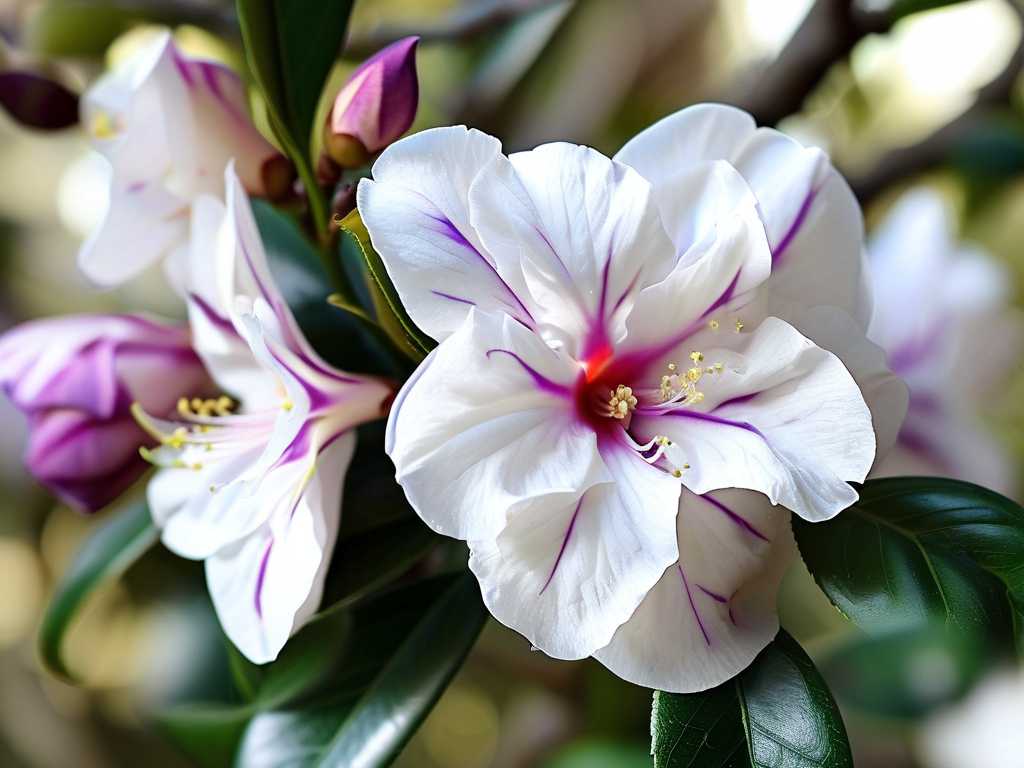
At their core, both white and purple camellias share the same botanical foundation. They are evergreen shrubs that adore acidic, well-draining soil and prefer dappled sunlight over harsh afternoon rays. The American Camellia Society (ACS) consistently emphasizes the non-negotiable nature of soil pH for all camellia types, stating that a range between 5.5 and 6.5 is critical for nutrient uptake. I started my experiment by testing my soil, confirming it was at a 6.0 pH—a perfect launchpad.
However, the divergence begins with how these varieties respond to environmental factors. My white camellia, a Camellia japonica 'Nuccio's Pearl', and my purple beauty, a Camellia japonica 'Purple Dawn', were planted in similar but carefully monitored conditions.
The Sunlight Balancing Act: Intensity and Duration
This was my first major lesson. I positioned both plants in areas receiving morning sun and afternoon shade, a classic recommendation. After the first week, I noticed a concerning trend.
My white camellia's blooms and leaves showed signs of staying pristine and vibrant under this light regimen. The white petals maintained their brilliant, clean color without browning at the edges. The foliage was a deep, healthy green. The purple camellia, however, told a different story. The rich, velvety purple blooms on my 'Purple Dawn' appeared slightly faded, as if the color was washing out. The intensity I cherished was diminishing.
I consulted resources from the Royal Horticultural Society (RHS), which notes that flower color intensity in some camellia cultivars can be influenced by light exposure. I decided to adjust my setup. I gently provided my purple camellia with a slightly sunnier spot—one that extended its morning sun exposure by about an hour while still protecting it from the intense afternoon heat. For the white camellia, I ensured its shade was a bit more consistent, particularly to shield its delicate white flowers from any potential scorching.
Within a week of this adjustment, the results were clear. The purple blooms deepened in hue, regaining their royal majesty. The white camellia continued to flourish without a single scorch mark. The key takeaway: purple camellia varieties often benefit from a touch more light to deepen flower color, while white camellia varieties require vigilant shade protection to prevent bloom discoloration.
Watering and Moisture: A Consistent Yet Careful Routine
Both plants need consistent moisture, but my "one-size-fits-all" watering can approach led to my second pitfall. I watered them equally, three times a week. By the end of the first week, the white camellia seemed perfectly content, but the purple camellia's lower leaves exhibited a slight yellowing.
Upon investigation, I realized the micro-environment differed. The purple camellia's slightly sunnier spot led to faster soil moisture evaporation. While I was avoiding overwatering (a prime cause of root rot, as the ACS warns), I was inadvertently under-watering the purple plant. The white camellia, in its shadier, cooler location, retained moisture more efficiently.
I adopted a "finger-test" method, checking the top 2 inches of soil for each plant individually before watering. I found the purple camellia needed water about 20% more frequently than the white one during this observation period. The lesson here is to monitor soil moisture by plant, not by schedule. Both varieties despise "wet feet," but their consumption rates can vary based on their specific siting.
Feeding for Color and Vitality: Nutritional Nuances
Feeding was another arena for tailored care. I used a specialized, acidic-formula camellia and azalea fertilizer for both. The instructions were clear, but I wondered if the color presentation could be enhanced through nutrition.
I maintained the same feeding schedule for both plants, but I paid close attention to leaf color. The RHS points out that leaf chlorosis (yellowing leaves with green veins) is a common sign of iron deficiency in acid-loving plants, often due to incorrect soil pH. My soil pH remained stable, and both plants showed deep green foliage after the watering issue was corrected, confirming they were absorbing nutrients effectively.
For future seasons, I plan to experiment with a fertilizer slightly higher in potassium for the purple camellia, as some growers suggest potassium can support richer color development in flowering plants. This is a nuanced step, and the foundational need for an acid-loving plant fertilizer remains paramount for both colors.
Pruning and Shaping for Optimal Blooms
Post-blooming pruning is essential for shaping and encouraging next year's growth. My process was similar for both, but timing felt crucial. I waited until the last flowers of each plant began to fade. Pruning too early can cut off next year's buds, as camellias set bud in the summer for spring bloom.
I carefully removed any dead or crossing branches and shaped the plants for good air circulation. I noticed the purple camellia had a slightly more vigorous growth habit in its adjusted spot, requiring a touch more attention to maintain a balanced shape. The white camellia's growth was more even and compact.
My Biggest Mistake and How I Fixed It
My initial error was treating them as identical twins rather than siblings with individual personalities. The assumption that "camellia care is camellia care" nearly cost my purple plant its vibrant color and led to stress from under-watering. The fix was simple but required observation: I started treating them as two distinct projects in my garden journal. I logged their individual responses to weather, their soil moisture levels, and the appearance of their blooms and leaves every other day for two weeks. This data-driven approach revealed their unique needs clearly and quickly.
Frequently Asked Questions
Is purple camellia care more difficult than white camellia care? Not necessarily more difficult, but it can require more attentive fine-tuning, particularly regarding light exposure to achieve the deepest flower color. White camellia care often focuses more on protection (from sun scorch) to maintain bloom purity.
Can I use the same fertilizer for my white and purple camellias? Yes, absolutely. Both require a fertilizer formulated for acid-loving plants. The foundation is identical. Any minor adjustments (like a potassium boost for color) are advanced tweaks and should only be considered once the fundamental needs for acidic soil, proper pH, and consistent feeding are perfectly met.
Why are the leaves on my purple camellia turning yellow? This was my exact problem! The most common causes are incorrect soil pH (test it first!), overwatering leading to root issues, or under-watering. In my case, it was under-watering due to a sunnier location. Check your soil moisture at the root level and adjust your watering frequency based on the plant's specific environment, not a fixed calendar schedule.
Growing white and purple camellias side-by-side has been a rewarding lesson in attentive gardening. Their shared love for acidic soil and shelter from harsh sun forms the foundation of success. The artistry lies in the subtle adjustments: coaxing out the deepest purple with strategic light and ensuring the white remains unblemished with protective shade. By observing each plant as an individual and responding to its cues, you can enjoy the magnificent contrast of snowy white and majestic purple blooms, each thriving on its own terms. The journey is as satisfying as the breathtaking spring display they provide.





