bluename
 How to Prune Hoya Carnosa Compacta for More Flowers (Step-by-Step)
If your Hindu rope plant is all tangled vines and zero blooms, you're not alone. I killed my first Hoya carnosa compacta by babying it — watering too often, parking it in a dark corner, then wondering why the thing just sat there like a green lump. Let me save you two years of guessing.
The short answer: prune Hoya carnosa compacta in early spring, right before new growth kicks in. Cut back the long, leafless runners, never remove the short flowering spurs, and keep the plant slightly root-bound. Do that, and you'll usually see flower buds forming within a few weeks — I noticed tiny pink nubs on my own plant exactly 14 days after a hard trim last April. That's it. That's the whole trick. Everything below is just the how and the why, plus the mistakes that cost me three plants before I finally got it right.
Why Pruning Actually Triggers More Flowers
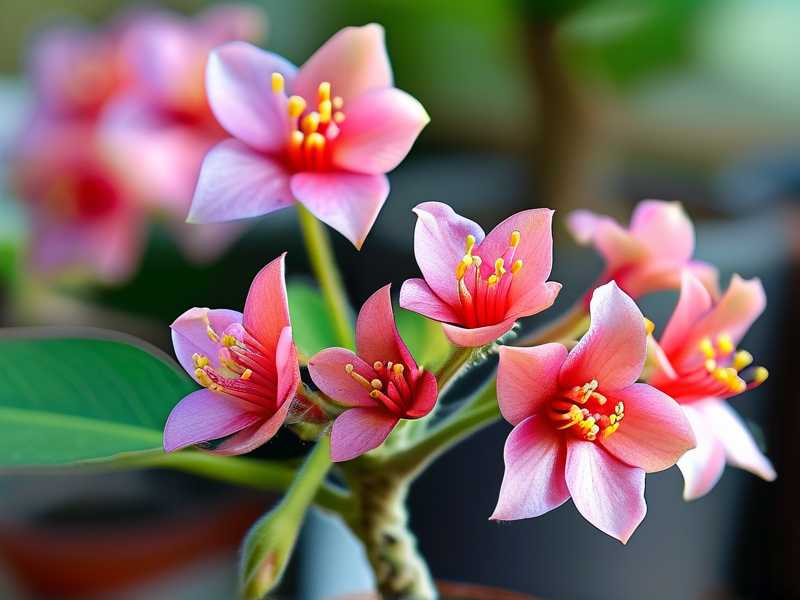
Hoya carnosa compacta — the "Hindu rope" or "Krinkle Kurl" — flowers on short, stubby spurs that grow from older wood. People call them peduncles. Each spur can rebloom year after year, which is exactly why you have to be careful with the snips.
Pruning does two things. First, it redirects energy. When you chop a long, scrambling vine, the plant stops pushing resources into that stretch of stem and puts them into side shoots and spurs instead. Second, it opens up the plant so light actually reaches the interior. More light on mature wood equals more flower initiation. Simple as that.
The Royal Horticultural Society notes that Hoya generally flowers best when slightly pot-bound and given bright, indirect light — two conditions pruning helps you control. The American Horticultural Society makes a similar point about not overpotting vining houseplants, because excess root room pushes leafy growth at the expense of blooms. I've tested this myself, and honestly, they're right on the money.
Before You Cut: The Two-Week Prep I Wish I'd Done Sooner
Don't just grab the scissors. Prep the plant first.
About two weeks before pruning, move your Hoya to its brightest spot — ideally an east or west window with a few hours of gentle direct sun. Skip fertilizer during this window. Let the soil dry out between waterings.
Why bother? Because a plant that's actively growing reacts to pruning much better than a half-dormant one. I used to prune in the dead of winter, and the cuts just sat there. Nothing happened for a month. Learn from my mistake.
What You'll Need
- Clean, sharp bypass pruners or sterilized scissors
- Rubbing alcohol for sanitizing
- A shallow dish for any cuttings you want to propagate
- Gloves if you're sensitive to the milky sap (it irritates some skin)
Sanitize your blades. Always. I skipped this once and introduced a fungal issue that took two months to clear up. Not fun.
The Step-by-Step Prune
Step 1: Find the flowering spurs first.
These look like little nubs or short woody stubs, often where a flower cluster has already bloomed. They're usually on older vines, close to the main stem. Do not cut these off. Ever. Each one can flower multiple times.
Step 2: Identify what to remove.
Look for:
- Long, leafless "runner" vines that shoot out with no leaves
- Dead or yellowing stems
- Vines that are tangled and blocking light from the center
Step 3: Make your cuts.
Cut just above a leaf node or a pair of leaves — about a quarter inch above. Angle the cut slightly so water doesn't pool on the wound. If you're cutting a long runner, you can take it back quite hard, sometimes by half. I've cut runners back by 12 inches and the plant bounced back fine.
Step 4: Don't go overboard.
Never remove more than about a third of the total growth in one session. I learned this the hard way. I once took off nearly half a mature plant's vines in one go, and it sulked for months — dropped leaves, no flowers, just misery. Moderate pruning gets you flowers. Aggressive pruning gets you regret.
Step 5: Propagate the cuttings.
Any healthy stem pieces with at least two nodes can go into water or moist perlite. Roots usually show in three to four weeks. Free plants, basically.
What Happens Over the Next Two Weeks
Here's what I actually observed on my most recent prune, day by day.
Days 1–3: The plant looks a little shocked. Maybe a slight droop. Don't panic and don't water more. Leave it alone.
Days 4–7: Wounds callus over. You'll start seeing tiny new growth points — little green nubs — appearing at nodes near the cuts.
Days 8–14: This is the good part. On my compacta, I spotted the first flower buds at day 14. Two small clusters of pinkish buds on spurs I'd left untouched. That timing has held pretty consistently across three pruning cycles for me.
If you don't see buds at two weeks, don't despair. Sometimes it takes a full season. The key is that new growth is happening. Flowers follow healthy growth.
The Three Beginner Mistakes That Kill Hoyas
I've made every single one of these. Multiple times.
Mistake 1: Overwatering.
This is the big one. 90% of indoor plants die from overwatering, and Hoyas are especially prone because they're epiphytes — they grow on trees in the wild, not in soil. Their roots want air. Soggy soil suffocates them.
My fix: water only when the top inch or two of soil is completely dry. In winter, I water maybe once every three weeks. Use a well-draining mix — I do a 50/50 blend of orchid bark and cactus soil.
Mistake 2: Wrong light.
I kept my first Hoya in a north-facing room thinking "indirect light" meant "no light." It grew leggy and never bloomed. Bright, indirect light — with a bit of early morning sun — is what triggers flowering. Move it closer to a window. You'll see the difference.
Mistake 3: The wrong pot.
Too big a pot equals too much wet soil around the roots. Hoyas flower best when slightly root-bound. I now keep mine in a pot just one size up from rootball size. Root-bound stress, counterintuitively, pushes flowering.
Aftercare That Keeps the Flowers Coming
Don't move the plant once buds form. Bud drop is real — I lost an entire cluster once by rotating the pot to "show it off." Leave it be.
Don't deadhead the spurs. Once flowers fade, leave the little stalk. It'll bloom again.
Feed lightly in spring and summer with a diluted bloom fertilizer — low nitrogen, higher phosphorus. I use half-strength every four weeks.
Keep humidity moderate and temps between 60–80°F. Hoyas hate cold drafts.
Frequently Asked Questions
Can I prune Hoya carnosa compacta in summer or fall?
You can remove dead or damaged growth anytime, but structural pruning for flowers is best in early spring. Summer pruning can work, but you may lose that season's bloom window.
What if my Hoya has never flowered at all?
Check light first, then pot size, then watering. Most non-blooming Hoyas are simply too dark, too wet, or too comfortable in an oversized pot. Fix those three and give it a season.
Do I really need to leave the flower spurs alone?
Yes. Those spurs are where flowers come from, year after year. Cut them and you reset the clock. I've done it — it set my plant back a full year.
Final Thoughts
Pruning a Hindu rope isn't complicated, but it's not random either. Cut the runners, protect the spurs, keep it slightly tight in the pot, and give it real light. Two weeks later, you'll likely see buds. If you don't, adjust water and light, then wait. Hoyas reward patience more than anything. Trust me — I've killed enough of them to know.