bluename
 How to Identify Different Papaver Rhoeas Varieties? A Practical Guide from a Fellow Gardener
Have you ever stood in a garden center, staring at a sea of vibrant red poppy seedlings, and wondered if they’re all the same? Or perhaps you’ve sown a packet of ‘wildflower mix’ and been surprised by the diverse poppies that emerged. I’ve been there. For years, I lumped all those brilliant red blooms under the single name “corn poppy” or “Flanders poppy,” assuming variety was just a matter of slight color shifts. My quest to truly learn how to identify different Papaver rhoeas varieties began out of frustration—I wanted to curate my garden’s color story intentionally, not by accident. This guide is the result of my hands-on, sometimes messy, two-week deep dive into distinguishing these captivating flowers. I’ll share my steps, the pitfalls I stumbled into, and the clear markers that finally helped me tell them apart with confidence.
My journey wasn’t just about aesthetics. According to the Royal Horticultural Society (RHS), understanding cultivar differences is key to successful garden planning, affecting bloom time, plant height, and overall visual impact. They note that Papaver rhoeas, the common poppy, has been extensively bred, leading to a spectrum of forms far beyond the classic single red. So, let’s move past the guesswork.
Starting with the Foundation: Know What Defines Papaver Rhoeas
Before distinguishing varieties, you must be sure you’re looking at Papaver rhoeas itself. This was my first checkpoint. True corn poppies have specific, consistent traits.
- The Foliage: Look for leaves that are deeply lobed, almost feathery, with a bristly or hairy texture. They form a basal rosette at the ground level.
- The Stem: It’s notably hairy and will ooze a white, milky latex if snapped—a key identifier for all true poppies.
- The Bud: The flower bud nods downward, covered in two distinctly hairy sepals that fall away as the bloom opens.
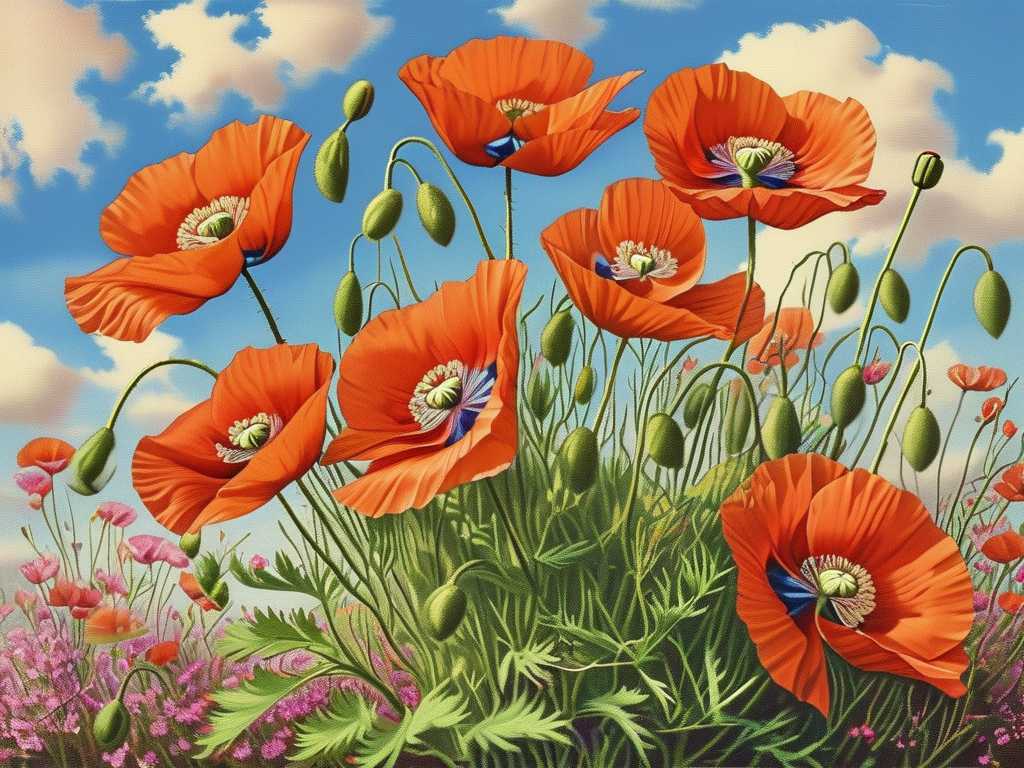
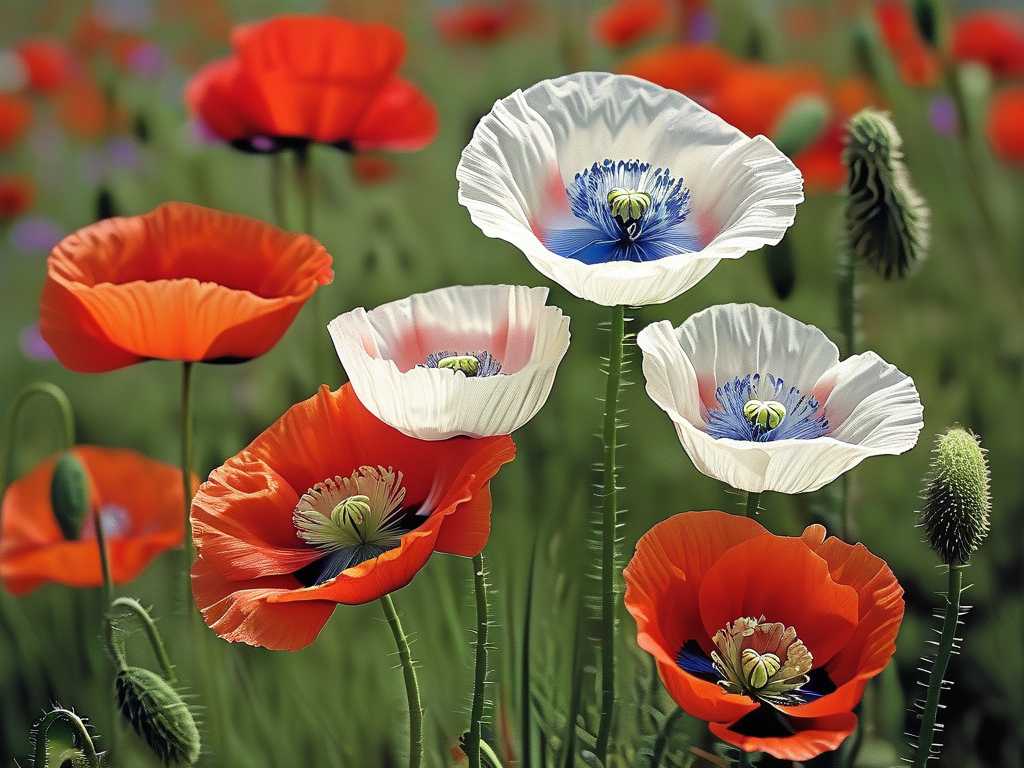
- The Basic Flower: The classic form has four, tissue-paper-like, overlapping petals, often with a dark blotch at the base. The center is a rounded capsule surrounded by a crown of dark, numerous stamens.
Once I confirmed these base characteristics in my garden patch, I knew I was working with Papaver rhoeas and not its cousins like Papaver somniferum (opium poppy) or Papaver nudicaule (Iceland poppy). Now, the real detective work on different poppy varieties began.
The Core Identification Markers: Your Detective’s Toolkit
Over a focused two-week period during peak bloom, I examined my plants daily, taking notes and photos. I learned to focus on three primary, variable characteristics: petal form, color/pattern, and plant stature. Ignoring any one of these led me astray.
Marker 1: Petal Form – Single, Double, or Semi-Double?
This is the most obvious differentiator. I set up a simple observation station with labeled stakes.
- Single Varieties: These look like the classic wild poppy. Four petals, often slightly crinkled, with a prominent central seed pod. Examples include the iconic ‘Flanders Poppy’ and the stunning ‘Ladybird’ with its unique red petals and black spots. I found these were the easiest to grow true from seed.
- Double and Semi-Double Varieties: Here’s where I made my biggest initial mistake. I assumed “double” just meant more petals. Not quite. True double varieties, like those in the ‘Angel’s Choir’ mix, have so many frilled petals they completely obscure the central seed pod, resembling a carnation or peony. Semi-doubles, such as the ‘Shirley Poppy’, have one or more extra layers of petals but still show a visible, though sometimes smaller, central capsule. The RHS emphasizes that Shirley poppies, a seminal development, were selectively bred for this semi-double form and cleaner colors without the basal blotch.
My Pitfall & Solution: I had a group of poppies I’d labeled “double.” After a heavy rain, the ones with weaker stems collapsed, their heavy, waterlogged heads in the mud. The ones that held up had slightly fewer petals and a visible center—they were semi-doubles. The solution? I staked the true doubles early with discreet green supports. Now I check stem sturdiness alongside petal count.
Marker 2: Color and Pattern – Beyond Scarlet
The color palette is vast. I created a simple color swatch journal for reference.
- Solid Colors: While red is classic, look for salmon (‘Mother of Pearl’), pink, and even white varieties. Pure white Shirley poppies are a breathtaking sight.
- Patterns and Edges: This is crucial for identifying poppy cultivars. The American Horticultural Society (AHS) points out that selective breeding has emphasized edge patterns. Look for:
- Picotee Edges: Petals with a contrasting color on their fringed margins. The ‘Amazing Grey’ poppy (which is actually a lavender-pink) often exhibits this.
- Bicolored Petals: Soft blends of color from the center outward, common in the ‘Mother of Pearl’ strain.
- Basal Blotch Presence/Absence: Classic wild types have a stark black blotch. Many cultivated strains, like the Shirley series, have been bred to eliminate it, creating a cleaner, often pastel look.
My Pitfall & Solution: Lighting dramatically alters color perception. A poppy I logged as “deep pink” in the morning sun looked “mauve” at dusk. My solution was to take all comparison photos at the same time of day—mid-morning—under consistent, bright but indirect light. This gave me a true baseline for color identification.
Marker 3: Plant Architecture – Height and Habit
Don’t just look at the flower. Step back and observe the plant.
- Height: Varieties can range from a compact 12 inches (30 cm) to towering 36 inches (90 cm). The ‘Falling in Love’ mix tends to be on the taller, more graceful side.
- Branching Habit: Some varieties produce a single, strong stem per plant. Others, often labeled as “branching” or “bush” types, will produce multiple flowering stems from the base, creating a fuller, longer-lasting display. This affects how you space them in the garden.
By the end of my two-week observation, cross-referencing these three markers—form, color, and structure—allowed me to confidently label every poppy in my bed. The Shirley poppy identification, for instance, became clear: semi-double form, clean colors (often picotee-edged) with no basal blotch, and a medium, branching height.
Putting It All Together: A Practical Identification Walkthrough
Let’s say you have an unknown poppy. Here was my final verification process:
- Confirm Species: Check for hairy, lobed leaves and a hairy stem. Snap a small piece of stem to see the white latex.
- Examine the Bloom: Is the central seed pod visible? If yes, it’s likely single or semi-double. If it’s a fluffy ball of petals with no center, it’s double.
- Analyze Color & Detail: Note the primary color. Then, inspect the petal base for a black blotch. Examine the edges for a contrasting picotee rim.
- Measure and Observe: Note the plant’s height and whether it has one or many flowering stems.
- Consult Reputable Sources: Compare your notes to trusted seed catalogs or the RHS plant finder, which describe these specific cultivar traits.
Will different Papaver rhoeas varieties cross-pollinate if I save seeds? Absolutely, and this was a fascinating lesson. If you grow multiple varieties close together, bees will mix their pollen. Seeds saved from these cross-pollinated plants will produce hybrids the following year, often reverting to traits of the wilder, single red form or creating unexpected mixes. To maintain a pure variety, you need to isolate plants by a significant distance or grow only one type per season.
What’s the most foolproof way to ensure I’m growing a specific variety? Start with fresh, high-quality seeds from a specialized, reputable supplier. Read the cultivar description carefully—it should detail petal form, color, height, and habit. While the famous ‘Shirley Poppy’ is a strain with a range of expressions, many modern varieties are stabilized for consistent traits.
I have poppies with very dark, almost black centers. Does that mean they are a special variety? Not necessarily. A dark, nearly black central capsule surrounded by dark stamens is a common feature of many single and semi-double red and pink varieties. It’s a beautiful contrast, but it’s not a unique identifier of a specific cultivar. Focus instead on the combination of petal form and color pattern.
Learning to distinguish between these varieties has transformed my gardening. It’s no longer a guessing game but a deliberate act of design. The process taught me patience—the two-week observation period was essential, as some traits like full height and branching habit weren’t apparent on day one. By moving beyond the simple label of “red poppy” and appreciating the nuances of form, pattern, and structure, you unlock a deeper connection to your garden and a much richer, more personalized display of these timeless flowers. The key is to look closely, take notes, and enjoy the beautiful diversity that Papaver rhoeas has to offer.