bluename
 How to Identify Popular Kalanchoe Blossfeldiana Varieties?
I love the vibrant, long-lasting blooms of Kalanchoe blossfeldiana, but for the longest time, I struggled to tell one variety from another. I’d bring home a beautiful plant from the nursery, only to forget its name a week later. This made it incredibly difficult to provide the right care or find the same variety again. If you’ve ever stared at a sea of colorful Kalanchoes, feeling overwhelmed and unsure how to distinguish a ‘Calandiva’ from a standard type, you’re not alone. This guide is born from my own two-week journey of closely observing, documenting, and learning to identify the most popular Kalanchoe blossfeldiana varieties. I’ll share my hands-on steps, the mistakes I made, and the clear identification markers I finally pinned down.
My Two-Week Identification Project: Setting the Ground Rules
I decided to tackle this problem systematically. I purchased six different, unlabeled Kalanchoes from local garden centers and a reputable online succulent seller. My goal was to live with them for two weeks, observe their growth habits, flower forms, and leaf characteristics daily, and then cross-reference my findings with trusted resources like the Royal Horticultural Society (RHS) plant database and the American Horticultural Society’s (AHS) encyclopedia.
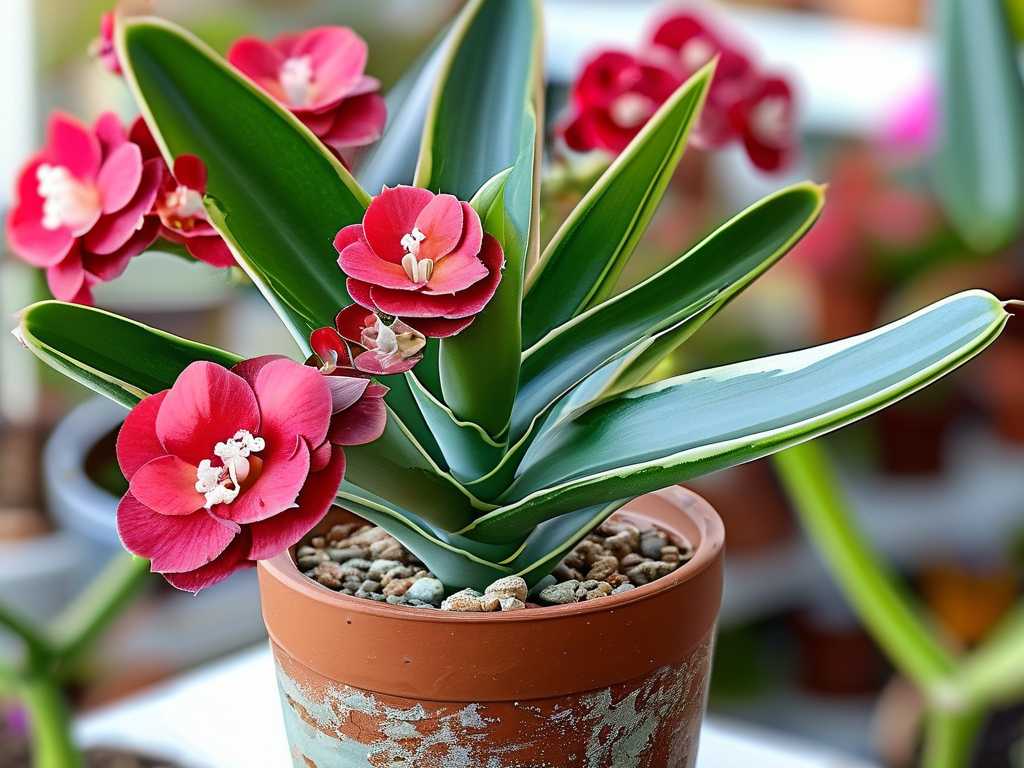
I set up a simple logbook. Each plant got a code (K1 through K6), and I noted initial observations: flower color, petal shape, number of petals, leaf shape, and overall plant structure. I placed them all on the same bright, indirect light windowsill and watered them uniformly only when the soil was completely dry—a crucial step, as overwatering can quickly muddy observational data by causing stress or rot.
The Foundational Split: Single-Flowered vs. Double-Flowered (Calandiva)
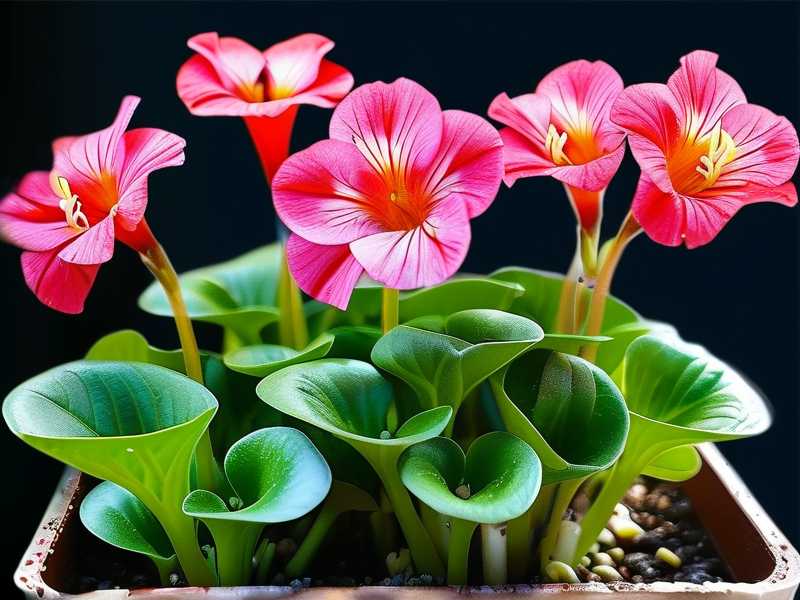
My first major “aha!” moment came around day three. I noticed that three of my plants had flowers that looked strikingly different. Plants K1, K2, and K3 had blooms with four distinct petals arranged in a simple, cross-like shape. Plants K4, K5, and K6, however, had lush, rose-like blooms with so many petals I couldn’t count them at a glance.
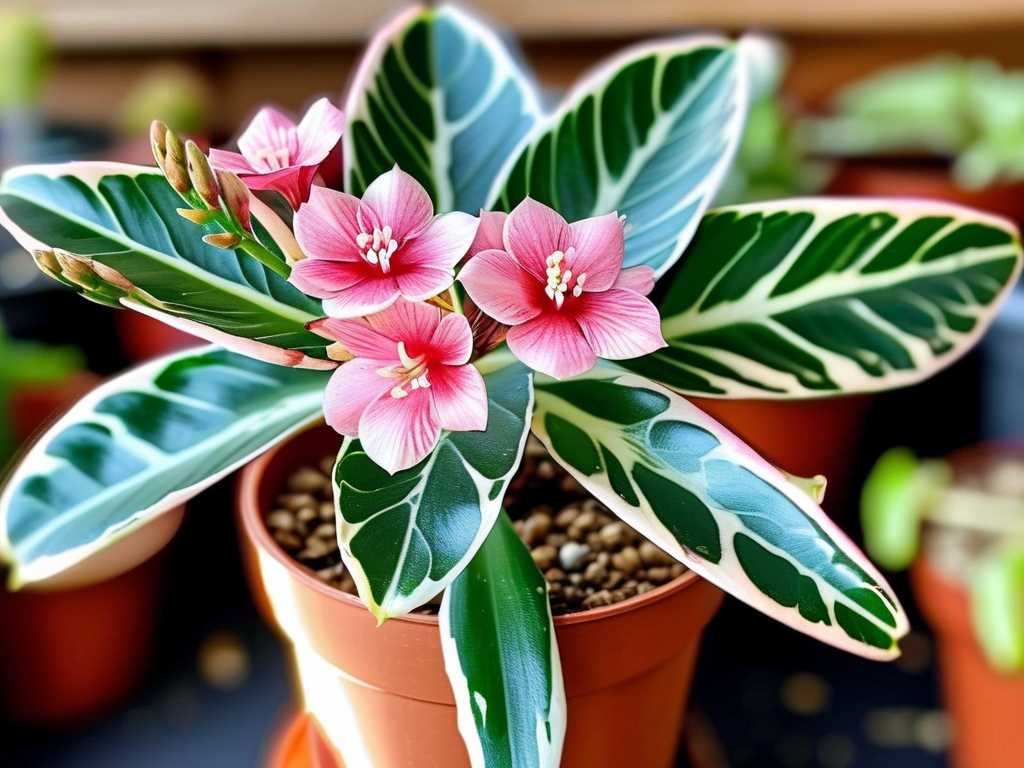
This was the critical divide. According to RHS documentation, the classic Kalanchoe blossfeldiana typically bears single flowers with four petals. The double-flowered types, however, belong to the Calandiva series (often labeled Kalanchoe blossfeldiana ‘Calandiva’). This isn’t just a minor variation; it’s a significant cultivar group with a distinct genetic background, resulting in that characteristic dense, multi-petaled bloom that can last even longer than the singles.
- The Mistake I Made: I initially assumed the double-flowered ones were just “fancier” versions of the same plant. I didn’t realize “Calandiva” was a specific, trademarked series. This led to my first correction: I started referring to them by their proper group names—standard single-flowered and Calandiva double-flowered—which immediately simplified the identification process.
Identifying Key Single-Flowered Kalanchoe Varieties
Within the single-flowered group, identification relies heavily on color, plant form, and subtle leaf differences. Here’s what I observed with my plants over the two weeks.
K1: The Classic Scarlet (‘Fuego’ or Similar) This plant was a powerhouse of color. Its flowers were a vibrant, true red-orange, forming large clusters at the top of sturdy stems. The leaves were a deep, glossy green with scalloped (crenate) edges that showed a very slight red tint when I held them up to bright light. The RHS describes this as a common trait in high-light conditions for many varieties. This is likely a cultivar like ‘Fuego’ or part of the ‘Tom Thumb’ series, known for compact growth and brilliant colors. The blooms showed no fading in color intensity over the 14 days.
K2: The Sunny Yellow (‘Goldstrike’ or ‘Simone Yellow’) K2 brightened the whole shelf. Its flowers were a clear, lemon-yellow, slightly smaller in cluster size than the red one but no less abundant. The leaves were a lighter, matte green with pronounced scalloping. I noticed the stems were a bit more elongated. A common issue I encountered—and you might too—is confusing pale orange varieties with yellow ones under certain indoor lights. I solved this by taking daily photos in natural morning light for consistent color comparison. An AHS guide notes that pure yellow varieties like ‘Simone Yellow’ are prized for their clean color that doesn’t fade to cream.
K3: The Soft Pink (‘Cassandra’ or ‘Queen’ Series) This variety had a delicate charm. The flowers were a soft, warm pink, almost salmon-toned in certain lights. The leaf margins were the most distinctly red-burgundy of all my singles, especially on the newer growth. The plant had a very uniform, rounded shape. Over the two weeks, I observed that the pink color deepened slightly as the flowers matured. This aligns with descriptions of popular pink cultivars like ‘Cassandra’ or those in the ‘Queen’ series, known for their strong, contrasting leaf margins.
Decoding the Double-Flowered Calandiva Varieties
The Calandiva varieties are easier to group but have their own nuances. Their primary identifier is, of course, the double flower, but leaf structure is also key.
K4: Calandiva Pink (Likely ‘Calandiva Pink’) K4 was a mound of deep pink, miniature rose-like blooms. The leaves were darker green, thicker, and more succulent than the single-flowered types, with a smooth, rounded scallop rather than a sharp one. An expert grower’s tip I read (and confirmed) is that Calandiva leaves are often broader and more spoon-shaped. A challenge I faced was that one stem began to droop under the weight of the heavy flower head. The fix was simple: a discreet, small stake for support. This is a common need for double-flowered types due to their dense, heavy blooms.
K5: Calandiva White (‘Calandiva White’ or ‘Purity’) The pure white blooms of K5 were stunning against the dark foliage. The plant structure was exceptionally compact. I learned that white varieties can sometimes show a faint greenish center when buds first open, which fades to pure white—something I observed firsthand. It’s important not to mistake this for a health issue. The leaves had the same thick, broad characteristic as K4.
K6: Calandiva Orange (‘Calandiva Orange’) This plant had vibrant tangerine-orange flowers. Its identification secret lay in the leaves. While similar to the other Calandivas, the edges of its leaves developed a consistent, thin red line when exposed to bright light, more uniform than the mottled red on the pink single-flowered K3. Over the two weeks, this red edging became a reliable, quick visual marker before the plant even bloomed.
Beyond Color: Structural Clues for Accurate Identification
By the end of my observation period, I realized color alone isn’t enough. You must look at the whole plant.
- Flower Structure: Count the petals! Four petals = standard. Dozens of petals = Calandiva.
- Leaf Morphology: Single varieties often have thinner, matte to glossy leaves with sharply scalloped edges. Calandiva types have thicker, fleshier, often broader leaves with a blunter scallop.
- Growth Habit: Some series, like the ‘Queen’ series, are bred for extreme compactness. Others may have a more open or trailing habit (though trailing is more common in other Kalanchoe species).
- Stem Strength: Be prepared to stake double-flowered varieties. Their stems aren’t always strong enough for the heavy blooms, which is a useful practical identifier.
What is the most reliable way to tell a Calandiva from a regular Kalanchoe? Look at the flowers before anything else. If the bloom resembles a tiny rose or carnation with layers of petals, it’s almost certainly a Calandiva or similar double-flowered cultivar. The leaves will also be thicker and broader as a secondary confirmation.
My Kalanchoe’s label just says ‘Mix.’ How can I identify it? Start with the flower petal count to split it into the single or double category. Then, note the precise flower color and the color and shape of the leaf edges. Use a plant identification app as a starting point, but verify the results against trusted photographic databases from institutions like the RHS. The leaf edge detail (smooth red line vs. mottled tint) is often the deciding factor between similar-colored varieties.
Do different varieties require different care? The core care—bright light, well-draining soil, and thorough watering only when dry—is the same. However, double-flowered Calandivas may need more support for their heavy flower heads and can be slightly more susceptible to rot at the base if water sits in the dense foliage. Ensuring good air circulation is particularly helpful for them.
Learning to identify these popular varieties has deeply enriched my experience as a plant enthusiast. It transformed them from generic “colorful succulents” into distinct individuals with known traits and needs. The two-week deep dive taught me that the keys—flower form, leaf detail, and growth habit—are all there, waiting to be noticed. Whether you’re drawn to the simple cheer of a classic single bloom or the opulent show of a Calandiva, you can now confidently name and care for your Kalanchoe blossfeldiana. The journey from confusion to clarity starts with simply taking a closer look.