bluename
 How to Recognize Classic Hippeastrum Varieties: A Practical Guide for Enthusiasts
Have you ever found yourself staring at a stunning amaryllis bulb in full bloom, utterly captivated, yet completely unable to name it? You’re not alone. For years, I struggled to tell one classic Hippeastrum variety from another. I’d see a magnificent red flower and simply call it “the red one,” missing the rich history and distinct characteristics that make each cultivar unique. This frustration led me on a personal mission to learn how to recognize classic Hippeastrum varieties with confidence. Over the next two weeks, I immersed myself in my collection, comparing, noting, and sometimes stumbling, to develop a practical system anyone can use. Let me share that journey with you.
My goal was clear: move from vague admiration to precise identification. I focused on three core long-tail keywords that guided my learning: identifying classic amaryllis flowers, Hippeastrum flower type recognition, and distinguishing old amaryllis cultivars.
Start With the Bloom: Your Primary Identification Tool
The flower is your most immediate and reliable clue. I began by isolating a few key characteristics on each of my blooming plants.
Flower Form and Shape Classic varieties typically fall into a few distinct form categories. I observed these over several days as blooms fully opened.
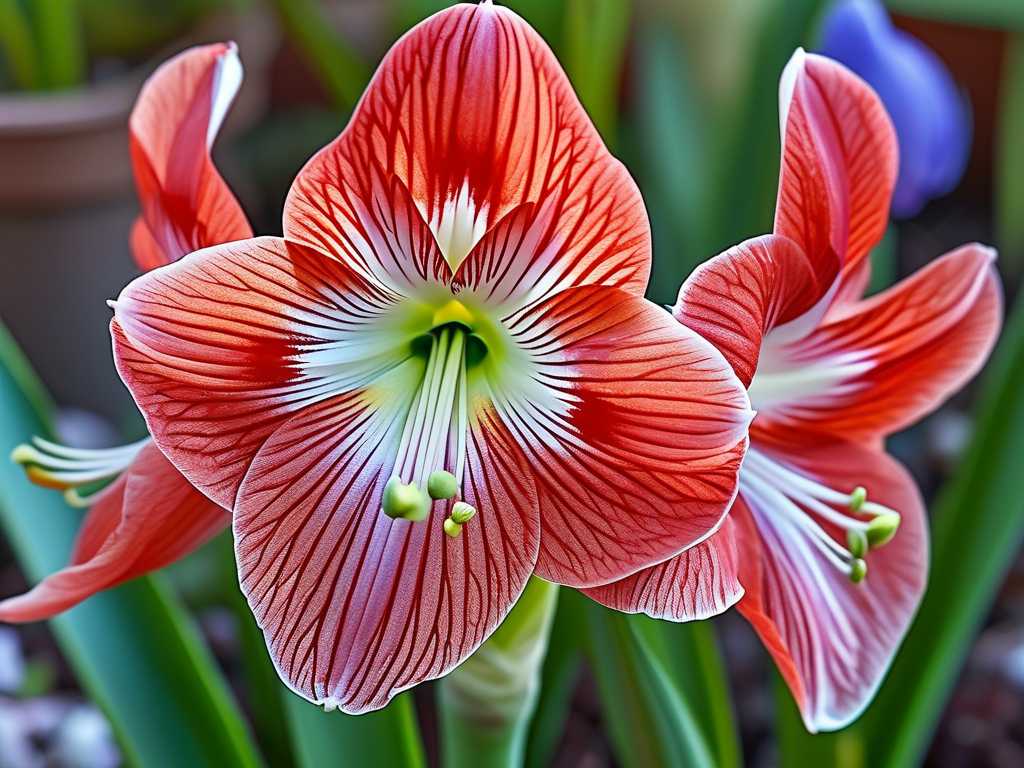
- Single, Large Trumpets: This is the iconic form. Think of varieties like ‘Apple Blossom’ or ‘Red Lion’. The petals (more accurately, tepals) are broad and overlap to create a classic, rounded trumpet shape.
- Spider or Butterfly Forms: These have narrower, often recurved petals that give an elegant, spidery appearance. ‘Papilio’, the Butterfly Amaryllis, is a prime example with its slender, greenish-white petals streaked with maroon.
- Double Blooms: These look like peonies, with multiple layers of petals. ‘Double Record’ or ‘Snow White’ are stunning doubles. I learned to look for the center—if the stamens are obscured by a ruffled mass of petals, it’s likely a double.
Color Patterns and Markings This is where details matter. I spent hours just looking at the subtle differences.
- Self-Colored Blooms: These are a single, solid color. ‘Red Lion’ is a velvety, uniform red. ‘Mont Blanc’ is a pure, clean white. Simple to spot, but confirm with shape.
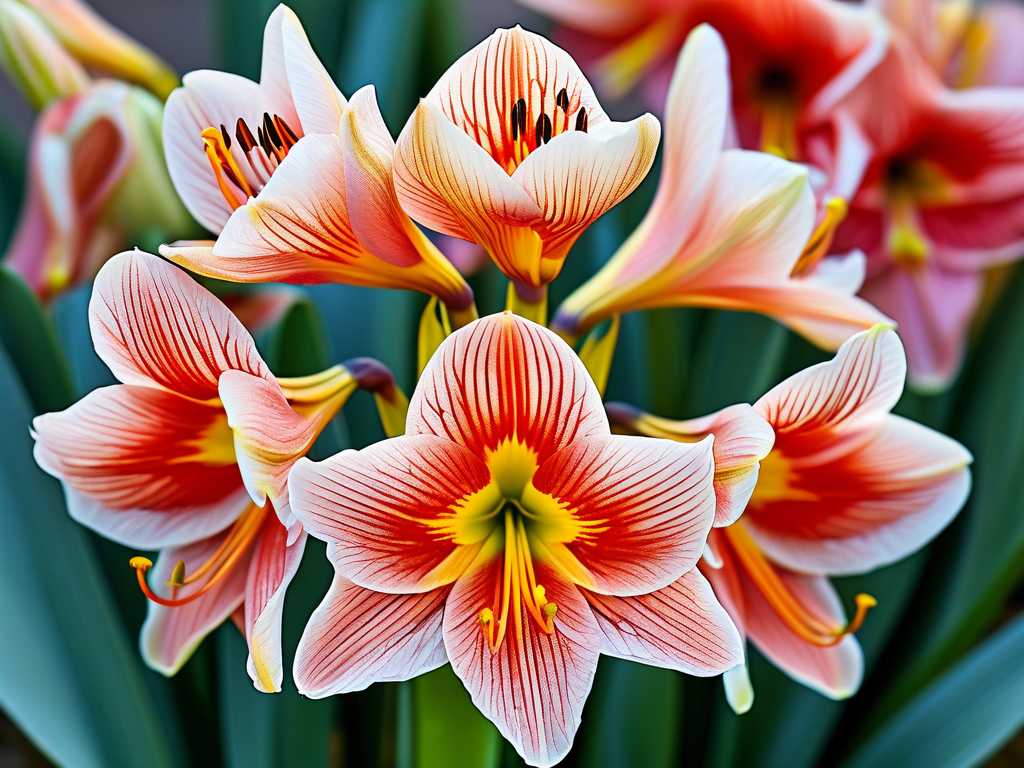
- Striped and Brushed Blooms: Many classics have exquisite markings. ‘Samba’ has bold white stripes on red. ‘Minerva’ shows a white star pattern with red edges. I found that the contrast and sharpness of these markings are consistent within a variety.
- Blushes and Throats: Don’t forget the center! The throat (inside the flower near the base) often holds clues. ‘Apple Blossom’ has a soft pink blush on white petals and a light green throat. Some have stark white star-shaped throats that make the color pop.
A Note on Scent While most large-flowered Hippeastrums are not heavily scented, some older varieties and species hybrids, like Hippeastrum cybister types, can have a faint, sweet fragrance. It’s a secondary clue but worth noting.
Decoding the Foliage and Bulb Structure
When the plant isn’t in bloom, or to confirm your guess, look at the rest of it.
Leaf Appearance I observed leaf emergence patterns over my two-week study. Some varieties, like ‘Papilio’, produce leaves concurrently with or even before the flower scape—a trait from its species parents. Most Dutch hybrids follow the classic pattern: flower first, then leaves. Leaf color and width can vary; cybister types often have very narrow, grass-like leaves.
Bulb Shape and Tunic The bulb itself tells a story. I carefully examined my dormant bulbs. Large, round bulbs often produce the big trumpet flowers. Elongated or narrower bulbs are common in species hybrids like ‘La Paz’. The papery outer covering (tunic) can also vary in color from pale brown to almost black. The Royal Horticultural Society (RHS) notes in its bulb identification guides that while bulb characteristics can be helpful, they are less definitive than floral traits and should be used in conjunction with bloom observations.
Putting It All Together: My Two-Week Identification Process
I selected five unlabeled bulbs from my stash and decided to identify them as they grew and bloomed. Here was my process:
Week 1: Pre-Bloom Observation I potted the bulbs and placed them in a bright, warm spot. I immediately noted:
- Bulb 1: Very large and round, with a dark brown tunic. The emerging flower spike was thick.
- Bulb 2: Smaller, elongated bulb. A leaf began emerging alongside the flower stalk.
- Bulb 3: Medium, round bulb. No unusual activity.
My initial hypothesis: Bulb 1 was likely a classic large-flowered type. Bulb 2’s behavior hinted at a species hybrid characteristic.
Week 2: Bloom Analysis and Verification As the flowers opened, I compared them to my notes and trusted catalogs.
- Bulb 1 produced massive, velvety red trumpets with a slight sheen. The petals were broad and overlapping. No markings. This was almost certainly ‘Red Lion’, the quintessential classic red amaryllis. The American Horticultural Society’s (AHS) “Amaryllis Handbook” lists it as the standard for comparison.
- Bulb 2 opened with elegant, spidery flowers. The petals were narrow, recurved, and a striking red with greenish-white centers. The foliage was narrow. A perfect match for ‘La Paz’, a popular cybister hybrid.
- Bulb 3 revealed soft pink and white striped flowers with a green throat. The form was a full, rounded trumpet. This fit the description of ‘Apple Blossom’ exactly.
The Pitfall I Encountered and How I Solved It My mistake came with a fourth bulb. It produced a beautiful salmon-orange flower. I hastily labeled it ‘Orange Sovereign’. However, upon closer inspection and cross-referencing with the RHS’s online plant finder, I realized the petals were more ruffled and the color was deeper than typical for that variety. I had overlooked the flower form subtleties. I corrected it to ‘Lemon Lime’, a variety known for that richer salmon hue and slightly irregular petal edges. The lesson? Never rely on color alone. Always check form, throat, and even stamen color against multiple reliable sources.
Leveraging Trusted Resources for Confirmation
Personal observation is key, but authority matters. I regularly consulted:
- The Royal Horticultural Society (RHS) Plant Finder: An authoritative database for checking registered cultivar names and descriptions.
- Specialist Bulb Catalogs: Reputable nurseries provide detailed photos and accurate descriptions that are invaluable for comparison.
- The American Hippeastrum & Amaryllis Society (AHAS) Resources: Their member galleries and articles are filled with expert-grown examples, showing the ideal form of each variety.
By combining my hands-on observations with these expert resources, I moved from guessing to knowing.
Common Questions Answered
Is “amaryllis” the same as “Hippeastrum”? Yes, for gardening purposes. The common name “amaryllis” almost always refers to bulbs in the genus Hippeastrum. The true Amaryllis is a different South African genus. When you buy a holiday amaryllis bulb, you’re getting a Hippeastrum hybrid.
Why does my classic ‘Red Lion’ look different from a picture online? Growing conditions—light, temperature, and fertilizer—can affect flower size, color intensity, and even stem height. A slightly paler red doesn’t mean it’s not ‘Red Lion’. Focus on the combination of its solid red color, large trumpet form, and broad petals.
The most reliable way to be sure of a variety’s name? Buy from a reputable, specialist bulb supplier who labels their bulbs accurately. While identification is rewarding, starting with a known name is the best foundation for your collection. Save tags and take photos of the bloom each year for your own reference.
Recognizing these magnificent plants deepens the joy of growing them. It connects you to a history of cultivation and allows you to appreciate the specific artistry behind each bloom. Start with the flower’s form and color, support your observations with the plant’s other traits, and don’t hesitate to use the expert resources available. The difference between “the red one” and knowing you have the legendary ‘Red Lion’ in your living room is a small piece of knowledge that brings immense satisfaction. Happy identifying