bluename
 How to Identify Different Hemerocallis Varieties: A Gardener's Practical Guide
You know the feeling. You're admiring a stunning daylily in a neighbor's garden or a botanical collection, and you think, "I must have that one!" But when you try to find it online or at a nursery, you're met with a dizzying array of names like 'Stella de Oro', 'Happy Returns', or 'Chicago Apache'. With over 80,000 registered cultivars, identifying a specific Hemerocallis can feel like botanical detective work without the right clues. I've been there, squinting at blooms, comparing leaf shapes, and getting lost in hybridizer terminology. After years of cultivating and a particularly intensive two-week identification project in my own garden, I've developed a systematic approach that works. Let me walk you through the key characteristics I use to tell these beautiful perennials apart.
Start With the Bloom: Your Primary Identification Tool
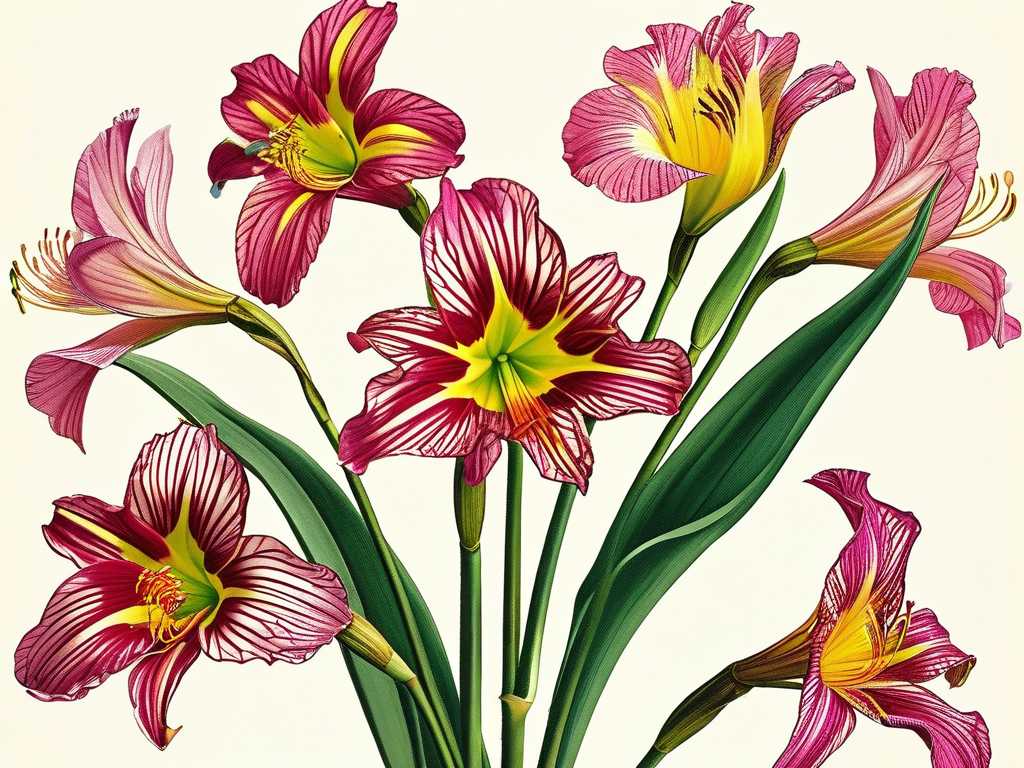
The flower is the most obvious and variable feature, making it the perfect starting point. Don't just note the color; become a detective of its details.
First, observe the flower form. The American Hemerocallis Society (AHS) classifies daylilies into several main forms. The most common is the single form, with three petals and three sepals. Then there's the double form, which has extra petal segments, creating a lush, layered look. Spider forms have petals that are exceptionally long and slender, with a length-to-width ratio of at least 4:1. Unusual forms like cascading or sculpted petals offer immediate clues. During my observation period, I misidentified a 'Lacy Doily' (a double) as a single because I only glanced at it in early morning. By documenting its bloom over a full day, I saw the extra petal layers fully unfurl, correcting my mistake.
Next, dive into color and pattern. Base color is just the beginning. Look for:
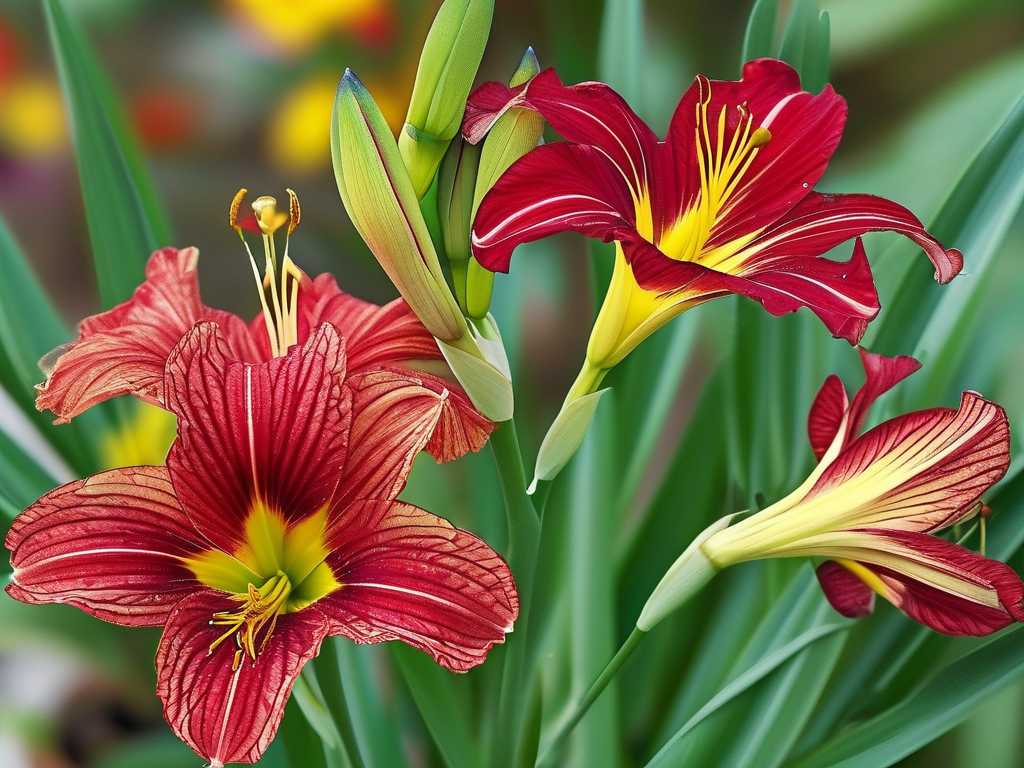
- Eyezone: A darker, distinct band on the petals, usually about a third of the way from the throat.
- Halo: A softer, diffused band of color in the same region as an eyezone.
- Watermark: A lighter, translucent area inside an eyezone or halo.
- Edge or Picotee: The margin of the petal may be a different color, either lighter (gold edge) or darker (a contrasting picotee).
I spent two weeks tracking a mystery daylily that had a rich pink bloom with a dramatic purple eyezone and a fine gold edge. Using the AHS online gallery, I filtered for these traits and narrowed it down to a handful of candidates, finally landing on 'Primal Scream'. Without noting all three color features, I would have been lost.
Finally, measure bloom size. The AHS categorizes blooms as:
- Miniature: Diameter less than 3 inches
- Small: 3 to 4.5 inches
- Large: Over 4.5 inches
Carrying a small ruler in my garden kit was a game-changer. My assumed "large" red daylily was exactly 4.5 inches, placing it in the small category and redirecting my search.
Decode the Plant's Architecture and Foliage
When the plant isn't in bloom, its structure provides critical identification data. This was the biggest lesson from my two-week deep dive: don't ignore the greenery.
Scape height and branching are crucial. The scape is the leafless stalk that bears the flowers. Heights can range from a compact 12 inches to towering 60-inch giants. Note if the scape is branched (holding multiple clusters of buds) or unbranched. A tall, heavily branched scape indicates a robust, potentially later-blooming tetraploid variety. I once ordered what I thought was a low-border daylily, only to find its 36-inch scapes towering over my front path. Now, I always verify this spec.
Foliage type is a stable, season-long identifier. Most daylilies are deciduous, dying back completely in winter. Evergreen types retain their leaves in milder climates, and semi-evergreen is an intermediate habit. In colder zones like mine, evergreen types can suffer winter damage if not mulched, which I learned the hard way. Furthermore, leaf growth habit can be clumping (growing in a tight vase-shaped mound) or spreading (runners sent out to form colonies). This tells you about the plant's behavior in your border.
Leverage Dormancy, Bloom Time, and Scent
These "hidden" traits can be the final piece of the identification puzzle.
Understanding dormancy type (deciduous, evergreen, semi-evergreen) isn't just for hardiness; it's a key identifier. Evergreen varieties in warm climates will have a different growth rhythm than deciduous ones in the north.
Bloom season is formally categorized: Early (E), Midseason (M), Late (L), and Rebloomer (Re). A plant that blooms once in July is Midseason. A plant that blooms in June and again in September is an Early Rebloomer. Tracking my plants over 14 days, I confirmed that my 'Stella de Oro' was a true "everbloomer" (a term for frequent rebloom), while 'Happy Returns' had distinct early and late flushes.
Never underestimate the power of scent. While many modern hybrids have sacrificed fragrance for form, numerous varieties, especially some older diploids and spider forms, have a delightful, sweet fragrance. A quick, gentle sniff can differentiate a fragrant 'Hyperion' from a non-fragrant look-alike.
Practical Steps for Identifying an Unknown Daylily
Here is the exact process I followed during my focused identification project.
- Create a Detailed Profile: Grab a notebook and camera. Document the flower's form, exact colors/patterns, and diameter. Photograph the bloom from front, side, and the throat. Capture the entire plant to show scape height and foliage.
- Note the Growing Conditions: Is the plant in full sun or partial shade? What's the soil like? This won't identify it, but it explains vigor and bloom size. One of my mystery plants was underperforming; moving it to full sun (as most daylilies prefer) brought out its true, identifiable colors.
- Consult Authoritative Resources: Use the databases provided by the American Hemerocallis Society (AHS) or the Royal Horticultural Society (RHS). Their plant finders allow you to filter by the exact traits you've recorded. This is far more reliable than a generic image search.
- Compare and Cross-Reference: Match your photos and notes against multiple source images. Read the official cultivar descriptions on hybridizer websites. Pay attention to details like "diploid" (22 chromosomes) vs. "tetraploid" (44 chromosomes)—tetraploids often have sturdier scapes and richer colors, which is a useful clue.
- Engage with the Community: Post your clear photos and trait description on gardening forums like those on GardenWeb or the AHS-affiliated groups. Experienced hybridizers and collectors can often pinpoint a cultivar in moments.
My Two-Week Identification Journey: Pitfalls and Solutions
I dedicated two weeks to identifying five unnamed daylilies in my inherited garden bed. The biggest pitfall was relying on memory. On day one, I thought I had all the details, but by day three, I confused traits between two red varieties. The solution was simple but strict: I created a dedicated log sheet for each plant and made daily notes at the same time each morning.
Another challenge was "bloom fade." A vibrant pink bloom in the cool morning could wash out to a pale lavender by afternoon under the hot sun. This made color identification tricky. My fix was to note the color at three times: dawn, midday, and late afternoon. The most stable color, typically seen in the morning, is the one used in official registrations.
Finally, I underestimated the importance of bud count and branching. One plant with a modest single scape initially seemed unimpressive. However, over the observation period, I noted it was a "reblooming daylily," sending up a new scape every few weeks, a trait far more valuable than a single massive bloom show. This taught me to evaluate the plant's performance over time, not just at a single snapshot.
Frequently Asked Questions
What is the single most important feature for identifying a daylily? While all traits matter, the flower form and color pattern combination—like a double yellow with a maroon eyezone—is often the most unique fingerprint. Start your search there.
I have a daylily that doesn't match any official description perfectly. Why? Environmental factors like soil pH, sunlight, and climate can influence bloom color, scape height, and even plant vigor. A daylily grown in poor, dry soil may be smaller and paler than its catalog description. Focus on the structural traits (form, foliage type, branching) which are more stable.
Are there reliable apps to identify daylilies by photo? General plant ID apps are often unreliable for specific daylily cultivars due to the vast number of look-alikes. The most effective tool is your own observation paired with the advanced search filters on the American Hemerocallis Society website, which is considered the authoritative registry.
Identifying daylilies is a rewarding skill that deepens your connection to your garden. It transforms a sea of similar blooms into a collection of distinct individuals, each with a name and a story. By moving beyond simple color and systematically examining flower form, plant architecture, and growth habits, you can confidently navigate the wonderful world of Hemerocallis. The process requires a bit of patience and careful note-taking, but the moment you successfully match a mystery plant to its true name is a genuine thrill for any plant lover. My two-week project not only named my forgotten daylilies but also made me a much more observant and appreciative gardener.