bluename
 How to Identify Different Hemerocallis Varieties: A Gardener’s Practical Guide
I’ve been growing daylilies, or Hemerocallis, for years, and I still remember the initial confusion. I’d stare at catalogs and garden center tags, overwhelmed by terms like “tet,” “dip,” “eyezone,” and “rebloomer.” How could I possibly tell them apart? If you’ve ever found yourself squinting at two seemingly similar orange blooms, wondering what truly distinguishes one Hemerocallis variety from another, you’re not alone. This precise challenge – accurately identifying different Hemerocalis varieties – is a common hurdle for enthusiasts moving beyond casual appreciation. Over the next few weeks, I’ll walk you through the exact, hands-on system I developed, sharing my missteps and triumphs, to turn that confusion into confident identification.
My journey to clarity started with a simple commitment: I would observe and document the key characteristics of just five different plants in my garden over a concentrated two-week period during peak bloom. This wasn’t a passive glance; it was an active investigation. I armed myself with a notebook, a camera, and the official classification guidelines from the American Hemerocallis Society (AHS). The AHS standards are the horticultural bedrock for daylily identification, providing the precise definitions that hybridizers and judges use worldwide.
The Foundation: Understanding Official Classification Traits
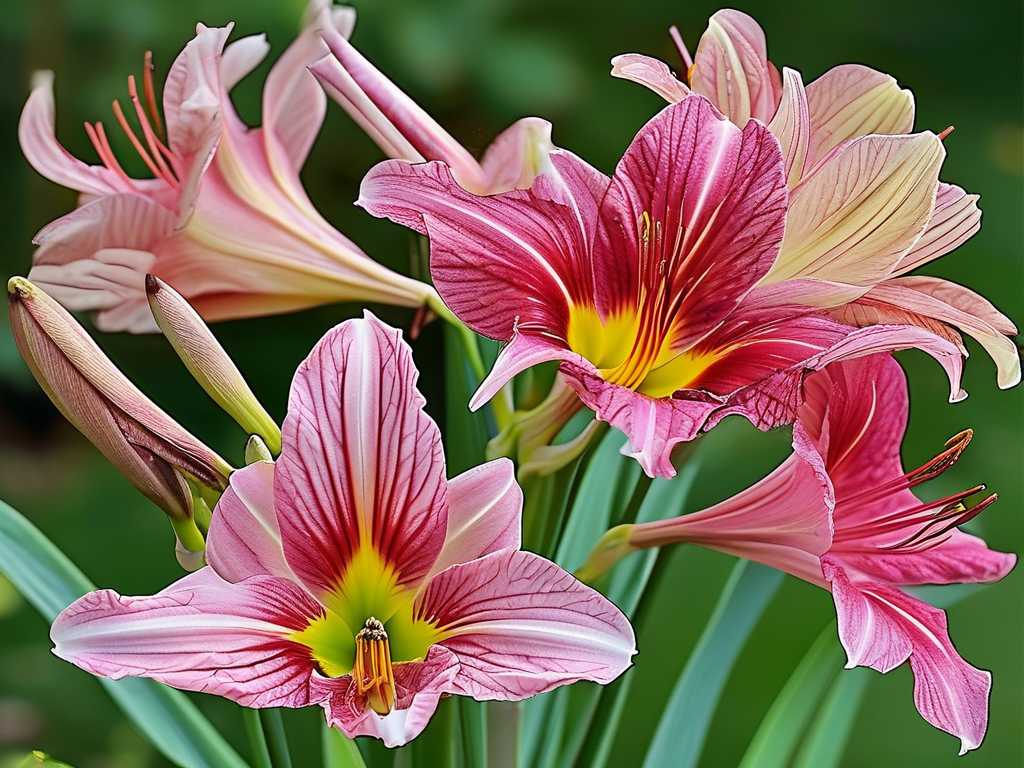
Before you can identify, you need to know what to look for. The AHS categorizes daylilies using a set of specific, observable traits. These aren’t just opinions; they are measurable standards. I learned to focus on four primary pillars: flower form, plant scape height, bloom time, and diploid versus tetraploid genetics. Relying on vague color descriptions like “pretty pink” was my first mistake. The professional system doesn’t work on vagueness.
For example, the AHS defines flower forms with clear distinctions: Single, Double, Spider, Unusual Form, and Polymerous. A “Single” flower has three petals and three sepals (collectively called tepals). A “Double” has extra layers of petals. I had a plant I always called “the fluffy one.” When I applied the AHS definition, I confirmed it was a true Double, as it exhibited multiple whorls of petals. This shift from casual description to formal classification was my first major “aha!” moment.
The Two-Week Observation Framework: From Theory to Practice
I selected five unnamed daylilies from a mixed bargain bed. For 14 days, I examined them each morning and evening, tracking the following checklist derived from AHS guidelines.
Step 1: Documenting the Flower Architecture This is the most telling step. I looked beyond color.
- Form: I compared each bloom to the AHS definitions. One had elongated, twisting tepals with pinched ends. My notes said “weird, spidery.” The AHS guide called this “Unusual Form.” Another had perfectly overlapping, rounded tepals – a classic “Circular” form.
- Size: I used a ruler. Blooms under 3 inches in diameter are “Miniature,” 3 to 4.5 inches are “Small,” and so on. One of my plants consistently produced blooms at 4.75 inches, placing it firmly in the “Large” flower size category.
- Eyezone and Band: This is a critical identifier. An eyezone is a darker, distinct ring about halfway up the petal. A band is a smoother, diffused area of color. One plant had a dramatic, deep purple eyezone that made the yellow throat pop. Another had a soft, golden band. I photographed these in even morning light to capture the true contrast.
Step 2: Assessing the Plant’s Structure and Habit The flower isn’t everything. The plant itself tells a story.
- Scape Height: This is the leafless stalk that holds the flowers. I measured from the ground to the point where the first branch or flower appeared. Heights ranged from a petite 14 inches (a “Low” scape) to a towering 36 inches (“Very Tall”). This alone helped separate two similarly colored varieties dramatically.
- Foliage and Clump Behavior: Is the foliage deciduous, evergreen, or semi-evergreen? Does the clump grow in a tight, upright fan or a more sprawling manner? I noted that one plant’s foliage died back completely in early fall (deciduous), while another retained green tips under the mulch (semi-evergreen).
Step 3: Noting Performance and Timing
- Bloom Season: The AHS divides the season into Early, Mid, Late, and Very Late. I marked my calendar. “Plant A” opened its first bloom on June 5th, which in my zone aligned with “Early Midseason.”
- Dormancy and Rebloom: This was a two-week snapshot, but I noted promises. One variety had multiple scapes with buds of different sizes, a strong indicator of “rebloom.” Another finished its one flush and showed no further bud development, marking it as a “dormant” type.
The Pitfalls I Encountered (And How I Solved Them)
It wasn’t all smooth sailing. About a week in, I hit a wall.
Pitfall 1: The “Color Deception” of Lighting. I labeled one flower “light lavender-pink.” Under a cloudy sky the next day, it looked completely gray-blue. I felt defeated. My solution was to use a neutral white index card as a background for all photos and to note the time and weather for each observation. The AHS acknowledges color can vary, so they emphasize pattern (like that eyezone) over absolute hue.
Pitfall 2: Ignoring the Buds and Spent Blooms. I was obsessed with perfect, open flowers. But examining the buds revealed shape clues, and spent blooms (called “spent perianths”) sometimes held their form, confirming my “Unusual Form” identification long after the fresh bloom withered.
Pitfall 3: Overlooking Ploidy. This is an internal trait, not always visible. Diploid (2 sets of chromosomes) and Tetraploid (4 sets) plants can have subtle differences in substance and color richness. I couldn’t lab-test, but I referenced known parentage from hybridizer websites. If a famous tetraploid like ‘Spacecoast Starburst’ was a parent, the seedling was likely tetraploid. The Royal Horticultural Society (RHS) notes that tetraploids often exhibit greater vigor and more intense colors, which matched my observations of the sturdiest, most vibrant plants in my trial.
The Results After 14 Days
By the end of my two-week deep dive, I had transformed five anonymous plants into distinct individuals. I could confidently describe them using AHS terminology:
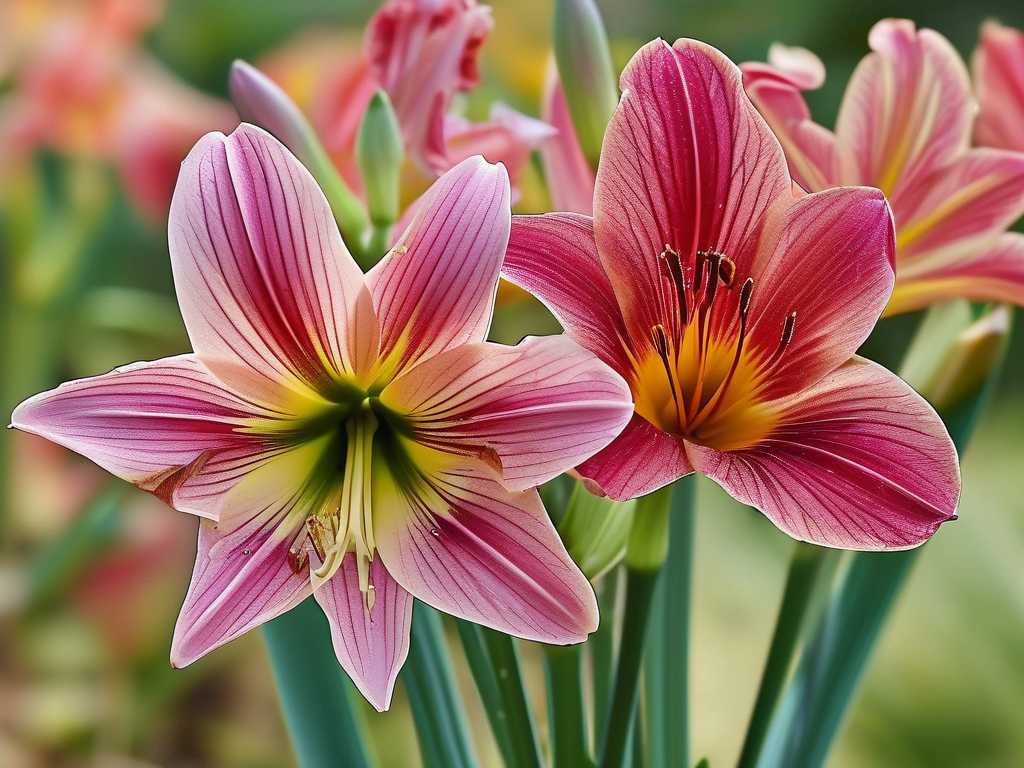
- A Midseason, Large-flowered, Double with a golden band, on a Tall scape.
- An Early Midseason, Small, Spider with a maroon eyezone, on a Low scape.
- A Reblooming, Tetraploid, Unusual Form with semi-evergreen foliage.
This framework gave me the language to search databases, talk to hybridizers, and finally understand catalog descriptions. I was no longer just looking; I was seeing.
How long does it take for a daylily to show its true characteristics? A single bloom isn’t enough. You need to observe multiple blooms on multiple scapes over at least one full bloom cycle. Some traits, like rebloom habit or exact dormancy, require a full season of observation. My two-week intensive was perfect for locking down flower form, size, and scape height during peak display.
Can I identify a daylily by photo alone? A clear, well-lit photo of the flower’s face, profile, and the full scape can get you very close, especially with the eyezone and form. However, critical identifiers like scent, exact scape height, and clump behavior are impossible to capture fully in an image. Use photos as a key tool, but remember their limits.
What’s the single most important identifier for beginner? Start with the flower form and eyezone/band pattern. These are visual, immediate, and rarely change. Is the flower round, spidery, or double? Does it have a distinct ring or a wash of color? Nailing these two factors will instantly narrow down the possibilities and set you on a much more accurate path than starting with a subjective color description.
The world of Hemerocallis is incredibly rich, and the joy of finally knowing your plants by more than just a color is immense. It transforms gardening from a passive hobby into an engaging detective story. By applying these structured observations—focusing on the official AHS classification traits, meticulously documenting over time, and learning from the lighting and timing pitfalls—you build not just identification skills, but a deeper appreciation for the artistry of hybridization. The labels in catalogs will start to make real sense, and each new daylily in your garden will introduce itself with a clear, distinct voice.