bluename
 How to Quickly Recognize Common Viola Tricolor Varieties?
Have you ever found yourself admiring a patch of cheerful, small-faced flowers, only to wonder, “Is that a viola, a pansy, or something else entirely?” I’ve been there. For years, the world of Viola tricolor and its countless cultivated cousins felt like a beautiful, confusing maze. As a passionate home gardener, I wanted to confidently identify the common varieties gracing my containers and borders. So, I embarked on a focused, two-week mission to crack their visual code. This guide is the result of my hands-on observation, a few missteps, and the simple system I now use to quickly tell them apart.
My goal was to move beyond vague guesses and learn to recognize key varieties based on consistent, observable traits. I focused on the plants commonly sold as Johnny-jump-ups, wild pansies, and their popular garden hybrids. The Royal Horticultural Society (RHS) emphasizes that while the species Viola tricolor is specific, the term “viola” broadly encompasses these related plants, making clear identification a common pain point for enthusiasts.
The Foundation: Understanding the Key Markers
Before diving into varieties, I had to learn what to look at. It’s not just about color. Through daily checks in my garden and local nursery, I pinpointed four reliable identifiers.
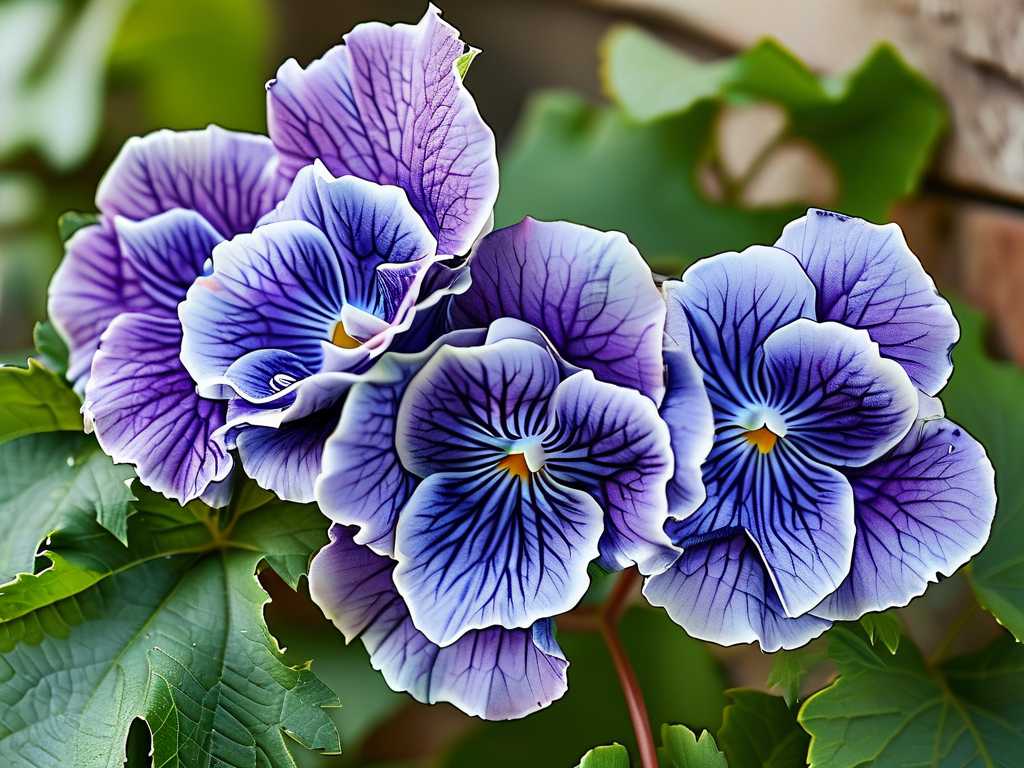
First, flower size and structure. This is your fastest clue. True species Viola tricolor and its direct descendants have smaller flowers, typically 0.5 to 1 inch across. The modern garden pansy (Viola x wittrockiana), however, boasts those large, rounded blooms we all know, often 2 to 4 inches wide. I also learned to check the “spur”—the nectar-filled pouch at the back of the flower. In violas, it’s usually shorter and stubbier.
Second, face patterns and whiskering. This is where the charm lies. The classic “face” is created by dark lines radiating from the flower’s center, often called “whiskers” or “penciling.” Their density and color intensity vary dramatically by variety. Some have bold, almost black lines, while others have delicate, faint hints.
Third, plant form and growth habit. Does the plant form a tidy mound or trail loosely? I observed that many heirloom violas have a more spreading, self-seeding habit (“johnny-jump-up” for a reason!), while modern hybrid violas are often bred for compact, mounded growth perfect for containers.
Fourth, color block distribution. Beyond lines, look for solid blocks of color on the petals. The arrangement of dark blotches on the lower petals—are they one, two, or three?—is a major distinguishing feature.
A Two-Week Observational Journey: Three Core Varieties Decoded
I selected three readily available types to study side-by-side over fourteen days. I planted them in similar conditions, took daily notes, and photographed their development. Here’s what I learned, including the pitfalls I encountered.
Identifying the Classic “Johnny-Jump-Up” (Viola tricolor subspecies)
My Starting Point: I began with seeds labeled “Heirloom Johnny-Jump-Up.” The initial seedlings looked unremarkable. My first mistake was expecting dramatic features too early. Patience was key.
Recognition Cues:
- Flowers: Small, about 3/4 inch in diameter. The petals are slightly elongated compared to round pansies.
- Pattern: The classic “face” is strong. It usually displays a beautiful tricolor pattern of purple (or deep blue), yellow, and white. The dark lines are prominent, and the lower petals often have a bright yellow center bleeding into the white edges.
- Habit: The plant has a loose, spreading form. True to its name, I found seedlings “jumping up” in nearby pots by the end of the second week!
- My “Aha!” Moment: Around day 10, the distinctive, small, tri-colored blooms with their wild, charmingly imperfect appearance made identification instant. The American Horticultural Society (AHS) notes this subspecies is often the closest to the true wildform, valued for its self-sowing resilience.
Spotting Modern Large-Bloom Garden Pansies (Viola x wittrockiana)
My Starting Point: I bought cell packs of common garden pansies from a big-box store. They were already in bloom, which helped, but I needed to look beyond the obvious size.
Recognition Cues:
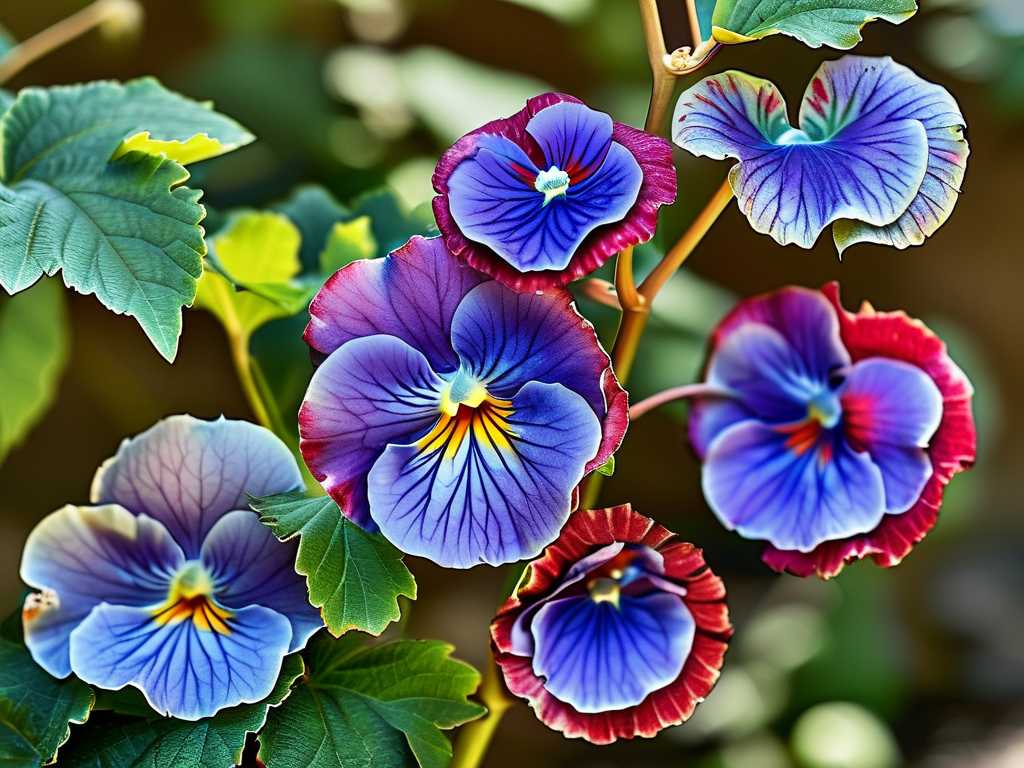
- Flowers: Large, rounded, and flat-faced, often exceeding 2 inches. They feel substantial.
- Pattern: Here, the patterns can be incredibly diverse. Look for large, velvety dark blotches on the lower petals—sometimes one central blotch, sometimes two that look like overlapping eyes. The whiskering is often less line-like and more of a smudged, radiating haze of dark color from the throat.
- Habit: They form neat, mound-shaped clumps with flowers held proudly above the foliage on sturdy stems.
- The Pitfall & Solution: I initially confused some “clear” or “blotchless” pansies with violas. The fix? I ignored color and focused on structure. The flower was still large and round with that classic pansy shape, and the plant habit was a tight mound. Flower architecture never lied, even when the color pattern was atypical.
Distinguishing Compact Hybrid Violas (Viola cornuta hybrids)
My Starting Point: This was the trickiest group. These are often labeled simply as “violas” and bridge the gap between johnny-jump-ups and large pansies.
Recognition Cues:
- Flowers: Prolific and smaller than pansies, but often slightly larger than true Johnny-jump-ups, ranging from 1 to 1.5 inches. They have a charming, slightly forward-facing posture.
- Pattern: They frequently exhibit a “mascara” or “eyeliner” effect—very fine, dark penciling around the edges of the petals, not just radiating from the center. The color blocks are clean and vibrant.
- Habit: Exceptionally compact, trailing, and floriferous plants. They are covered in a cloud of tiny faces.
- My Key Discovery: Over two weeks, their non-stop blooming performance was the giveaway. While a pansy might produce a few large blooms, these violas were constantly covered in dozens. As the RHS advises, considering “performance and form” alongside visual traits leads to accurate ID.
Essential Tools for Confident Identification
My two-week project taught me that quick recognition is a skill built on a few good practices.
- Carry a Hand Lens: A 10x loupe changed everything. It let me see the fine details of whiskering—whether they were hairy lines or smooth color gradients—which is crucial for telling some hybrids apart.
- Observe Over Time, Not Just Once: A single flower can be misleading. Watch how the plant grows, how it holds its flowers, and how the colors behave in sun vs. shade. My daily 5-minute check-ins built a reliable mental database.
- Read the Plant Tag, But Verify: Tags like “Majestic Giant II” or “Sorbet XP” indicate specific series. I used these as starting clues, then confirmed the traits matched the described growth habit and bloom style.
What is the absolute fastest way to tell a pansy from a viola? Look at the flower size and count. If you see a few very large (2-4 inch), perfectly rounded flowers, it’s almost certainly a modern garden pansy (Viola x wittrockiana). If you see a plant smothered in dozens of smaller (1-1.5 inch) flowers, you’re likely looking at a hybrid viola.
Can the same variety look different in my garden? Absolutely. Sun exposure, temperature, and soil pH can influence color intensity. I noticed blooms were paler in full, hot sun. The structural traits—flower shape, plant form, and pattern type—remained constant, however. Trust the architecture over the exact shade.
Why does it even matter to identify them correctly? Knowing what you have guides your care. True Johnny-jump-ups will happily self-seed for next year. Modern hybrid violas often need deadheading to keep blooming prolifically, while some large pansies are treated as cool-season annuals and fade in summer heat. Correct identification lets you match the plant’s behavior to your garden goals.
The journey from confusion to clarity with these delightful flowers is immensely rewarding. By focusing on the consistent markers of flower size, facial patterning, and plant architecture—and giving yourself time to observe—you can quickly learn to recognize the common Viola tricolor varieties in your garden. It turns a sea of small faces into a community of familiar friends, each with its own name and story. My two-week deep dive not only solved an identification puzzle but also deepened my appreciation for the incredible diversity within this single, beloved plant group.