bluename
 How to Identify Classic Delphinium Varieties: A Gardener's Practical Guide
I remember standing in the garden center, utterly bewildered by a sea of delphinium seedlings. They all looked vaguely similar—tall, promising spires of green. I wanted the classic, majestic spires I’d seen in cottage garden magazines, but the labels were generic. Which ones were the true classics? How could I tell them apart before they flowered? That moment of confusion sparked a two-week deep dive into identifying these regal plants. I turned my own garden into a living laboratory, and what I learned saved me from costly mistakes and unlocked the secret to choosing the perfect classic delphinium.
My goal was simple: learn to pinpoint the key characteristics that define classic delphinium varieties, from seedling to full bloom. I focused on three core identifiers: flower structure and form, plant height and habit, and foliage characteristics. Over a focused fortnight, I observed, compared, and even misidentified a few plants, ultimately creating a foolproof system.
The Foundation: Understanding Delphinium Groups
Before you can identify a specific variety, you need to know which group it belongs to. The Royal Horticultural Society (RHS), a global authority in horticulture, classifies the classic garden delphiniums we love into a few key groups. This was my first "aha!" moment.
The most common are the Elatum Group hybrids. These are the quintessential tall, stately delphiniums with dense, packed flower spikes. Think of the iconic 'Pacific Giant' series—they are Elatums. Then you have the Belladonna Group, which are more graceful and branched, with looser flower arrangements. Varieties like ‘Blue Bees’ fall here. Understanding this basic split immediately helps you set expectations for the plant's overall shape and stature.
Key Identifier 1: Decoding Flower Structure and Form
This is the most telling sign. I spent days photographing and sketching different flower spikes.
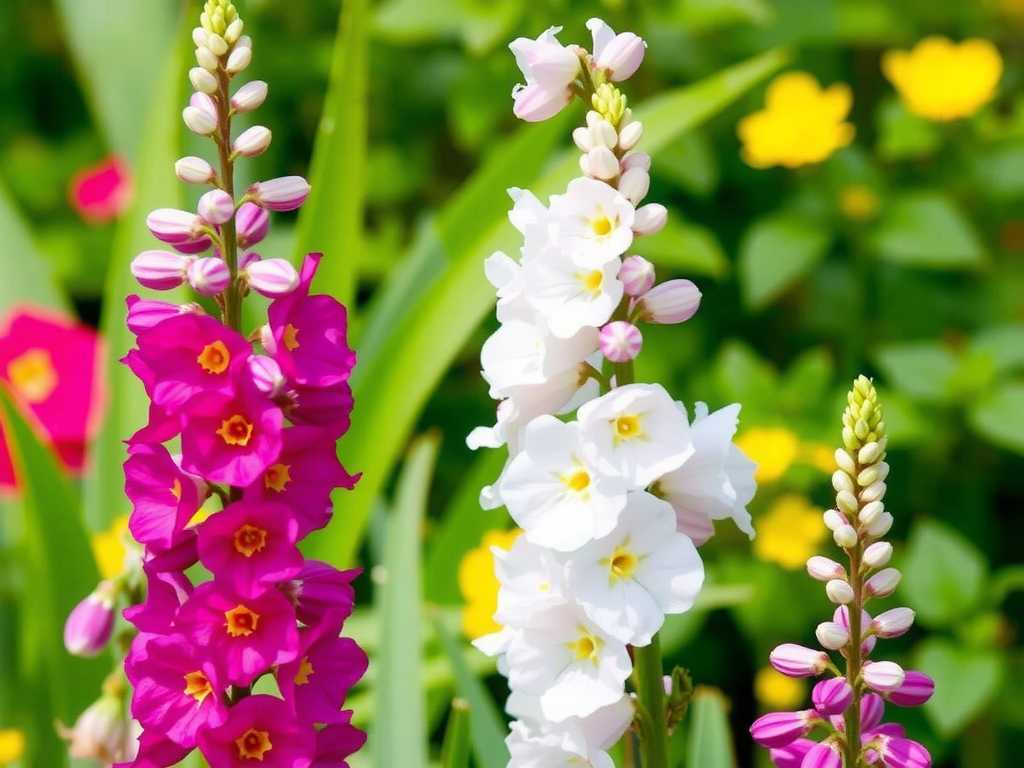
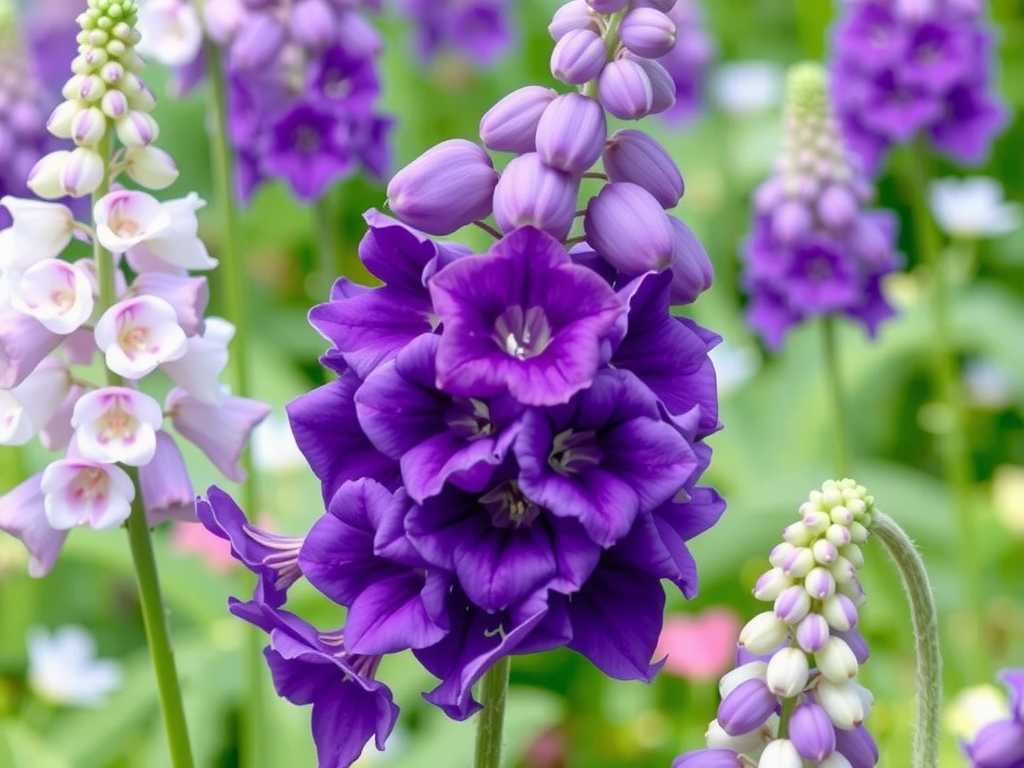
A classic Elatum-type delphinium has a single, towering central spike (the terminal raceme) that is densely packed with flowers. The individual flowers are often "double" or "semi-double," meaning they have extra petals (technically sepals) in the center, called a "bee." This bee can be a contrasting color—white, brown, or black. The spike is solid and substantial, like a floral spear. The American Hemerocallis Society (AHS), while focused on daylilies, emphasizes in its broader gardening resources that flower form consistency is a key marker of a true perennial cultivar.
In contrast, a Belladonna-type classic has a more airy, branching habit. It sends up multiple flowering stems that are looser and more open. The flowers are typically single, with a more visible central bee, and the overall effect is lighter, almost like a giant floral fountain. I initially confused a young Belladonna with a poorly grown Elatum, but the branching pattern at the base gave it away.
Key Identifier 2: Assessing Plant Height and Habit
You can often make a good guess even before flowers appear. I staked and measured my plants weekly.
True classic tall delphinium varieties, primarily from the Elatum group, are robust from the start. As seedlings mature, their growth is strongly upright with a singular, dominant main stem. They quickly aim for heights of 5 to 7 feet (1.5 to 2.1 meters). Their habit is clump-forming but distinctly vertical. The stems are thick and need staking early.
Classic Belladonnas and shorter Elatum strains exhibit a different delphinium growth habit. They are generally more bushy at the base, with multiple stems emerging. Their mature height usually ranges from 3 to 4 feet (0.9 to 1.2 meters). I learned this the hard way when I planted a Belladonna ‘Blue Bees’ at the back of a border, expecting it to be a giant. It was beautiful, but it got lost behind shorter plants—a placement mistake I corrected the following season.
Key Identifier 3: Examining Foliage and Stem Details
When flowers aren't present, the leaves tell a story. This became my favorite identification trick.
Classic delphinium foliage is deeply lobed, almost star-shaped, with a palmate structure (like a hand). However, texture and density vary. Elatum Group leaves tend to be darker green, slightly thicker, and more deeply cut. The stems are stout, hollow, and often have a subtle bluish or purplish tinge, especially at the nodes (where leaves join the stem).
Belladonna Group foliage is often a lighter, brighter green and may feel slightly softer. The stems are somewhat slender and more likely to be solid green. I found that gently rubbing a leaf (with care!) can reveal a slight fuzziness on some classic varieties, a detail rarely mentioned on tags.
My Two-Week Observation Diary: Pitfalls and Solutions
My identification project wasn't all smooth sailing. Here are the pitfalls I hit and how I solved them.
Week 1 Pitfall: The "Label Reliance" Error. I bought two plants simply labeled "Blue Delphinium." Assuming they were the same, I gave them identical care. By day 10, one was clearly forming a single, thick spike, while the other was bushier. I had an Elatum and a Belladonna! Solution: I immediately researched their suspected groups and adjusted my care. The Elatum got a heavier, taller stake. The Belladonna was moved slightly to accommodate its spreading form.
Week 2 Pitfall: Overwatering Seedlings. In my zeal, I overwatered a tray of mixed delphinium seedlings, causing a slight damping-off issue. This made early identification via leaf structure harder, as growth was stunted. Solution: I let the soil dry out, applied a gentle fungicide, and focused on the survivors. The lesson was that healthy plants are easier to identify. The RHS advice on "well-drained soil" is non-negotiable.
By the end of the two weeks, the differences were crystal clear. The Elatums stood like proud sentinels with their thick spikes, while the Belladonnas danced with branched grace. I could confidently point to each plant and name its group and likely series.
Frequently Asked Questions
Can I identify a delphinium variety by its seed packet picture alone? Not reliably. Packet photos are often idealized. Focus on the descriptive text. Look for key terms like "Elatum hybrid," "tall spike," "double flower," or "Belladonna type," and note the stated mature height. These are more accurate identifiers than the photo.
My delphinium doesn't look like the classic forms I see online. What's wrong? Poor growing conditions—like insufficient light, overcrowding, or poor soil nutrition—can cause stunted growth and weak flower spikes, masking its true classic form. Ensure full sun, rich soil, adequate spacing, and proper spring feeding. A healthy plant will express its true characteristics.
Are there other classic types beyond Elatum and Belladonna? Yes, but they are less common in general gardens. The Grandiflorum or Chinese Delphinium (Delphinium grandiflorum) is a shorter, long-blooming species with loose clusters of single flowers. It's a classic in its own right but has a very different, more informal habit compared to the towering hybrid spires.
Identifying classic delphinium varieties is a rewarding skill that transforms your gardening. It moves you from guessing to knowing, ensuring you get the exact architectural effect or color palette you desire in your border. By combining a knowledge of groups with a close eye on flower form, plant architecture, and even leaf detail, you can become an expert selector. Start with the Elatum and Belladonna groups, use the RHS classifications as your guide, and don't be afraid to get up close and personal with your plants. The clues are all there, waiting to be discovered.