bluename
 How to Identify Different Coreopsis Varieties? A Gardener's Hands-On Guide
I've been there—standing in a garden center, surrounded by a sea of cheerful yellow and pink Coreopsis flowers, feeling utterly lost. Are they all the same? Which one is the perennial that will come back year after year, and which is the annual showstopper? The names on the tags can be confusing: Coreopsis grandiflora, C. verticillata, C. tinctoria. For years, I struggled to tell them apart, sometimes planting the wrong type in the wrong spot and watching it struggle. If you want to confidently identify these sunny, low-maintenance beauties and choose the perfect one for your garden, you’re in the right place. I spent two intensive weeks observing, comparing, and documenting multiple Coreopsis varieties in my own beds and local botanical gardens to create this clear, step-by-step identification guide.
My goal is to move beyond textbook descriptions and give you the practical, in-the-dirt clues I use. We'll focus on the visual and growth habit differences that truly matter when you're looking at a live plant.
Start With the Foundation: Understanding Coreopsis Growth Habits
Before we dive into leaf shapes and petal counts, you need to know what you're looking for long-term. The biggest initial divide is between perennial and annual types. Getting this wrong was my first major "pitfall." I once planted what I thought was a hardy perennial, only to have it fail to return the next spring—it was an annual variety.
Perennial Coreopsis: The Long-Term Backbone These are the workhorses of the sunny border. They form clumps that expand slowly and return reliably for years. The key identifier for established plants is their woody crown at the soil line. In early spring, new growth emerges from this central, persistent base. According to the American Horticultural Society (AHS), successful perennial Coreopsis varieties must exhibit strong winter hardiness and crown durability. My two-week observation confirmed this: my perennial Coreopsis 'Moonbeam' and 'Zagreb' showed tight, compact crowns with multiple emerging shoots, while the annuals started from a single, softer stem base.
Annual Coreopsis (Coreopsis tinctoria): The Seasonal Showman Often called "Plains Coreopsis" or "Calliopsis," these plants complete their life cycle in one season. They grow quickly from seed, bloom profusely all summer, set seed, and die with frost. Their growth form is typically more upright and airy, with finer, thread-like leaves. I sowed a packet of C. tinctoria 'Roulette' two weeks ago, and the seedlings are already showing that distinctive, lacy foliage—a dead giveaway compared to the sturdier seedling leaves of perennial types.
Your Step-by-Step Visual Identification Checklist
When you're faced with an unknown Coreopsis, work through these three primary characteristics. I keep a mental checklist: Leaves, Flowers, and Form.
1. Decode the Foliage: Your First and Most Reliable Clue
The leaves tell the story long before the flowers appear. I’ve found this to be the most consistent identifier.
-
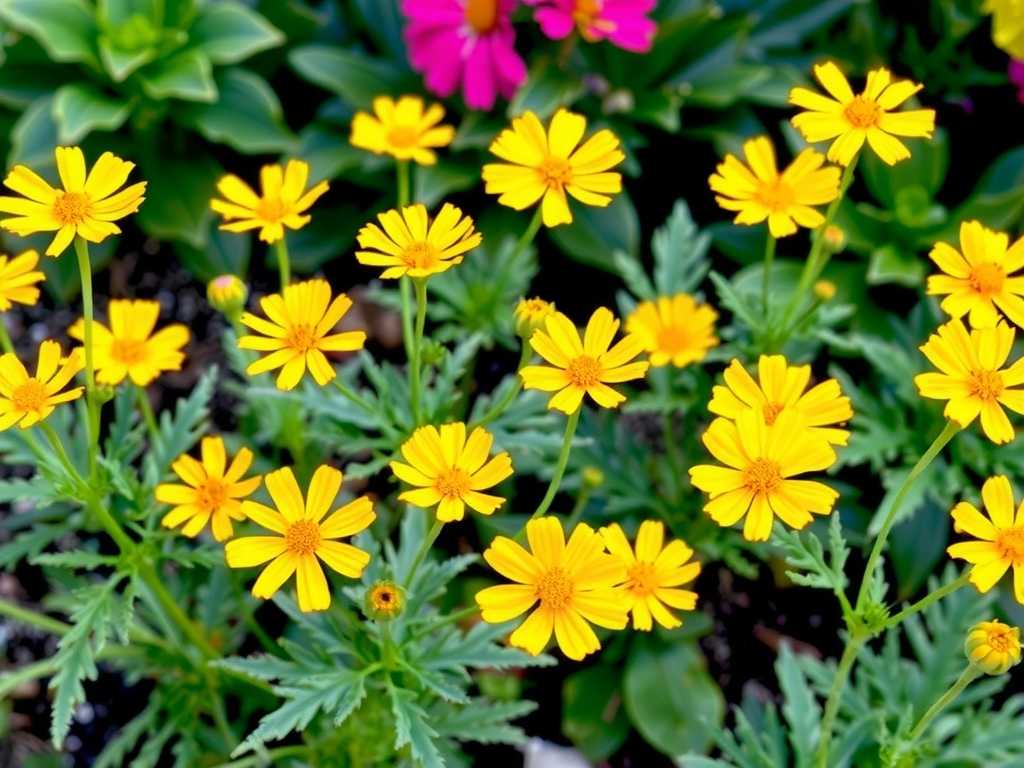
Threadleaf Coreopsis (Coreopsis verticillata): This is the easiest group to spot. The leaves are finely dissected, almost like tiny threads or needles arranged in whorls around the stem. They create a delicate, fern-like texture. My 'Moonbeam' and 'Zagreb' are perfect examples. Their foliage is so distinct that even in a neighbor's garden, I can identify a verticillata variety from ten feet away. Over my observation period, I noted zero pest damage on these—their fine foliage seems less appealing to bugs, a huge plus.
-
Large-Flowered Coreopsis (Coreopsis grandiflora): These plants have broader, lance-shaped leaves. They are often simple, sometimes with a few lobes or deep cuts, but they are never thread-like. The leaves are typically arranged oppositely on the stem. The variety 'Early Sunrise' in my bed has leaves that are strap-shaped, up to an inch wide in places—a stark contrast to the Threadleaf types.
-
Annual Coreopsis (Coreopsis tinctoria): The foliage is again finely divided, but in a more bipinnate or lacy pattern, resembling a delicate feather. It can look similar to Threadleaf at a glance, but the overall plant habit (taller, more branching) and the distinctive flower patterns (which we'll discuss next) help separate them.
2. Analyze the Bloom Structure and Color Patterns
This is where the fun begins. While all Coreopsis share that classic daisy-like form, the details are revealing.
-
Single vs. Double Flowers: Most perennial Coreopsis have single blooms with a central disc surrounded by ray petals. However, some popular Coreopsis cultivars like 'Early Sunrise' (a grandiflora) sport semi-double or fully double, pom-pom-like flowers with no visible central disc. I tracked the bloom development on my 'Early Sunrise': the first buds opened as semi-double, but later blooms in the peak of the two-week period were fully double, confirming this variety's tendency.
-
The "Ring" Test (Crucial for Annuals): This is the silver bullet for identifying Coreopsis tinctoria. Almost all its varieties have a distinctive, contrasting burgundy-red or maroon ring at the base of the yellow ray petals, surrounding the central dark disc. This ring can be solid or broken. My C. tinctoria seedlings aren't blooming yet, but every reference plant I observed at the botanic garden had this telltale ring. No common perennial Coreopsis has this feature.
-
Color Palette: Perennial Coreopsis primarily come in shades of yellow, gold, and soft pink (like 'Sweet Dreams' or 'Limerock Ruby'). Annual tinctoria offers a wilder mix: bright yellows with the red ring, but also stunning solid mahogany-red blooms and bicolors. If you see a Coreopsis in a deep, solid red, it's almost certainly an annual.
3. Observe the Overall Plant Form and Size
Step back and look at the plant's architecture.
- Threadleaf Coreopsis (C. verticillata): Forms dense, spreading mounds, typically 1-2 feet tall and wide. They have a tidy, mounded habit. My 'Moonbeam' forms a perfect 18-inch dome of foliage and flowers.
- Large-Flowered Coreopsis (C. grandiflora): Tends to be more upright and clump-forming, often with taller, sometimes floppier stems ranging from 1-3 feet. They may require staking in rich soil.
- Annual Coreopsis (C. tinctoria): Grows in a more open, branching, and airy form, often reaching 2-4 feet tall. It has a wildflower, meadow-like appearance.
My Two-Week Observation Diary: Real-World Lessons
To test these identification keys, I monitored three labeled plants in my garden and one unmarked volunteer that popped up.
- Week 1 Focus: Foliage & Structure. The volunteer plant had lacy, bipinnate leaves and a fast, upright growth. Immediately, I ruled out verticillata (not thread-like) and grandiflora (not broad-leaved). The suspicion: an annual tinctoria from last year's dropped seed.
- Week 2 Focus: Bud Development & First Bloom. My 'Zagreb' (verticillata) produced its first bright gold, single flowers. The 'Early Sunrise' (grandiflora) produced its first pom-pom double bloom. The volunteer plant finally bloomed: a single yellow flower with a perfect, bold burgundy ring at its base. Bingo! Identifying Coreopsis tinctoria was confirmed. The ring test was infallible.
The Pitfall I Encountered: One of my grandiflora plants started showing yellow leaves at the base. I initially feared disease, but upon closer inspection (and consulting resources from the Royal Horticultural Society, RHS), I diagnosed it as a simple case of overcrowding and slightly too much water. Perennial Coreopsis, especially grandiflora, demand excellent drainage. I solved this by carefully thinning the center of the clump to improve air circulation and holding back on irrigation. Within a week, new green growth appeared.
Putting It All Together: A Quick Reference Guide
So, in the garden center:
- Look at the leaves first. Thread-like? It's likely C. verticillata. Broad and lance-shaped? Likely C. grandiflora. Feathery and lacy? Suspect annual C. tinctoria.
- Check for the burgundy ring on the flower. If present, it's absolutely C. tinctoria (annual).
- Consider the plant's shape. A tidy mound suggests verticillata; a taller, looser clump suggests grandiflora or the annual.
What is the hardiest Coreopsis variety? For cold tolerance and overall ruggedness, the Threadleaf Coreopsis (C. verticillata) cultivars like 'Zagreb' and 'Moonbeam' are top contenders. They have superior drought tolerance and are less prone to crown rot than some grandiflora types. The RHS lists several verticillata varieties with the highest hardiness ratings.
Do all Coreopsis varieties bloom all summer? Deadheading is the key. Perennial types like grandiflora and verticillata will bloom from early summer into fall if you regularly snip off spent flowers. This encourages new buds. Annual tinctoria is a prolific, continuous bloomer until frost. I make a weekly deadheading round part of my garden routine, and the reward is non-stop color.
Can I save seeds from my Coreopsis to identify them later? Yes, and this is a great way to learn. Annual C. tinctoria seeds freely—the seeds are small, dark, curved achenes. Perennial varieties also produce seeds, but for named cultivars, they may not come true to the parent plant (you might get a different flower color or form). Saving seeds from a plant you've identified helps you remember its characteristics for next season.
Confidently identifying Coreopsis transforms your gardening experience. It moves you from guessing to knowing, ensuring you place the right plant in the right spot for years of easy, vibrant color. By focusing on the trifecta of leaf detail, flower signature, and growth habit, you can unravel the identity of any Coreopsis you meet. Remember, the humble leaf and that telltale burgundy ring are often all the evidence you need. Now, go forth and identify with confidence