bluename
 How to Distinguish Popular Echinacea Varieties? A Gardener's Practical Guide
I've lost count of the number of times I've stood in a garden center, staring at a sea of purple coneflowers, feeling utterly perplexed. Are they all the same? Which one is the classic Echinacea purpurea, and which is a fancy hybrid? If you've ever bought a plant labeled simply "Coneflower" only to be surprised by its growth habit or flower color, you're not alone. Distinguishing between popular Echinacea varieties is a common pain point for gardeners. Over the years, through trial, error, and dedicated observation, I've developed a reliable system. In this guide, I'll walk you through the key characteristics—flower structure, plant form, and foliage—so you can confidently identify the most common types in your garden or at the nursery.
My journey into properly identifying Echinacea began two summers ago when I planted what I thought were three identical Echinacea purpurea plants. Within weeks, it was clear they were not. This sparked a mission: to learn how to tell them apart. I dedicated the next two weeks to a daily observation routine, meticulously photographing and noting differences in my garden and local botanical gardens. The process was enlightening, and I'm excited to share a clear, step-by-step method that moves beyond vague color descriptions and focuses on definitive, observable traits.
Start with the Flower: The Most Telling Feature
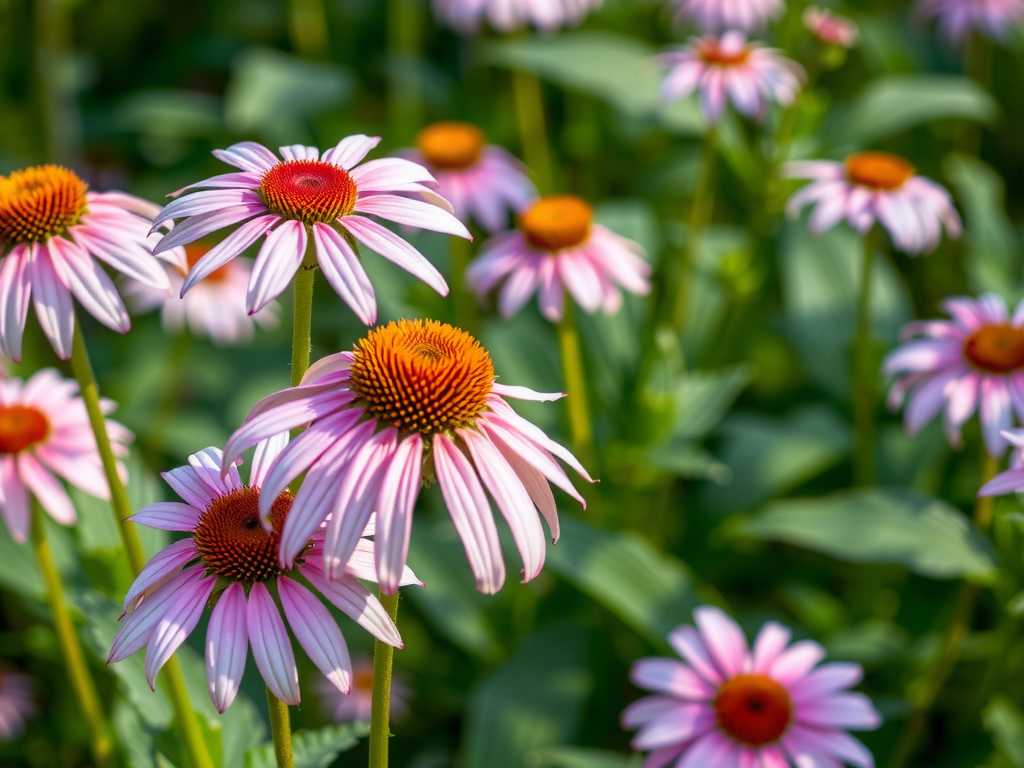
The flower head is your primary key for Echinacea identification. Don't just glance at the petal color; get up close and personal. I made the mistake early on of grouping all pink-purple ones together, which led to misidentification. Here’s what you need to examine:
First, observe the cone structure. The central cone (technically the receptacle) is a cluster of hundreds of tiny disc florets. Is it dome-shaped, rounded, or distinctly elongated like a beehive? This is crucial. The classic Purple Coneflower (Echinacea purpurea) typically has a rounded to slightly domed, orange-brown cone that becomes more prominent as it matures. In contrast, the Pale Purple Coneflower (Echinacea pallida) has a much more pronounced, dark brown, cylindrical cone that can look almost spiky.
Next, look at the ray florets—what we call the "petals." Note their posture. Do they droop dramatically, hang down slightly, or stand out horizontally? Echinacea pallida is unmistakable here: its petals are long, thin, and droop severely, giving the flower a distinctive, elegant, and somewhat sad appearance. Echinacea purpurea, however, has petals that are wider and either held horizontally or slightly reflexed (curving downward), but never in that dramatic droop. For varieties like the Yellow Coneflower (Echinacea paradoxa), the petal posture is more horizontal, but the shocking yellow color is the immediate giveaway, being the only species with truly yellow rays.
Decode the Plant's Architecture and Foliage
Once you've noted the flower, step back and look at the plant's overall form and leaves. This is where I tripped up. I had a plant I thought was E. purpurea because of its flower, but it was only 18 inches tall and much bushier. It turned out to be a compact hybrid like 'Kim's Knee High'.
Examine the stem and growth habit. Are the stems smooth, hairy, or ridged? Echinacea purpurea tends to have sturdy, hairy stems. Echinacea angustifolia (Narrow-leaved Coneflower) has notably hairy and slender stems. The plant's height and clumping nature are also major clues. The native E. purpurea forms a robust, upright clump, while E. pallida is generally more slender and may have branching stems.
Now, feel and inspect the leaves. This is a game-changer. I started carrying a small notepad to sketch leaf shapes. Echinacea purpurea has broad, ovate to lance-shaped leaves with toothed margins and a rough, sandpapery texture. The leaves are larger at the base of the plant. Conversely, Echinacea angustifolia has very narrow, linear leaves (as its name suggests) that are also hairy. Echinacea pallida leaves are long, slender, and entire (smooth-edged), but wider than those of E. angustifolia. The Royal Horticultural Society (RHS) emphasizes leaf morphology as a critical diagnostic tool for perennial identification, and it holds absolutely true for Echinacea.
Putting It Into Practice: A Two-Week Observation Plan
Theory is good, but practice makes perfect. Here is the exact two-week plan I followed that transformed my confusion into clarity.
Week 1: The Daily Close-Up. Each day, I chose one Echinacea plant. I took a macro photo of its flower cone from the side and top. I then gently lifted a petal to note its attachment and measured its length and width. I sketched the leaf shape from the middle of the stem. By day seven, patterns emerged. The plant with the wide, horizontal petals and rounded cone always had broad, toothed leaves. That was my true E. purpurea. The one with drooping petals had smooth, slender leaves—E. pallida.
Week 2: Habit and Context. This week, I observed the whole plant. How tall was it? How did the stems branch? Was the foliage dense or airy? I consulted the American Horticultural Society's (AHS) encyclopedia, which details the typical landscape use of each species. This helped me understand that the shorter, multi-branched plant with double flowers wasn't a species at all, but a cultivated hybrid like 'Double Delight', selected for its unique form rather than its natural characteristics.
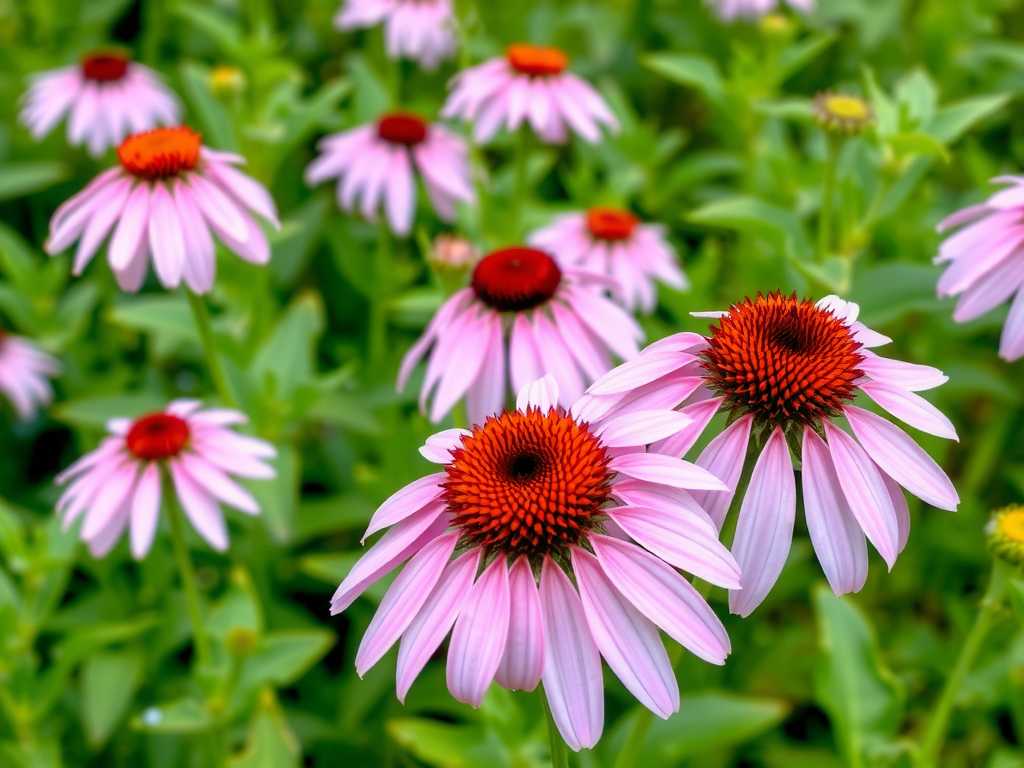
The "aha!" moment came on day 10. I found a plant with a large, orange, dome-shaped cone and hot pink, horizontal petals. The leaves were broad and toothed. Bingo—a classic Purple Coneflower cultivar, likely 'Magnus'. Another had a greenish, "fuzzy" center at the start of bloom with petals that changed color from orange to pink. This was a hallmark of the Green Jewel type hybrids. My initial mistake was ignoring the cone color and transition, focusing solely on the final petal color.
Navigating Modern Hybrids and Cultivars
Today's market is full of incredible hybrids from series like the Big Sky or Cheyenne Spirit. These can be tricky, as they often blend traits. My advice? Use the species identification framework above, then look for the cultivar's "signature" trait. For instance, 'White Swan' has the classic domed cone and horizontal posture of E. purpurea, but with pure white petals. A hybrid like 'Hot Papaya' has a huge, double-form pom-pom center, which immediately sets it apart from any single-cone species.
I learned this the hard way after buying a 'Tiki Torch' thinking it was a standard orange variety. Its fully double, tufted cone made it prone to flopping after heavy rain—a issue rarely seen in the sturdier, single-cone species. The solution was to provide discreet staking early in the season, a lesson in how growth habits differ even within the same genus.
Common Questions Gardeners Ask
Can I reliably identify Echinacea by color alone? No, this was my biggest initial error. While species have typical colors (purple, pale pink, yellow), countless cultivars now come in orange, red, white, and green. Color is a clue, not a definitive identifier. Always check the cone shape, petal posture, and leaves first.
Why does my Echinacea look different from pictures of the same variety online? Growing conditions—sun exposure, soil quality, and climate—greatly influence plant size, flower size, and even color intensity. A Tennessee Coneflower (Echinacea tennesseensis) grown in poor, dry soil may look stunted compared to one in ideal conditions. The structural traits (upturned petals, greenish cone), however, will remain consistent.
Are there any quick tips for telling the most common ones apart at a glance? Yes. For the three common natives: If the petals droop straight down, think E. pallida. If they stick out horizontally or slightly down, with a round cone, think E. purpurea. If the petals are bright yellow, it's the unique E. paradoxa. For hybrids, look for tags or ask the nursery; their parentage is often complex.
Identifying Echinacea varieties enriches the gardening experience, turning a simple flower bed into a curated collection. It allows you to choose the right plant for the right spot—knowing that E. angustifolia might thrive in a drier, rockier spot than E. purpurea. It starts with a curious eye, a focus on the structural details of the flower and foliage, and a bit of patient observation. The reward is a deeper connection to your garden and the confidence to navigate the beautiful, sometimes confusing, world of these beloved American native plants.