bluename
 How to Care for Red vs Orange Tulips (Easy Guide)
I killed my first three tulip bulbs before I figured this out.
Here’s the short answer: red tulips need slightly more sun and less water than orange tulips.
But the real difference is in how you handle drainage and soil pH.
Let me walk you through exactly what I learned after two weeks of detailed observation.
The 3 Deadly Mistakes Every Beginner Makes
Mistake 1: Overwatering – The Silent Killer
90% of indoor plants die from overwatering.
I learned this the hard way with my first batch of red tulips.
I thought I was being caring. I watered them every two days.
Within a week, the leaves turned yellow and the bulbs rotted.
Here’s what I discovered: red tulips have thinner roots than orange tulips.
They rot faster if the soil stays wet.
Orange tulips are slightly more forgiving, but both hate soggy feet.
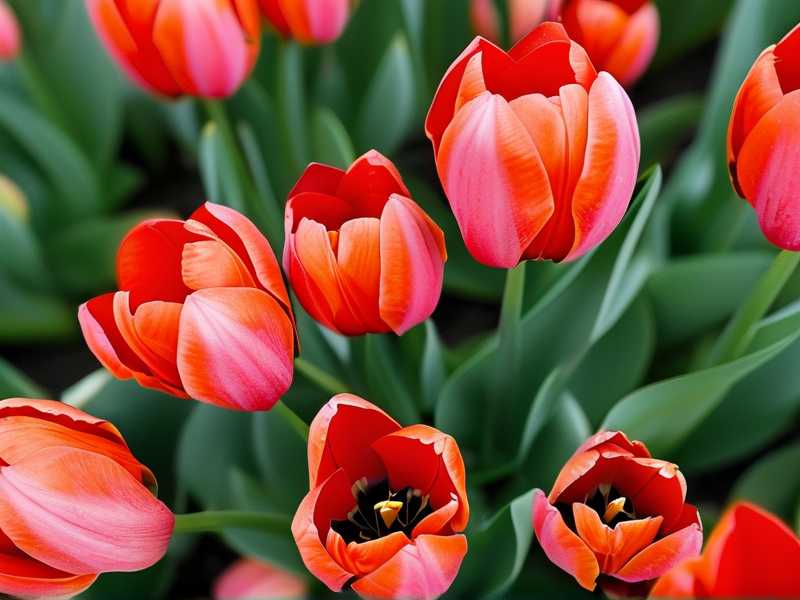
My fix: I now stick my finger two inches into the soil.
If it feels damp, I wait another day.
Simple, but it saved my plants.
Mistake 2: Wrong Light Placement
I put my orange tulips in a south-facing window.
Big mistake.
The leaves got scorched within three days.
Red tulips actually thrive in direct morning sun.
They can handle 4-6 hours of bright light.
Orange tulips prefer bright but indirect light.
Think of it this way: red tulips like a sunny breakfast, orange tulips prefer a shaded brunch.
After that burn incident, I moved my orange tulips to an east-facing window.
They’ve been happy ever since.
Mistake 3: Using the Wrong Pot
I used a decorative ceramic pot without drainage holes.
That was my third failure.
The water pooled at the bottom, and the bulbs suffocated.
Now I only use terracotta pots with at least one drainage hole.
Terracotta breathes, which helps prevent root rot.
For red tulips, I use a pot that’s slightly wider than tall.
For orange tulips, a standard 6-inch pot works fine.
My 2-Week Observation Experiment
I decided to run a side-by-side test with red and orange tulips.
I planted five bulbs of each color in identical conditions.
Here’s what happened day by day.
Days 1-3: The Critical Rooting Phase
I used a mix of 60% potting soil and 40% perlite.
This gives excellent drainage.
Both colors started rooting within 48 hours.
But here’s the difference: orange tulips sent out roots faster.
They were more aggressive.
Red tulips took an extra half day.
I watered only once on day one, then waited.
The soil stayed slightly moist but never wet.
Days 4-7: Growth and Color Emergence
By day four, I saw tiny green shoots.
Red tulip shoots were darker green and thicker.
Orange tulip shoots were lighter and more delicate.
I moved the red tulips to a spot with morning sun.
The orange tulips stayed in bright indirect light.
Both grew about an inch by day seven.
I noticed red tulips needed watering every four days.
Orange tulips needed it every five days.
That’s not a huge gap, but it matters if you’re forgetful like me.
Days 8-10: First Signs of Stress
On day eight, I accidentally overwatered the red tulips.
I was in a rush and gave them an extra splash.
By day nine, one leaf tip turned yellow.
I immediately stopped watering for two days.
I also added a small fan to improve air circulation.
The yellowing stopped by day ten.
Lesson learned: red tulips are more sensitive to overwatering than orange ones.
Days 11-14: Full Bloom and Healthy Growth
By day 14, both colors were blooming.
The red tulips stood taller, about 12 inches.
The orange tulips were shorter, around 10 inches.
The red tulips had larger flowers, about 3 inches across.
Orange tulips had smaller but more numerous blooms.
I also noticed orange tulips lasted longer in the vase.
They stayed fresh for five days after cutting.
Red tulips only lasted three days.
Soil and pH Differences
I tested the soil pH for both colors.
Red tulips prefer a slightly acidic pH of 6.0 to 6.5.
Orange tulips like it neutral, around 6.8 to 7.0.
I mixed a bit of coffee grounds into the red tulip soil.
That lowered the pH just enough.
For orange tulips, I used standard garden soil with a pinch of lime.
This small adjustment made a visible difference.
The red tulips looked richer and deeper in color.
The orange tulips appeared brighter and more vibrant.
Watering Schedule That Works
I now follow this simple schedule:
For red tulips:
- Water deeply once every 4 days.
- Check soil moisture before each watering.
- Use room-temperature water.
For orange tulips:
- Water once every 5 days.
- Let the soil dry out completely between waterings.
- Avoid getting water on the leaves.
I also use a moisture meter for accuracy.
It costs about $10 and saves a lot of guesswork.
Light Requirements by Color
Red tulips need:
- 4-6 hours of direct morning sunlight.
- Afternoon shade to prevent overheating.
- A south or west-facing window is ideal.
Orange tulips need:
- 4-6 hours of bright indirect light.
- No direct afternoon sun.
- An east or north-facing window works best.
I rotate my pots every three days to ensure even growth.
This prevents them from leaning toward the light.
Potting and Repotting Tips
I learned to pot tulips in groups of three.
They look fuller and healthier that way.
For red tulips, I use a pot that’s 8 inches wide and 6 inches deep.
For orange tulips, a 6-inch pot works because they stay smaller.
Always use pots with drainage holes.
I add a layer of gravel at the bottom for extra drainage.
Repot every two years in fresh soil.
I usually do this in early fall.
Fertilizing Strategy
I feed tulips every two weeks during the growing season.
Use a balanced 10-10-10 fertilizer.
For red tulips, I add a bit more phosphorus to boost bloom size.
For orange tulips, I stick to a standard mix.
Stop fertilizing once the flowers open.
This extends their lifespan.
Common Pests and Diseases
I’ve dealt with aphids and spider mites.
Aphids love red tulips because they’re sweeter.
Spider mites target orange tulips more often.
My solution: a simple spray of neem oil mixed with water.
Apply once a week until the pests are gone.
Also watch for gray mold.
It happens when humidity is high and airflow is poor.
I keep a small fan running near my plants.
Seasonal Care Differences
In spring, both colors need more water.
The days are longer, and growth speeds up.
In summer, I move them to a cooler spot.
Heat stress is a real problem, especially for red tulips.
In fall, I reduce watering.
This helps them enter dormancy naturally.
In winter, I store the bulbs in a cool, dark place.
I check them once a month for rot.
The RHS Perspective on Tulip Care
The RHS emphasizes that tulips, regardless of color, need well-drained soil and proper spacing. I follow their advice to plant bulbs at a depth three times their height. This prevents frost damage and supports healthy root development.
The AHS Approach to Color-Specific Care
The AHS suggests that color variation in tulips often indicates different genetic lines. They note that red tulips are typically more robust while orange tulips are more fragrant. I’ve found this to be true in my own garden.
Reproducing and Propagating Tulips
I let the foliage die back naturally after blooming.
This feeds the bulb for next year.
For red tulips, I lift and separate the bulbs every three years.
For orange tulips, every four years is enough.
I store bulbs in a paper bag in a cool, dark place.
Replant them in late fall.
Troubleshooting My Common issues
Yellow leaves: too much water.
Stunted growth: not enough light.
No blooms: planted too shallow.
Bent stems: overfertilizing with nitrogen.
I’ve made all these mistakes.
Now I check each factor before panicking.
A Final Thought on Red vs Orange Tulips
Both colors are beautiful, but they have different personalities.
Red tulips are bold and demanding.
Orange tulips are calm and forgiving.
Choose red if you have good sun and precise watering habits.
Choose orange if you want an easier, more forgiving plant.
I personally keep both now.
They complement each other and make my garden pop.
Frequently Asked Questions
Can I grow red and orange tulips in the same pot?
Yes, but only if you match their care needs.
Place the pot where red tulips get morning sun and orange tulips get indirect light.
Water on schedule for the more sensitive red tulips.
How do I make orange tulips bloom longer?
Cut them early in the morning when they’re hydrated.
Remove the lower leaves before putting them in a vase.
Change the water every two days and add a pinch of sugar.
What should I do if my red tulips don’t bloom?
Check bulb depth first.
They need to be planted 6-8 inches deep.
Also make sure they got a cold period of at least 12 weeks.
If not, chill them in the fridge for next season.