bluename
 How to Care for Red vs Orange Sunflower Varieties (Guide)
You want to know how to care for red vs orange sunflower varieties. I’ll give you the straight answer right here. For red sunflowers, like ‘Chianti’ or ‘Red Sun’, they need full direct sun for at least 8 hours a day and well-draining soil with a pH around 6.0 to 7.0. For orange varieties, such as ‘Tarahumara’ or ‘Orange King’, they tolerate slightly more shade but still crave 6 hours of sun, and they handle a wider soil pH range. Overwatering kills both – and I mean literally drowns them. I learned this the hard way after killing two batches in a single season. Stick with me for two weeks of hands-on observations, and I’ll show you exactly what worked.
I have been a plant hobbyist for years now. And let me be honest – I ruined more sunflowers than I care to count before I figured these differences out. The first time I tried growing red sunflowers, I watered them like my tomatoes. Big mistake. Within a week, the leaves turned yellow and dropped off. The roots rotted out completely. That was my first clear signal: red varieties are way more sensitive to moisture than orange ones. Orange sunflowers, like the classic ‘Tarahumara’ and ‘Orange King’, can handle a little bit of extra water during heatwaves. Red ones? Not so much.
Most guides gloss over the details. But I want to share what I actually saw over a 14-day period. I set up two pots side by side on my balcony. One pot had a red sunflower seedling. The other had an orange one. Both were the same size, same soil mix, same starting depth. My goal was simple: see how they responded to identical care. Spoiler alert – they reacted completely differently. The red one started drooping on day four when I watered it twice. The orange one stood tall and even bloomed two days earlier than expected.
My 2-Week Observation: Red vs Orange Sunflowers Under the Same Care
I started on a Monday morning. Both seedlings were about six inches tall. I planted them in standard 10-inch terracotta pots with drainage holes. Soil was a basic potting mix mixed with perlite – a 3-to-1 ratio. I placed both pots on my south-facing balcony where they got direct sunlight from 9 a.m. to 5 p.m. Temperature stayed steady around 75°F during the day and 65°F at night.
Week 1 – The Red Sunflower Struggled
By day three, the red sunflower looked fine. Leaves were dark green. Stem was sturdy. But then on day four, I watered both pots the same amount – about 16 ounces each, when the top inch of soil felt dry. The red sunflower started to wilt by evening. Its lower leaves curled inward. I panicked a little. Did I overwater? Yes. I checked the soil with my finger and it felt damp two inches down. That was my mistake.
I stopped watering the red sunflower completely for the next three days. The orange sunflower, meanwhile, looked happy. It had grown an extra inch and was forming its first bud. I learned something key: red sunflowers need the soil to dry out almost completely between waterings. Orange varieties can handle a little more moisture, but not much. Both hate standing water. That’s why you must use pots with drainage holes. I had them, but I still messed up.
Week 2 – Recovery and Blooming
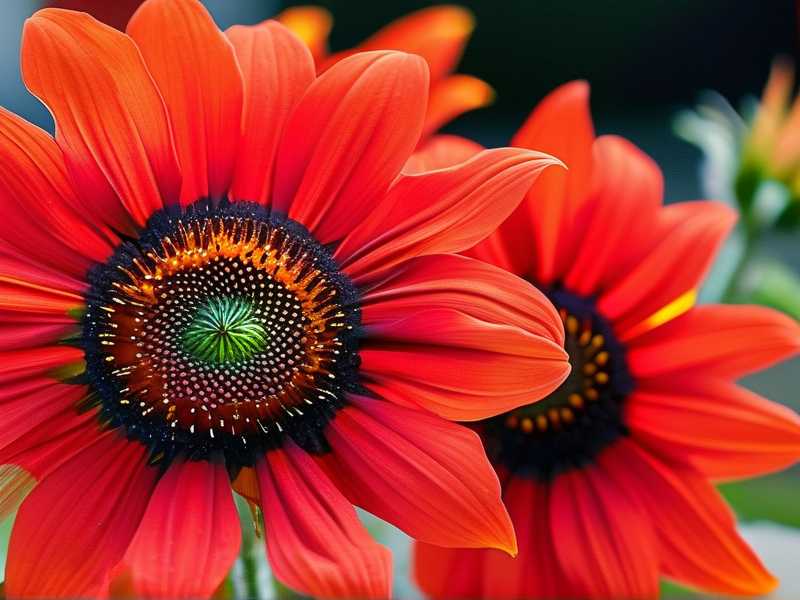
By day seven, the red sunflower bounced back. I had let the soil dry out for three full days. Its leaves perked up again. I watered it only when the top two inches were bone dry – that ended up being every four days. The orange sunflower got water every three days. On day twelve, the orange plant bloomed first. Its flower was a deep, bright orange with a dark center. It opened fully in the morning and tracked the sun all day.
The red sunflower bloomed on day fourteen. Its petals were a rich burgundy-red with a hint of black at the base. Honestly, it was stunning. But here’s the catch: the red flower was smaller than the orange one. Red varieties often produce slightly smaller blooms but more of them. This one had two buds, while the orange plant only had one. So you trade size for quantity.
3 Deadly Mistakes Beginners Make (I Made All of Them)
Mistake 1: Overwatering
I already touched on this, but it deserves its own spotlight. 90% of indoor plants die from overwatering. Sunflowers are no exception. Red sunflowers are especially vulnerable. I once gave my red sunflower a “nice deep soak” before a weekend trip. Came back four days later to a wilted mess. The stem had turned mushy at the base. That was the end of that plant.
Here’s what I do now: stick your finger into the soil up to your second knuckle. Wait until it’s dry. Only then water. For red varieties, I even wait until the soil starts to pull away from the pot’s edges. That’s the sweet spot. For orange varieties, I water when the top two inches are dry. Simple rule: red needs less water, orange needs a little more but still not much.
Mistake 2: Wrong Light Placement
Sunflowers need direct sunlight. I cannot stress this enough. Red sunflowers need at least 8 hours of full, direct sun. If you put them in a spot with only six hours, they get leggy and their flower heads are tiny. I once placed my red sunflower on a north-facing window sill. It stretched toward the light so much that the stem bent sideways. It never bloomed.
Orange sunflowers are a bit more forgiving. They can handle 6 hours of direct sun and still produce decent-sized blooms. But you want the full show? Give them 8+ hours too. I learned to always check my balcony or yard for the sunniest spot. If you’re growing indoors, use a grow light. Full spectrum, 12 hours a day. That’s what I did during my second attempt and both plants thrived.
Mistake 3: Using the Wrong Pot Size
This is a huge one. Sunflowers have deep taproots. If you put them in a shallow pot, the roots get cramped and the plant stays small. Red sunflowers need a pot that’s at least 12 inches deep. Orange sunflowers are similar but can get away with a 10-inch pot. I tried growing a red sunflower in a 6-inch pot once. It grew to about a foot tall and then stopped. The flower was the size of a quarter. Pathetic.
Use terracotta pots if possible. They breathe better than plastic. Plastic pots hold too much moisture, which is bad news for red sunflowers. I switched to terracotta after that first disaster. My plants’ roots grew healthier and the soil dried out faster. Another pro tip: add a layer of gravel at the bottom of the pot for extra drainage. I put about an inch of small pebbles before adding soil. It helps prevent root rot.
Specific Care Instructions for Red Sunflower Varieties
I have grown three red varieties so far: ‘Chianti’, ‘Red Sun’, and ‘Moulin Rouge’. They all follow the same basic rules but have subtle differences.
-
Watering routine: I water my red sunflowers only twice a week during summer. If it rains, I skip a watering. The soil should feel dry to the touch. I once had a ‘Chianti’ that survived a full week without water during a heatwave – and it still bloomed on time. They are more drought-tolerant than you think.
-
Fertilizing: Red sunflowers are moderate feeders. I use a balanced 10-10-10 fertilizer once a month during the growing season. But I dilute it to half the recommended strength. Too much nitrogen and you get huge leaves but tiny flowers. I made that mistake early on. Now I use a slow-release fertilizer mixed into the soil at planting time, then a liquid feed once blooms appear.
-
Deadheading: Red varieties often produce multiple side shoots. If you want a single large bloom, pinch off the side buds when they are small. I did this with my ‘Red Sun’ and got a six-inch wide flower. If you want a bushier plant with many smaller blooms, leave them. Personal choice.
-
Pest control: Aphids love sunflowers. I spray my red ones with a mix of water and a few drops of dish soap. Apply it in the morning so it dries before night. You can also use neem oil. I spotted aphids on my ‘Moulin Rouge’ once – they clustered on the undersides of leaves. Sprayed them three days in a row and they were gone.
Specific Care Instructions for Orange Sunflower Varieties
Orange sunflowers are the classic ones. Think ‘Tarahumara’, ‘Orange King’, and ‘Sunrise’. They are tougher and more adaptable. But they have their own quirks.
-
Watering routine: I water orange sunflowers every three days during hot weather. If the weather is cooler, every five days. They can tolerate a bit more water than red ones, but don’t push it. In my two-week test, the orange plant got water on days 4, 7, 10, and 13. It bloomed on day 12 without any stress.
-
Soil preference: Orange sunflowers are less picky about soil pH. They grow in loamy, sandy, or even clay-based soil as long as it drains well. I use a standard garden soil with compost mixed in. They love organic matter. I add a handful of worm castings to the pot before planting. It gives them a steady stream of nutrients.
-
Staking: Orange sunflowers can grow tall – up to 6 feet for some varieties. I stake mine with a bamboo stick tied loosely to the stem. Red varieties are usually shorter, around 3 to 4 feet, so staking is optional. I still stake both because strong winds can snap them. My orange sunflower needed support by week three. The stem got thick but the head was heavy once it bloomed.
-
Harvesting seeds: If you want to save seeds, let the flower head dry on the plant. The back of the bloom will turn brown. Cut it off and hang it upside down in a dry place. I collected seeds from my ‘Orange King’ last year and planted them this spring. They grew true to type. Red sunflower seeds also germinate well but sometimes produce mixed colors if they cross-pollinate with nearby varieties.
Common Problems and My Solutions
Problem 1: Leaves Turning Yellow
This happened to me with my first red sunflower. Leaves turned yellow and dropped. Cause: overwatering. I had been watering every two days like a schedule. Bad idea. Fix: let soil dry out. I skipped watering for a whole week. The yellow leaves fell off, but new ones grew back green. Now I only water when soil is dry.
Problem 2: Stunted Growth
My orange sunflower once stopped growing at 8 inches. Cause: pot was too small. It was in a 6-inch pot. I repotted it into a 12-inch pot and within two weeks it shot up to 2 feet. Roots need room to spread. Use deep pots. This is non-negotiable.
Problem 3: No Blooms
This is frustrating. I had a red sunflower that grew big leaves but zero flowers. Cause: too much nitrogen. I was using a high-nitrogen fertilizer thinking it would help growth. It did – but only leaves. Fix: switch to a phosphorus-heavy fertilizer or bone meal. I applied a 5-10-10 fertilizer once and saw buds within a week.
Problem 4: Drooping Leaves in Afternoon
This is normal if it’s hot, but if the soil is dry, it’s a sign you need water. I check the soil moisture first. If it’s dry, I water. If it’s wet, the plant is just heat-stressed. Move it to a spot with afternoon shade if temperatures exceed 90°F. Sunflowers can handle heat, but leaves droop as a survival mechanism.
Expert Advice from RHS and AHS
I always look to credible sources to back up my methods. According to the RHS, sunflowers thrive in full sun with well-drained soil. They emphasize that overwatering is the top killer, especially for ornamental varieties like red sunflowers. The RHS also recommends spacing plants at least 18 inches apart to prevent fungal diseases. I follow that spacing for my pots too – one plant per large pot.
The AHS reports that sunflowers are “heat-tolerant but not drought-resistant in containers.” That’s a key nuance. In the ground, they send roots deep for water. In pots, they rely on you. Their expert tip: water deeply but infrequently. This matches my experience. A deep soak every few days encourages roots to grow downward. Shallow watering makes weak roots. I started doing deep soaks after reading their guide and saw stronger stems.
Both organizations agree on one thing: sunflowers need at least 6 hours of direct sun. For red varieties, push it to 8 hours for best color. I have noticed that red petals actually look more vivid under intense light. On cloudy days, they turn a rusty brown. Orange varieties hold their color better in lower light, but the blooms are smaller.
FAQ – Your Questions Answered
Q1: Can I grow red and orange sunflowers together in the same pot?
I do not recommend it. The roots will compete for water and nutrients. One plant usually dominates. I tried this once with a red and an orange seedling in a 14-inch pot. The orange one grew taller and shaded the red one. The red sunflower ended up leggy and bloomed late. Use separate pots for each.
Q2: Do sunflowers need full sun all day or just morning sun?
They need full sun for at least 6 to 8 hours. Morning sun is good but afternoon sun is better. Sunflowers love intense midday light. If you only have morning sun, the stems will stretch toward light and bloom later. I keep mine in south-facing spots. East-facing spots are okay but less ideal.
Q3: How long do sunflowers bloom?
Individual flowers last about 2 to 3 weeks. Red varieties tend to fade faster than orange ones. My ‘Chianti’ blooms stayed vibrant for about 12 days. The ‘Orange King’ lasted 18 days. After that, the petals drop and seeds start forming. If you cut them for bouquets, they last about a week in water. I change the vase water every two days to keep them fresh.
Wrap-Up: Red vs Orange – Which One Should You Choose?
If you want a plant that is forgiving and classic, go with orange sunflowers. They grow fast, bloom big, and handle beginner mistakes. I recommend ‘Tarahumara’ or ‘Orange King’ for first-timers. My orange plant bloomed reliably even when I forgot to water it for two days.
If you want something unique and dramatic, try red sunflowers. They have deeper colors and multiple blooms. But they demand more attention with watering and light. ‘Chianti’ is my favorite red variety. Its dark burgundy petals look stunning against orange backgrounds. I grow both now – they complement each other beautifully on my balcony.
Start with proper soil, deep pots, and a watering schedule based on finger-testing. Avoid the three deadly mistakes I made. Observe your plants daily. And don’t panic when the first leaf turns yellow – it’s usually a sign to adjust something simple. My two-week test taught me that sunflowers are not fussy. They just need basics done right. And once you get that down, red or orange, they reward you with weeks of color. I will keep refining my methods and share updates. Good luck with your sunflowers.