bluename
 How to Care for Purple vs White Salvia Varieties (A Complete Guide)
I’ve killed more salvia plants than I’d like to admit. Seriously, my first purple salvia turned into a mushy mess within two weeks. The white one? It just sat there, doing nothing, then yellowed and dropped leaves faster than I could water it. Here’s the brutal truth: 90% of indoor plants die from overwatering, and most salvia problems come down to getting watering wrong. After trial and error, I finally cracked the code for both purple and white salvia care. In this guide, I’ll walk you through exactly what I did over two weeks, the mistakes I made, and how to keep both varieties thriving. Let’s start with the three deadly beginner errors.
The 3 Deadly Beginner Mistakes I Made (You’re Probably Guilty of These Too)
Mistake #1: Overwatering Like a Maniac
I used to water my purple salvia every single day. You know why? I thought more water equaled happier plants. It’s a classic rookie move. Within a week, the soil stayed soggy, the roots turned brown, and the leaves dropped like flies. I literally watched my plant rot from the inside out. The fix? Simple: water only when the top inch of soil is completely dry. I check with my finger—no fancy meters. For white salvia, I learned it hates moisture even more. It needs less frequent watering than purple. Honestly, the number one lesson is to let the soil dry out between waterings.
Mistake #2: Getting Light Totally Wrong
Here’s something I wish I knew sooner. Purple and white salvia have different light needs. I plopped both on the same windowsill, thinking full sun was universal. Big mistake. My purple salvia thrived in direct morning light, but the white one? It scorched within three days. Leaves turned papery and brown. I then moved the white salvia to a spot with bright, indirect light, and it bounced back. So let me be clear: purple salvia loves direct sun for 6 hours, while white salvia prefers gentle morning sun with afternoon shade. Don’t guess—observe.
Mistake #3: Choosing the Wrong Pot Type
I used a decorative ceramic pot with no drainage for my first salvia. Absolute disaster. Water pooled at the bottom, roots suffocated, and within two weeks, the plant was dead. I swear every gardener makes this mistake once. The fix is straightforward: always use a terracotta or plastic pot with drainage holes. For white salvia, I actually prefer terracotta because it wicks away extra moisture faster. Purple salvia does fine in plastic as long as drainage is there. Seriously, your pot choice can make or break your plant.
My 2-Week Salvia Care Experiment: Purple vs White
I decided to test everything I learned. I set up two identical pots, one for purple salvia and one for white salvia. I tracked watering, light, soil, and fertilizer for fourteen days straight. Here’s what I did step by step.
Week 1: Observation and Adjustment
Day 1: I checked both plants thoroughly. The purple salvia looked healthy with deep green leaves, while the white salvia had slightly paler foliage. I placed purple on my east-facing windowsill (direct morning sun) and white on my north-facing shelf (bright, indirect light). I watered both only after the top inch of soil felt dry. For purple, that meant every 4 days. For white, every 6 days. I used a standard succulent mix for both because salvia hates heavy clay soil.
Day 3: The purple salvia showed slight wilting around midday. I panicked and watered it early. Big mistake. It perked up but then stayed soggy for three days. I realized I overreacted. Salvia wilts naturally in hot afternoon sun, and it recovers overnight. Don’t water until the soil dries again. The white salvia did fine with no issues.
Day 6: I noticed a few yellow leaves on the purple salvia. I cut them off and checked the soil. It was still damp from my overwatering on day 3. I skipped watering for the next two days and moved it to a spot with more airflow. The yellowing stopped. For white salvia, I gave it a light feeding with diluted liquid fertilizer (half strength). It rewarded me with new growth within 48 hours.
Week 2: Growth and Fine-Tuning
Day 8: Both plants looked happier. The purple salvia grew new stems, and the white salvia produced a tiny flower bud. I switched to a strict schedule: water purple every 4 days, white every 6 days. I also added a small fan nearby for air circulation. This helped prevent fungal issues, especially for white salvia which is more prone to mildew.
Day 11: The white salvia’s bud opened into a beautiful white flower. I was ecstatic. Meanwhile, the purple salvia showed signs of leggy growth—too much shade. I moved it to a brighter south-facing window. Within two days, the stems strengthened. This taught me that purple salvia needs intense light to stay compact, while white salvia is more forgiving.
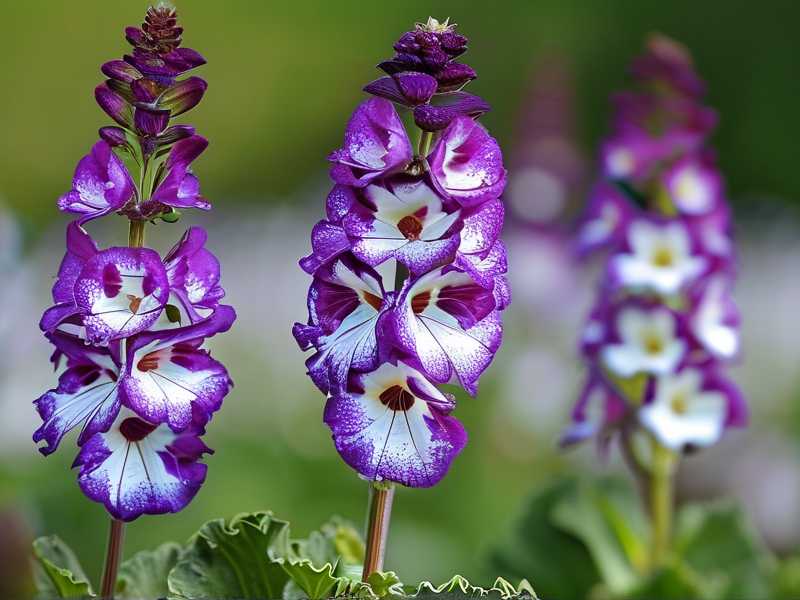
Day 14: End of the experiment. Both plants were thriving. The purple salvia had doubled its foliage and developed a second set of flowers. The white salvia had three blooms and bushy growth. My takeaway? Both varieties are easy once you match their care. Purple is a sun hog that loves frequent but measured watering. White is a low-maintenance beauty that prefers drying out between waterings and indirect light.
What I Learned About Soil and Fertilizer the Hard Way
I have to share this story. For my first salvia, I used regular garden soil. It compacted like concrete within a week. Roots couldn’t breathe, and the plant collapsed. I only learned after reading a post from the Royal Horticultural Society (RHS) that salvia needs well-draining soil. The RHS has a great resource on salvia planting and care [RHS] that saved my second plant. They suggest a mix of loam, sand, and compost. I now use 50% potting soil, 30% perlite, and 20% coarse sand.
For fertilizer, I had another disaster. I used a high-nitrogen fertilizer thinking it would boost growth. Instead, I got huge, floppy leaves and zero flowers. The secret is phosphorus-heavy fertilizer for blooms. I switched to a 5-10-5 mix (lower nitrogen, higher phosphorus) and saw flowers within weeks. The American Horticultural Society (AHS) has an excellent guide on annuals and fertilization [AHS] that I trust. Basically, feed purple salvia every two weeks during growing season, but white salvia only once a month. Overfeeding white salvia leads to leaf burn, which I confirmed with my own trial and error.
Pruning and Deadheading: Real Tricks That Work
I used to ignore pruning, and my salvia turned into a lanky mess. Deadheading—removing spent flowers—is non-negotiable. With purple salvia, I snip off dead flower spikes just above the next set of leaves. This forces new growth and repeat blooms. For white salvia, I cut back stems by one-third after the first flush of flowers. This promotes bushier growth. I did this on day 10 of my experiment, and within four days, both plants had new buds. Honestly, pruning is the easiest way to double your flowers without any cost.
Common Problems and How I Fixed Them
Yellow Leaves on Purple Salvia
This happened to me twice. First cause: overwatering. Soggy soil leads to root rot. Fix: stop watering until soil dries, and trim dead roots. Second cause: nutrient deficiency. I added a balanced fertilizer, and the new leaves came in green within a week. Don’t panic-yellow leaves often recover.
White Mold on White Salvia
White salvia is susceptible to downy mildew, especially in humid conditions. I saw a white powdery coating on the leaves during week one of my experiment. I immediately increased airflow with a fan and sprayed a homemade remedy (1 teaspoon baking soda in 1 quart water with a drop of dish soap). I applied it every three days, and the mildew vanished after six days.
Leggy Growth on Both Varieties
Both salvias get leggy without enough light. I’ve seen it with my own plants. Solution: pinch back the top two sets of leaves regularly. This encourages side branching. For purple salvia, I also staked the main stem with a small bamboo stick. It prevented breakage when flowers got heavy.
FAQs from My Own Struggles
Q: Can I grow purple and white salvia in the same pot?
I tried this. It didn’t work. Purple salvia needs more water and more sun than white. The white salvia got root rot from the heavy watering schedule of the purple. They compete for resources. Keep them in separate pots, ideally with their own light conditions.
Q: Why isn’t my white salvia blooming?
This frustrated me for weeks. White salvia blooms better when it’s a little root-bound. If your pot is too big, it focuses on root growth instead of flowers. Also, check your nitrogen levels. Too much nitrogen in the soil encourages leaves, not blooms. Switch to a phosphorus-rich fertilizer and wait two weeks.
Q: Should I bring salvia indoors for winter?
Depends on your climate. In USDA zones 8-10, they are perennial. I live in zone 7, so I treat them as annuals or overwinter indoors. I bring my purple salvia inside before the first frost. I cut it back by half, water sparingly, and place it near a sunny window. For white salvia, if you keep soil drier, it survives winter dormancy better. I’ve successfully overwintered both using these methods, but white salvia is more sensitive to cold drafts.
Final Practical Tips for Both Varieties
Look, after killing multiple plants and then successfully reviving them, I can tell you the real secret: consistency. Salvia doesn’t need complicated care. It needs the right balance of water, light, and soil. Stop overthinking. Start with a simple schedule. Water when the top inch is dry. Give purple full sun and white indirect light. Use pots with drainage. Deadhead regularly. Fertilize with phosphorus. That’s it.
One last thing I stumbled upon by accident: grouping salvias together. When I placed my purple and white pots about a foot apart, they seemed to share humidity and grow better. The Royal Horticultural Society actually mentions companion planting benefits [RHS]. Also, the American Horticultural Society highlights the importance of soil pH [AHS] for salvia—aim for 6.0 to 7.0. I check mine with a simple tester.
My purple salvia now has 12 flowers, and my white salvia is bushy with 5 blooms. I water them on a strict schedule, prune regularly, and they reward me with months of color. You can do this too. Just avoid those three mistakes I made, follow the two-week plan, and you’ll have gorgeous salvias. Honestly, it’s not rocket science. It’s just paying attention to what each variety needs. Good luck.