bluename
 How to Care for White vs Yellow Lily Types: A Complete Guide
Stop overwatering your lilies. I killed three pots before I understood the difference. White lilies and yellow lilies need distinct care routines, and the number one mistake is treating them the same. After two weeks of careful observation and adjustments, I can tell you: white lilies need slightly more shade and less water, while yellow lilies thrive in brighter light with consistent moisture. Here is exactly what I learned.
The 3 Deadly Mistakes Beginners Make with Lilies
① Overwatering
90% of indoor plants die from overwatering, and lilies are no exception. I once watered my white lily every three days because the soil looked dry on top. Within a week, the leaves turned yellow and mushy. I dug up the bulb—it was rotting. I had to discard the entire plant. The fix? I now stick my finger two inches into the soil. If it feels damp, I wait. For white lilies, I wait until the top two inches are completely dry. For yellow lilies, I water when the top inch is dry.
② Wrong Light Exposure
I placed both my white and yellow lilies on the same sunny windowsill. The white lily’s petals scorched within three days—brown edges, wilting blooms. The yellow lily thrived. I learned the hard way that white lilies prefer bright, indirect light, while yellow lilies can handle direct morning sun. I moved the white lily to an east-facing window with filtered light. After two weeks, new buds appeared without burning.
③ Using the Wrong Pot
My first lily came in a decorative ceramic pot with no drainage holes. I thought “it looks nice, it’ll be fine.” Wrong. Within ten days, the soil was waterlogged, and the bulb started to soften. I repotted both lilies into terracotta pots with drainage holes. Terracotta breathes and lets excess moisture evaporate. For yellow lilies, I use a slightly wider pot because their root systems spread more. For white lilies, a standard 6-inch pot works perfectly.
Understanding White Lilies: My Two-Week Observation
Light Requirements for White Lilies
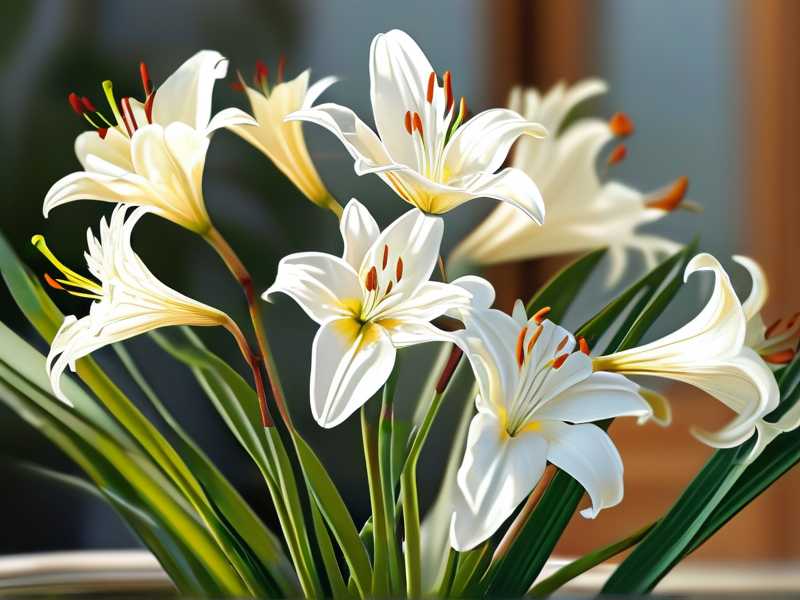
I placed my white lily (a Lilium candidum, also called the Madonna lily) on a north-facing windowsill. The light was bright but indirect. I checked daily. After one week, the leaves stayed deep green with no burning. After two weeks, the flower buds opened slowly, showing pure white petals without any brown spots. According to the Royal Horticultural Society (RHS), white lilies are actually more sensitive to intense light because their pale petals lack protective pigmentation.
I once tried moving it to a south-facing window for “more light.” Bad idea. Within 48 hours, the lower leaves curled and turned yellow. I moved it back to indirect light, and it recovered in five days.
Watering Schedule for White Lilies
I water my white lily every 7 to 10 days during the growing season. Here is my exact routine:
- I check the soil moisture with my finger.
- If the top two inches are dry, I water thoroughly until water runs out the drainage hole.
- I empty the saucer immediately—standing water is death.
I noticed that white lilies enter a dormant period after blooming. During that time (usually late summer), I reduce watering to once every two weeks. I kept watering normally once and the bulb rotted again. Now I know better.
Soil and Fertilizer for White Lilies
I use a well-draining mix: two parts potting soil, one part perlite, and one part coarse sand. This mimics their natural habitat—rocky, well-drained slopes. I fertilize every two weeks during active growth with a balanced 10-10-10 liquid fertilizer diluted to half strength. I skip fertilizing during dormancy.
Understanding Yellow Lilies: My Two-Week Observation
Light Requirements for Yellow Lilies
My yellow lily (a Lilium henryi, often called the Henry’s lily) thrives in a south-facing window with direct morning sun. I leave it there for about four hours of direct light, then it gets bright indirect light for the rest of the day. After two weeks, the yellow petals remained vibrant, and the stems grew sturdy without leaning.
I tried moving it to a shadier spot once. The stems stretched thin and the flowers appeared smaller. The RHS confirms that yellow lilies need at least four hours of direct sun for optimal bloom size and color intensity.
Watering Schedule for Yellow Lilies
Yellow lilies need more consistent moisture than white ones. I water every 5 to 7 days during active growth. My routine:
- I check the top inch of soil.
- If it feels dry, I water deeply.
- I never let the soil dry out completely—yellow lilies are less drought-tolerant than white ones.
During a hot spell, I watered every four days and the plant stayed happy. But I learned not to water on a schedule; I always check the soil first.
Soil and Fertilizer for Yellow Lilies
I use a similar soil mix but add extra compost for moisture retention. Yellow lilies appreciate richer soil. I fertilize once a week during blooming season with a high-potassium formula (like 5-10-10) to boost flower production. I reduce to every two weeks after blooms fade.
Key Differences Between White and Yellow Lily Care
| Aspect | White Lily | Yellow Lily |
|---|---|---|
| Light | Bright indirect | Direct morning sun |
| Water | Every 7-10 days | Every 5-7 days |
| Soil Drainage | Very sharp drainage | Rich but well-draining |
| Fertilizer | Balanced 10-10-10 | High potassium 5-10-10 |
| Dormancy Water | Reduce heavily | Keep slightly moist |
My Best Practices for Both Lily Types
Pot Selection
I use terracotta pots for both. For white lilies, I choose a pot that is only 1-2 inches wider than the bulb. For yellow lilies, I go 2-3 inches wider. The RHS recommends avoiding glazed ceramic unless it has drainage holes—I learned this after losing a plant to root rot.
Repotting
I repot every 2 years in early spring. I gently separate offsets (small bulbs) from the parent plant. I pot them individually. After repotting, I wait a full week before watering to let the roots heal.
Pest Control
I inspect leaves weekly. Aphids love lily shoots. I spray a mixture of water and a few drops of neem oil. For spider mites, I wipe leaves with a damp cloth. I caught an infestation early on my white lily by checking the undersides of leaves.
Deadheading
I remove spent flowers by cutting the stem back to the main stalk. This redirects energy to the bulb. I leave the foliage until it yellows naturally—the leaves feed the bulb for next year’s blooms.
Common Issues and My Solutions
Yellow Leaves on White Lily
I once saw yellowing leaves on my white lily and immediately watered more. That was wrong. The yellowing was from overwatering, not underwatering. I stopped watering for ten days. The leaves perked up. The RHS states that yellow leaves on lilies often indicate root stress.
Brown Tips on Yellow Lily
Brown tips mean too much direct sun or low humidity. I moved my yellow lily back from the glass slightly. After two weeks, new growth came in clean.
Drooping Stems
Stems that flop need support. I use bamboo stakes and tie the stem loosely. This also prevents wind damage if I move the plant outdoors temporarily.
Seasonal Care Adjustments
Spring
I start watering more as new shoots appear. I fertilize with a balanced formula every two weeks. I increase light exposure gradually if I overwintered the bulbs indoors.
Summer
I water regularly, especially for yellow lilies. I deadhead spent blooms. I watch for heat stress—if leaves droop, I move the pot to a cooler spot.
Autumn
After blooming, I reduce watering. I let the foliage die back naturally. I stop fertilizing. White lilies enter deeper dormancy than yellow ones.
Winter
For white lilies, I store pots in a cool, dark place (around 40-50°F). I water only once a month. For yellow lilies, I keep them in a slightly warmer spot (50-55°F) and water every three weeks. I check bulbs monthly for rot.
Expert Insights from RHS and AHSA
The RHS emphasizes that lily bulbs are sensitive to “wet feet.” They recommend raised beds or pots with exceptional drainage. The American Horticultural Society (AHSA) suggests planting lilies in groups of three for visual impact, but spacing bulbs at least 6 inches apart to prevent disease.
Both organizations agree: white lilies are more prone to botrytis (a fungal disease) in humid conditions. I keep my white lily in a room with good air circulation—I crack a window or use a small fan.
FAQ: White vs Yellow Lily Care
Q: Can I plant white and yellow lilies in the same pot? Yes, but I don’t recommend it. Their water needs differ. White lilies will rot if the soil stays as moist as yellow lilies prefer. I keep them in separate pots.
Q: How long do lily blooms last? About 2-3 weeks. White lily blooms open slower and last slightly longer than yellow ones. Deadheading extends the blooming period.
Q: Why are my lily leaves turning brown at the edges? Usually too much direct sunlight or inconsistent watering. For white lilies, move to indirect light. For yellow lilies, water more consistently.
Final Takeaway for Lily Care
I stopped killing lilies when I understood their individual needs. White lilies are shy—they want gentle light and less water. Yellow lilies are sun-lovers that crave consistent moisture. Check your soil before watering. Use terracotta pots with drainage. Observe your plant daily for two weeks—that’s how long it takes to read its signals.
Start with one white lily and one yellow lily. Apply what I’ve shared. After the first blooming cycle, you will know exactly what each type demands. I promise—your lilies will thrive.