bluename
 How to Recognize Early-Blooming Tulip Varieties and Late-Blooming Tulip Varieties?
Planning a tulip garden that offers a long season of color can be tricky. Many gardeners face the disappointment of having all their tulips bloom at once, leaving gaps in their spring display. The key to a staggered, continuous bloom from early spring to late spring lies in understanding how to recognize and select both early-blooming and late-blooming tulip varieties. This guide will equip you with the knowledge to identify them by their characteristics, names, and growth habits, ensuring your garden is a vibrant spectacle for weeks on end.
Understanding the Tulip Blooming Spectrum
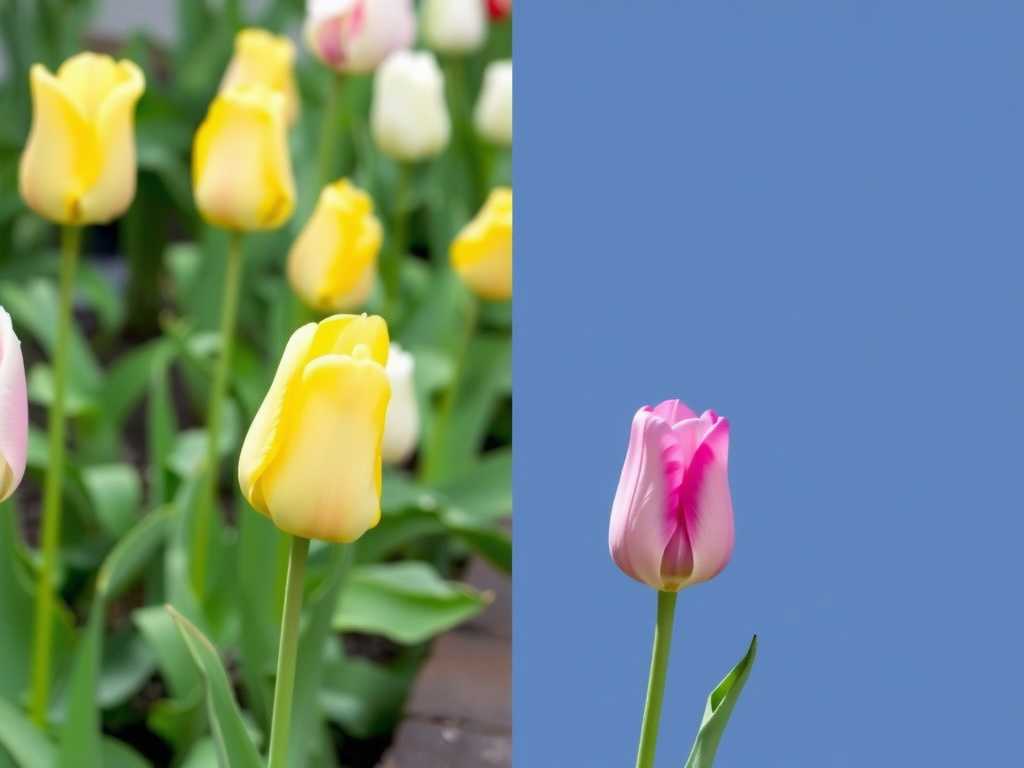
Tulips are broadly categorized by their bloom time, which is primarily influenced by their genetic classification. The Royal Horticultural Society and other bulb authorities group tulips into 15 divisions, several of which are defined by their flowering period. Recognizing whether a tulip is early or late starts with knowing these groups.
Early-season tulips typically brave the cooler weather of March and April. They are often shorter, sturdier plants, an evolutionary advantage that protects them from wind and late frosts. Late-season tulips, in contrast, follow in April and May, growing taller and often displaying more elaborate flower forms. According to bulb expert Anna Pavord, author of The Tulip, "The sequencing of tulip bloom is a dance with temperature, where early varieties have a lower heat requirement to initiate flowering."
Key Characteristics of Early-Blooming Tulips
How can you spot an early-blooming tulip at the garden center or in a catalog? Look for these telltale signs.
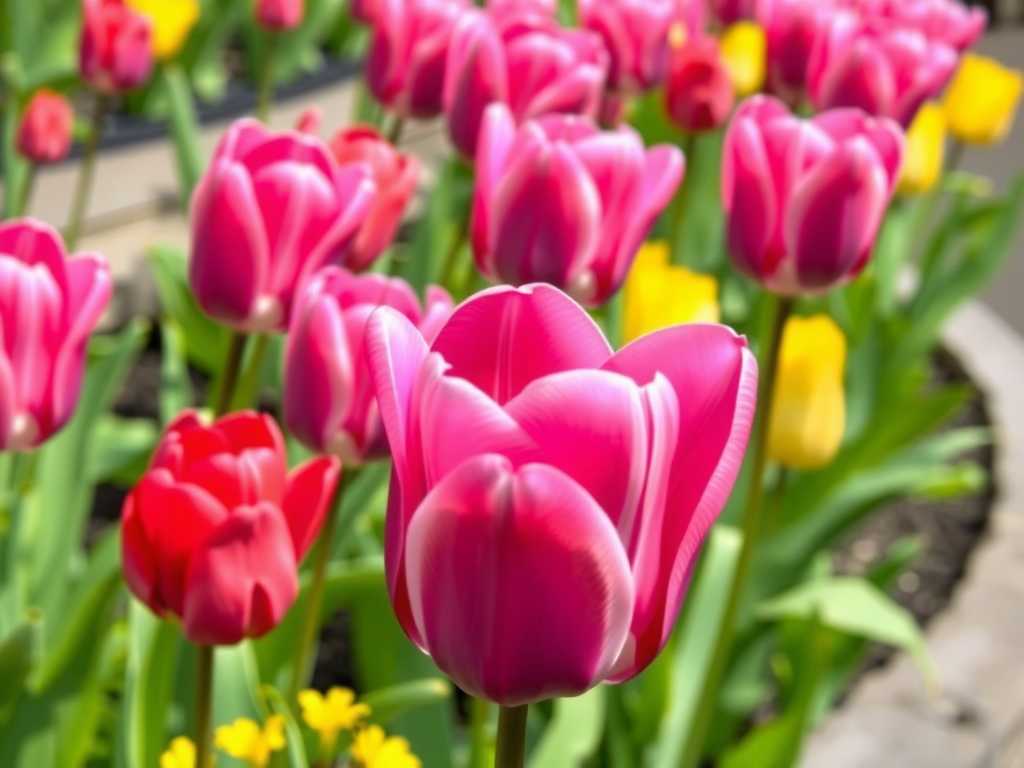
First, check the variety name and classification. Early tulips often belong to the Single Early and Double Early divisions. Single Early Tulips have classic, cup-shaped flowers on stems ranging from 10 to 18 inches. They are among the first to bloom. Double Early Tulips, like the popular 'Peach Blossom', resemble peonies with their multitude of petals.
Second, observe the plant's stature. Early bloomers are generally more compact. Their leaves and stems are robust, providing support without the need for staking. This sturdy build helps them weather unpredictable early-spring conditions.
Finally, examine the bulb packaging or description. Reputable suppliers always list the bloom time (e.g., "Early Spring"). Terms like "Fosteriana Tulips" (Emperor tulips) or "Kaufmanniana Tulips" (Waterlily tulips) also indicate very early bloomers. These species-type tulips are exceptionally hardy and often have distinctive foliage with mottled or striped patterns.
Key Characteristics of Late-Blooming Tulips
Late-blooming tulips are the dramatic finale of the spring bulb show. They are recognized by their height, complex flowers, and later flowering window.
The most recognizable late-bloomers fall into several divisions. Darwin Hybrid Tulips are famous for their large, brilliant flowers on strong, tall stems (up to 24 inches), perfect for cutting. Single Late Tulips (also called Mayflowering Tulips) include the elegant lily-flowered and towering cottage types. Double Late Tulips (Peony-flowered) are incredibly lush with heavy, multi-petaled heads. Fringed and Parrot Tulips, with their feathered and ruffled petals, are also exclusively late-season performers.
Their physical structure is a major clue. Late tulips grow significantly taller, often between 18 and 30 inches. They require more time and warmer soil temperatures to develop these extensive stems and large blooms. Their flower forms are diverse and often intricate, a luxury afforded by the stable, warmer late-spring weather.
Practical Tips for Planning Your Bloom Sequence
Now that you know how to recognize them, here’s how to use this knowledge. Start by reading bulb catalogs carefully. Sort or filter selections by "bloom time." Create a planting map, placing early varieties at the front of borders and taller late varieties toward the back.
For continuous color, interplant bulbs with different bloom times in the same bed. You can also layer bulbs in a single planting hole—a technique called "lasagna planting"—with late-bloomers planted deepest, early-bloomers above them, and crocus or muscari at the very top. A 2022 study by the Netherlands Flower Bulb Information Center confirmed that strategic variety selection can extend tulip display periods in a single garden by up to 8 weeks.
What is the absolute easiest way to tell if a tulip is early or late before it blooms? The most reliable method is to check the variety name and its official classification (division) on the bulb package or catalog listing. Look for terms like "Single Early," "Double Early," "Darwin Hybrid," or "Single Late." Reputable sellers always provide this information, which is a direct indicator of bloom time.
Can I influence the bloom time of my tulips after planting? While you cannot change a variety's genetic predisposition, environmental factors play a role. Tulips planted in warm, sunny, sheltered spots will often bloom a week or two earlier than the same variety planted in a cool, shaded area. Conversely, a prolonged cold spring can delay blooming across all types.
I have a mix of early and late tulips, but they all seem to bloom at once. What went wrong? This is often caused by purchasing a "mixed" bag of bulbs without verified bloom times. Many commercial mixes are blended for color, not flowering sequence. To guarantee succession, buy named varieties from each bloom-time category separately and plant them in distinct groups or layers as described.
Mastering the recognition of early and late tulip varieties transforms garden planning from a guessing game into a design science. By paying attention to plant height, flower form, and, most importantly, the official variety classification, you gain the power to choreograph a spring-long display. Start with sturdy, compact early bloomers to welcome the season, and finish with the tall, flamboyant late bloomers for a spectacular finale. With this knowledge, your garden will no longer have a fleeting moment of glory but a sustained and memorable performance.