bluename
 How to Identify Floribunda Rose Varieties and Climbing Rose Varieties?
You’ve fallen in love with roses, but the sheer number of varieties can be overwhelming. Is that stunning bush in your neighbor’s garden a Floribunda or a Hybrid Tea? Can that vigorous rose covering the archway be trained as a Climber? Correctly identifying Floribunda rose varieties and Climbing rose varieties is the first step to mastering their care, ensuring they thrive, and planning a beautiful garden. This guide will equip you with the practical knowledge to tell them apart with confidence.
Understanding the Rose Class System
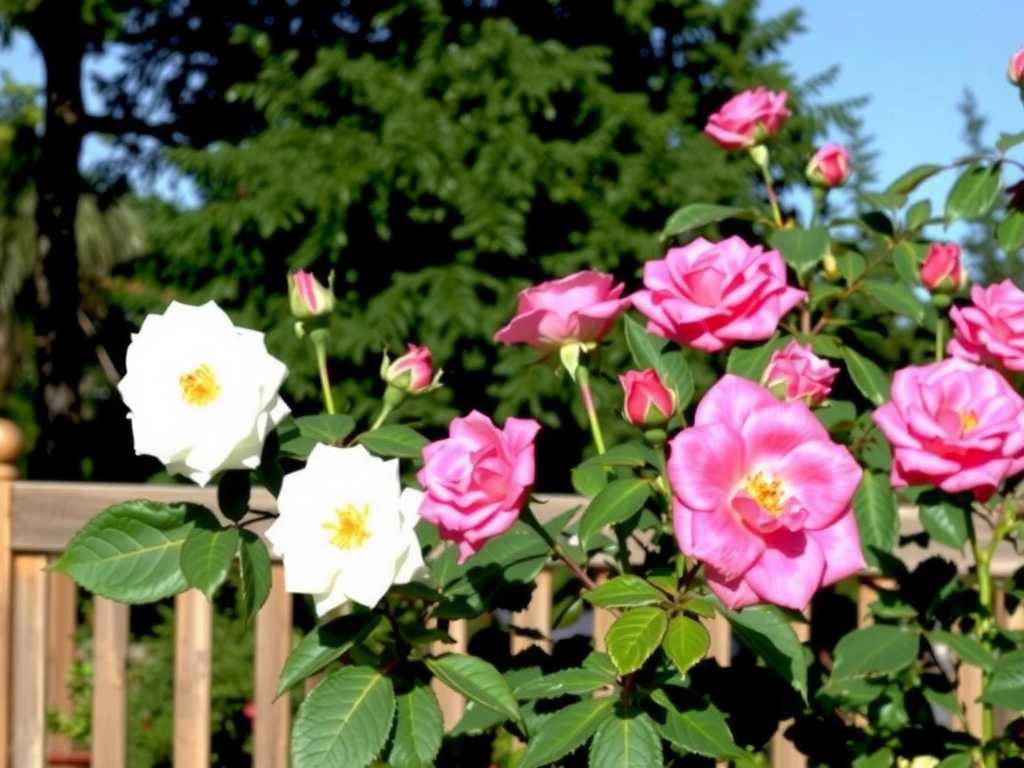
Before diving into identification, it's crucial to understand that roses are organized into classes based on their growth habits, ancestry, and blooming characteristics. The American Rose Society recognizes dozens of classes, but for gardeners, distinguishing between the main types is key. Floribunda and Climbing roses are two distinct classes, each with unique traits.
What Defines a Floribunda Rose?
Floribunda roses, whose name means “abundance of flowers,” are a beloved class developed by crossing Hybrid Teas with Polyantha roses. They combine the elegant bloom form of Hybrid Teas with the prolific, clustered flowering habit of Polyanthas.
Key Identification Features of Floribundas
Look for these characteristics to identify a Floribunda rose variety.
Growth Habit and Size Floribundas are typically bushy, compact shrubs. They generally grow between 2 to 4 feet tall and wide, making them perfect for borders, hedges, and container gardening. Their structure is dense and multi-stemmed.
Bloom Presentation This is their most telling feature. Floribundas produce flowers in large clusters or trusses. Instead of one bloom per stem, you’ll see dozens of blooms opening together in a spectacular display. As noted by renowned rosarian Stephen Scanniello, “Floribundas offer a mass of color that few other roses can match, providing continuous garden impact.” Individual blooms can be single, semi-double, or double, and they often resemble the classic shape of Hybrid Teas but on a smaller scale.
Leaf and Stem Structure The foliage is usually glossy, dense, and dark green. Stems are often sturdy to support the weight of the flower clusters. Canes tend to be numerous, creating a full, rounded shrub.
Bloom Cycle Floribundas are celebrated for their reliability. They bloom in repeated flushes from late spring until frost, offering near-constant color.
Popular Floribunda Examples ‘Iceberg’ (white), ‘Julia Child’ (buttery yellow), ‘Scentimental’ (striped red and white), and ‘Easy Does It’ (apricot-orange blend) are classic Floribunda varieties.
What Defines a Climbing Rose?
Climbing roses are not a separate botanical class but rather a growth habit found within many other classes, such as Hybrid Teas, Floribundas, and Old Garden Roses. Any rose that produces long, flexible canes capable of being trained on a support can be considered a climber.
Key Identification Features of Climbing Roses
Identifying Climbing rose varieties focuses on their growth pattern and training potential.
Growth Habit and Canes The primary identifier is the presence of long, arching, or pliable canes. These canes can grow from 6 to 20 feet or more, depending on the variety. Unlike true vines, climbing roses do not have tendrils or suckers; they must be physically attached to a trellis, fence, or arbor.
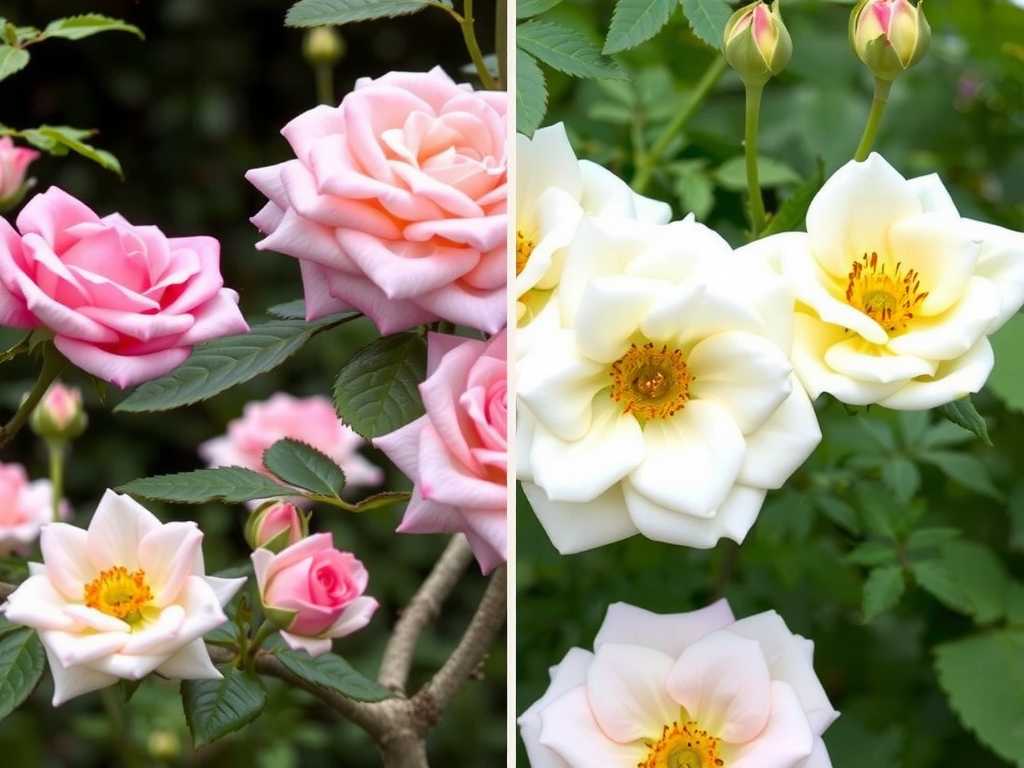
Bloom Presentation Climbing roses bloom in two main styles. “Large-Flowered Climbers” often produce classic, large Hybrid Tea-style blooms, either singly or in small clusters. “Ramblers,” a subtype, produce massive cascades of smaller flowers in huge clusters. The blooms can appear along the entire length of the cane.
Training Requirement A rose that exhibits long, vigorous cane growth but is left untrained will look like a sprawling, messy shrub. Its true identity as a climber is realized only when its canes are trained horizontally, which encourages more flowering along their length.
Bloom Cycle Some climbers, especially modern repeat-blooming varieties, flower in flushes throughout the season. Others, particularly some old-fashioned ramblers, may have one spectacular but brief bloom period in early summer.
Popular Climbing Rose Examples ‘New Dawn’ (pale pink, repeat-blooming), ‘Don Juan’ (dark red, fragrant), ‘Eden’ (pink and cream), and ‘Altissimo’ (single red blooms with yellow stamens) are iconic climbing varieties.
Side-by-Side Comparison: Floribunda vs. Climber
Let’s put it all together. Imagine you’re looking at two unknown roses.
A 3-foot tall, rounded shrub is covered in a mass of 30 coral-pink blooms all grouped together. The plant is free-standing and neat. This is almost certainly a Floribunda. A plant sending out 8-foot long, supple canes is tied to a pergola. Blooms of rich purple appear in groups of three to five along the horizontal sections of the canes. This is clearly a Climbing rose variety.
Practical Steps for Identifying an Unknown Rose
Follow this step-by-step process in your garden or at the nursery.
- Assess the Overall Structure. Step back. Is it a self-supporting shrub or a plant with long, trailing canes that seem to want support?
- Examine the Flowering Pattern. Count the blooms per stem. Are they in a large, showy cluster (Floribunda) or arranged more sparsely along a long cane (Climber)?
- Measure the Growth. While size can vary, a plant consistently under 5 feet is likely a shrub type. Canes persistently growing beyond 6 feet suggest a climbing habit.
- Check for Training. Are there ties on the canes? Is it growing on a structure? If yes, it’s being grown as a climber.
- Consult the Plant Tag or Catalogue. If available, this is the most reliable source. Look for class abbreviations like “Fl.” for Floribunda or “Cl.” for Climber.
Expert Tip for Better Blooms
For climbing roses, remember this principle from the Royal Horticultural Society: training canes horizontally maximizes flowering. When a cane grows vertically, blooms form only at the top. Tying it sideways encourages flowering shoots all along its upper side, creating a wall of color.
Commonly Asked Questions
Can a Floribunda rose become a climbing rose? No, they are genetically different. A true Floribunda is a shrub. However, some varieties are more vigorous and may be sold as “short climbers” or “pillar roses,” but they are exceptions and typically don’t reach the lengths of dedicated climbing varieties.
What if my rose has traits of both? You might be looking at a “Climbing Floribunda.” These are mutations (called “sports”) of bush Floribundas that produce longer canes. They retain the clustered bloom habit but on longer, trainable canes. ‘Climbing Iceberg’ is a perfect example.
How important is correct identification for plant care? Extremely important. Pruning is the key difference. Floribundas are pruned back by about one-third in early spring to maintain shape and encourage new basal breaks. Climbing roses require careful pruning to remove old wood and train new canes, often focusing on lateral shoots. Feeding and sun requirements are similar, but how you prune and support them defines your success.
Knowing how to distinguish between these two popular types empowers you to choose the right rose for the right spot. Floribundas bring relentless color to beds and borders, while Climbing varieties add vertical drama and romance. By observing the growth habit, cane length, and flower clustering, you can confidently identify whether you’re tending a Floribunda or a Climber, ensuring you provide the care and support it needs to put on its best show year after year.