bluename
 How to Distinguish Haworthia Varieties and Haworthia Cooperi Varieties
Trying to tell one Haworthia from another can feel like a real puzzle. With hundreds of species and countless hybrids, these charming succulents often look confusingly similar. This guide is here to clear up the confusion. We’ll provide you with a clear, step-by-step framework to confidently identify different Haworthia types, with a special focus on the popular and often-misidentified Haworthia cooperi group. By the end, you’ll know exactly what to look for.
Understanding the Haworthia Basics
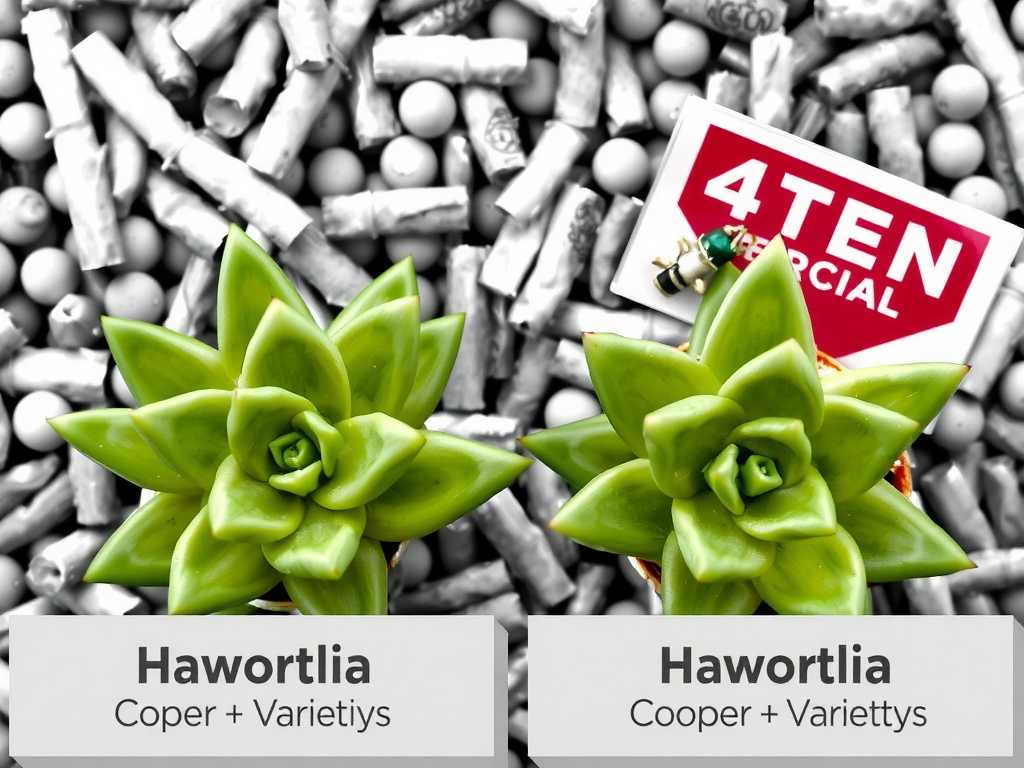
Before diving into specifics, it’s crucial to grasp what defines this genus. Haworthias are small, slow-growing succulents native to South Africa. They are prized for their intricate leaf patterns, textures, and forms, often growing in tight rosettes. Most are non-toxic and perfect for indoor settings due to their modest light requirements compared to other succulents.
The key to distinguishing Haworthia varieties lies in a careful observation of a few consistent features: leaf shape, transparency, texture, growth pattern, and flower structure.
Key Identification Features for All Haworthias
Focus on these five characteristics to start narrowing down any Haworthia’s identity.
Leaf Shape and Arrangement Examine the leaf form. Are they short and triangular, long and slender, or rounded and plump? How are they arranged? Is the rosette symmetrical, or do leaves grow in a more haphazard, clumping manner? For instance, Haworthia fasciata (Zebra Plant) has stiff, pointed leaves in a strict rosette, while Haworthia limifolia has spirally arranged, ridged leaves.
Leaf Windows and Transparency Many Haworthias have “windows”—translucent areas at the leaf tips or along the leaf face that allow light into the inner parts of the plant. This is a major clue. Haworthia cooperi varieties are famous for their highly transparent leaf tips. In contrast, Haworthia attenuata has opaque leaves with white tubercles (bumps).
Leaf Texture and Markings Feel and look closely. Are the leaves smooth, rough, or covered in raised white dots or bands? Are the markings on the surface (like H. attenuata) or mostly on the underside (like H. fasciata)? Texture is a reliable, consistent trait.
Growth Habit and Offsets Does the plant grow as a solitary rosette, or does it freely produce offsets (pups) to form a dense cluster? Some, like Haworthia retusa, tend to stay solitary, while Haworthia reinwardtii grows tall, columnar stems stacked with leaves.
Flower Structure While not always present, flowers offer definitive clues. Haworthia flowers are small, tubular, and grow on a thin, unbranched inflorescence. Color is usually white or pale pink with subtle green or brown veins. The shape and curvature of the flower tube can differ between species, as noted by botanists like Dr. John Manning in his work on South African flora.
A Deep Dive into Haworthia Cooperi and Its Varieties
Haworthia cooperi is a species beloved for its almost magical, translucent leaves that seem to glow. However, it comes in several distinct varieties that are often mislabeled. Here’s how to tell them apart.
The Classic Haworthia Cooperi var. Cooperi This is the standard form. It features chunky, rounded leaves with pronounced transparency at the tips. The leaves are smooth and often have a slight bluish-green hue. The rosette is mostly stemless, and it can offset to form a small cluster. The leaf ends are rounded and look like little green bubbles.
Haworthia Cooperi var. Truncata This variety is a standout. Its leaves appear literally truncated, as if cut off square at the ends. The leaf tips are perfectly flat and highly translucent, forming a neat, straight line across the top of the plant. It grows almost flush with the soil, giving it a unique, minimalist appearance. Expert collector Steven Hammer describes this form as “a living collection of glassy facets.”
Haworthia Cooperi var. Pilifera Identified by the presence of short, hair-like awns or bristles at the leaf tips. While still having transparent “windows,” the ends of the leaves are pointed and adorned with these fine filaments. The leaves are often longer and more tapered than the standard cooperi.
Haworthia Cooperi var. Dielsiana This variety tends to have longer, more slender leaves that are slightly recurved (curved backwards). The transparency is present but may be less pronounced than in var. cooperi. It forms tighter clusters and the leaves can take on a reddish tint under stress.
Haworthia Cooperi var. Venusta Perhaps the most distinctive, this form is covered in a fine, cobweb-like fuzz across its leaves. The hairs are soft and dense, covering the translucent leaf tips. It’s smaller and offsets prolifically, creating a mat of fuzzy, glowing rosettes.
Comparison Table: Cooperi Varieties at a Glance
| Variety | Leaf Tip Shape | Key Distinguishing Feature | Growth Habit |
|---|---|---|---|
| var. cooperi | Rounded, bulbous | Smooth, highly transparent “bubbles” | Low, clustering |
| var. truncata | Flat, square | Straight, truncated line of transparency | Very low, compact |
| var. pilifera | Pointed with awn | Fine bristles at the tip | Low, offsets freely |
| var. dielsiana | Slender, recurved | Longer leaves, less bulbous, red tints | Tight clusters |
| var. venusta | Rounded, obscured | Dense covering of white, cobweb-like hairs | Mat-forming |
Practical Identification Steps in the Store or Nursery
- Start with the Leaf Tips: Look for transparency first. If you see clear, window-like leaf ends, you’re likely holding a Haworthia cooperi type.
- Check for Textures: Feel for fuzz (venusta) or look for tiny bristles (pilifera). If smooth, note if the tip is round (cooperi) or flat (truncata).
- Assess the Form: Is it solitary or clustering? Is it growing tall or staying ground-level?
- Beware of Stress Colors: Remember that light, water, and temperature can change leaf color. Focus on permanent structural features like shape and texture, not temporary color.
Why Correct Identification Matters
Knowing exactly which Haworthia you have isn’t just for collectors. It ensures you provide the best care. Light needs can vary; a fuzzy H. cooperi var. venusta might appreciate slightly more shade than a smooth-leaved type to prevent scorching. Proper identification also helps you understand its growth rate and offsetting behavior, allowing for better potting and propagation planning.
According to a 2022 report from the International Succulent Introductions institute, accurately named plants have a significantly higher long-term survival rate among hobbyists, as care advice can be precisely matched.
My Haworthia has very long, thin leaves without transparent tips. What is it? You likely have a species from the Haworthia limifolia or Haworthia reinwardtii group. These species are known for their elongated, often textured leaves that lack the distinctive “windows” of the cooperi group. Focus on the leaf ridges and growth pattern (stem-forming vs. rosette) for further identification.

Can two different Haworthia varieties look exactly the same? While many look similar, close inspection of leaf texture, tip shape, and growth habit will almost always reveal differences. Mislabeling is common in the trade, but true botanical varieties have consistent, defining characteristics. Hybrids can create intermediate forms, which is why sourcing from reputable specialists is advised.
How important are flowers for identification? Flowers are the most reliable botanical identifier for pinpointing a species, as the structure of the flower tube is unique. For the casual grower, vegetative features (leaves, growth habit) are sufficient for distinguishing common varieties. However, for definitive classification, especially with rare types, flowering is essential.
Identifying Haworthia varieties becomes an engaging hobby in itself. Start by mastering the look of the classic Haworthia cooperi with its glowing leaf windows, then learn to spot the flat tips of truncata or the fine fuzz of venusta. Remember, patience and observation are your best tools. Each plant tells a story through its shape and texture, and with this guide, you’re now equipped to read it. Happy growing