bluename
 How to Identify Single-Petal Hippeastrum Varieties and Double-Petal Hippeastrum Varieties?
Have you ever found yourself admiring a stunning Hippeastrum (often sold as Amaryllis) but unsure exactly what type you’re looking at? The dazzling array of blooms can be confusing, especially when trying to distinguish between the elegant simplicity of single-petal varieties and the opulent fullness of double-petal ones. Knowing how to identify single-petal Hippeastrum varieties and double-petal Hippeastrum varieties is more than just a gardening party trick. It helps you make informed purchases, understand the plant’s care needs, and build a collection that matches your aesthetic vision. This guide will equip you with the knowledge to confidently tell them apart.
Understanding the Basic Anatomy of a Hippeastrum Flower
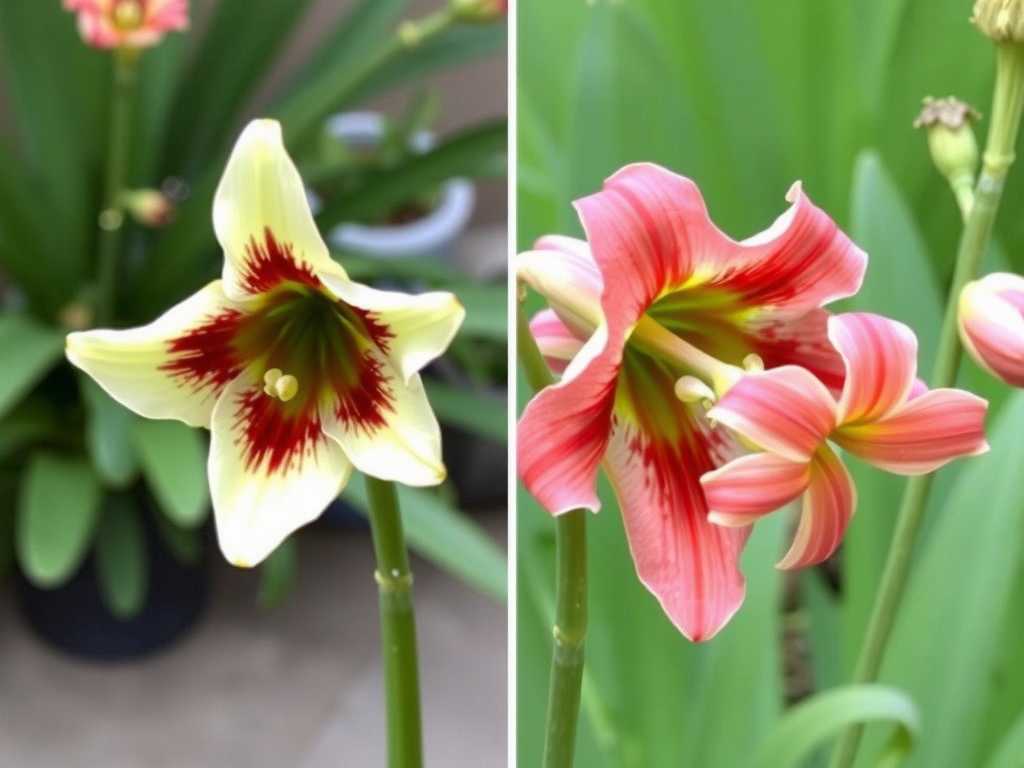
Before diving into the differences, let's establish a common language. A typical Hippeastrum flower has several key parts. The most prominent are the tepals, which are often simply called petals. In a standard bloom, there are six tepals arranged in two whorls. The inner three are true petals, and the outer three are sepals, but they look nearly identical. At the center, you'll find the reproductive structures: the stamens (with pollen-tipped anthers) and the pistil. This basic structure is your starting point for all identification.
The Hallmark of Single-Petal Hippeastrum Varieties
Single-petal Hippeastrums represent the classic, timeless form of the flower. They are defined by their straightforward, elegant structure.
Clean, Defined Structure The primary identifier is the number of visible tepal layers. A true single-petal Hippeastrum will have only one set of six tepals. This creates a clean, open cup or trumpet shape. The lines of the flower are sleek, and the bloom often has a graceful, almost lily-like appearance. You can clearly see all six tepals without any overlapping extra layers.
Visible Reproductive Center Because there is only one layer of tepals, the flower's center is completely open and on full display. You will easily see the six long stamens and the central pistil. This is a key diagnostic feature. In many singles, the anthers are laden with prominent, often contrasting pollen, adding to the visual interest of the bloom. Horticulturist Dr. Lena Feldmann notes, "Single-petal Hippeastrums offer a purity of form that highlights the beautiful symmetry of the plant's reproductive biology. The visible stamens are a signature trait."
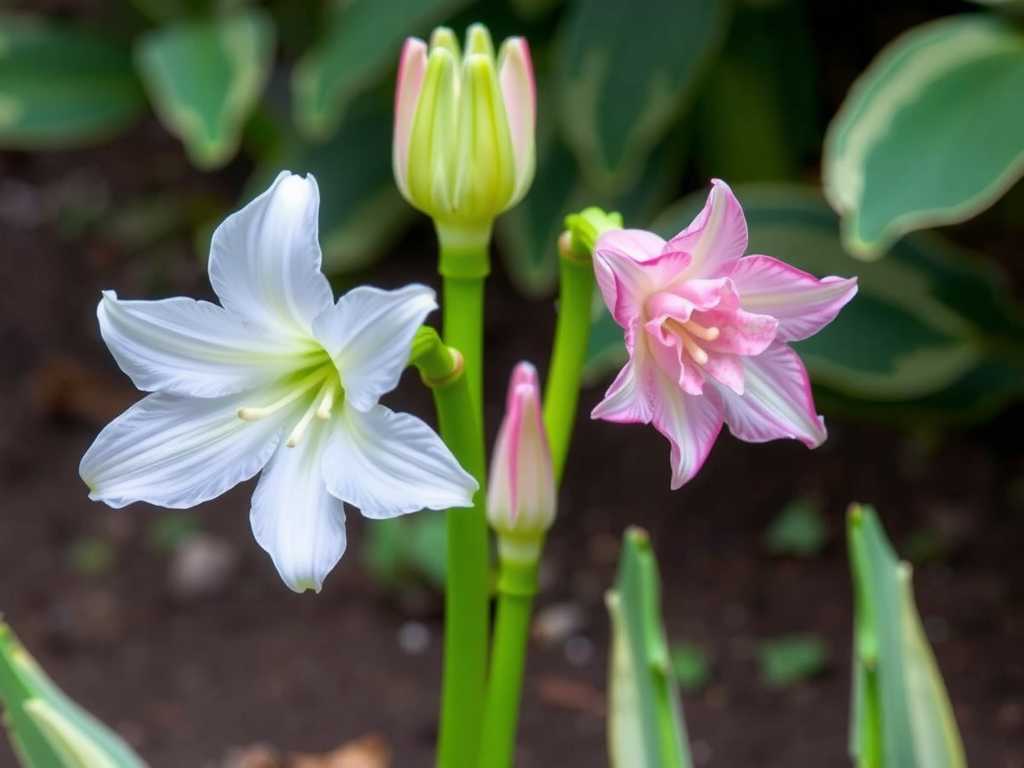
Common Examples and Growth Habit Popular examples include classic red varieties like ‘Red Lion’, elegant whites like ‘Apple Blossom’, and striking striped types like ‘Minerva’. In terms of growth, single-petal varieties often have a slight edge in stem strength, as the blooms are generally lighter. They may also direct slightly more energy into bulb development after flowering, as the flower structure requires less resource investment compared to doubles.
The Opulent World of Double-Petal Hippeastrum Varieties
Double-petal Hippeastrums are all about drama and volume. They have been selectively bred to multiply the number of petal-like structures, creating a lush, peony-like effect.
The Multi-Layered Bloom The most obvious characteristic is the presence of extra tepals. These aren't true petals in the botanical sense but are transformed stamens. Instead of developing into pollen-bearing anthers, these stamens become petaloid (petal-like). This process, known as "double-flowering" or "petalody," results in a bloom with many more than the standard six tepals. The count can range from a few extra to so many that the flower becomes a dense, ruffled pom-pom.
Concealed or Absent Center With all the extra tepals, the flower's center becomes crowded and often completely hidden. You may see no stamens at all, or just a few stubby, underdeveloped ones tucked deep within the bloom. The classic reproductive center is obscured, which is a dead giveaway that you're looking at a double variety. The focus is entirely on the lavish display of color and texture.
Common Examples and Considerations Stunning doubles include ‘Blossom Peacock’, ‘Dancing Queen’, and ‘Snow White’. It’s important to know that the weight of these heavy, multi-petaled blooms can sometimes cause stems to bend or require staking. A recent industry report from the International Flower Bulb Centre indicated a growing consumer preference for double varieties in indoor holiday displays, citing their "luxurious and long-lasting visual impact."
Side-by-Side Comparison: A Practical Identification Checklist
When you have a bloom in front of you, run through this quick checklist:
- Count the Tepal Layers: Can you see one distinct set of six? Or are there multiple layers, making it hard to count?
- Examine the Center: Are six prominent stamens and a pistil clearly visible? Or is the center filled with more petal-like structures?
- Observe the Form: Is the shape a clean trumpet (single)? Or is it full, ruffled, and dense (double)?
- Feel the Weight: Gently feel the bloom. Does it feel light and delicate (often single) or substantial and heavy (often double)?
Sometimes, you may encounter "semi-double" varieties. These fall in between, having more than six tepals—often 9 to 12—but still retaining some visible, though often shortened, stamens. They are a beautiful middle ground.
Why Accurate Identification Matters for Your Gardening Success
Knowing whether you have a single or double Hippeastrum goes beyond labeling. It informs your care strategy. Double varieties, with their heavier blooms, almost always benefit from a sturdy stake placed early to support the stem. Their complex flowers may also draw more energy from the bulb. Post-bloom, ensuring your double-flowered bulb gets excellent light and a balanced fertilizer is crucial for rebuilding strength for the next season. For singles, while staking can still be helpful for tall scapes, it's less frequently critical.
Furthermore, identification aids in propagation. Single-petal Hippeastrums, when pollinated, will reliably produce seed pods that can be grown into new plants (though they may not match the parent). Doubles, due to their altered reproductive parts, are often sterile or set seed very poorly. They are primarily propagated by bulb offsets, which is a slower process and partly explains why some rare doubles can be more expensive.
Can a Hippeastrum bulb change from producing single flowers to double flowers? No, the flower type is genetically encoded in the bulb. A bulb bred to be a double-petal variety will always produce double flowers (barring rare mutations). If you buy a labeled double, it will stay a double. The confusion sometimes arises when a bulb produces an atypical, weaker first bloom that may not fully express its double characteristics.
I have a Hippeastrum with 8 tepals. Is it a single or a double? This would be classified as a semi-double. True singles have 6 tepals. Once the count exceeds that due to petaloid stamens, it is no longer a standard single. Semi-doubles offer a lovely compromise with extra fullness while often still showing a hint of the central stamens.
Are double-petal Hippeastrums harder to grow than single-petal ones? Not necessarily harder, but they may require a bit more attention. The main difference is providing physical support for the heavier flower heads. Their cultural needs regarding light, water, and dormancy are identical to those of single-petal varieties. The key is to anticipate the need for staking.
Distinguishing between single and double Hippeastrum varieties unlocks a deeper appreciation for these magnificent plants. By focusing on the flower's core structure—the number of tepal layers and the visibility of the reproductive center—you can confidently categorize any bloom you encounter. Whether you prefer the elegant, architectural simplicity of a single or the lavish, romantic drama of a double, understanding their differences ensures you can provide the right care and fully enjoy the spectacular performance each type brings to your home or garden.