bluename
 How to Identify Single-Petal Papaver Rhoeas Varieties and Double-Petal Papaver Rhoeas Varieties
Have you ever been captivated by a field of vibrant red poppies, only to wonder why some look delicate and simple while others appear lush and ruffled? For gardeners, botanists, and flower enthusiasts, accurately distinguishing between single-petal and double-petal Papaver rhoeas varieties is a common challenge. Mistaking one for the other can lead to unmet garden design expectations or incorrect plant care. This guide will provide you with the clear, visual, and botanical clues needed to confidently tell them apart, ensuring you select the perfect poppy for your needs.
Understanding Papaver Rhoeas: The Common Corn Poppy
Before diving into identification, let's establish a baseline. Papaver rhoeas, commonly known as the corn poppy, field poppy, or Flanders poppy, is an annual flowering plant renowned for its vivid red blooms. It's a species with remarkable natural variation, which horticulturists have selectively bred into the distinct forms we see today. The primary division within cultivated varieties lies in their flower structure: single-petal (single) and double-petal (double).
The Hallmarks of Single-Petal Papaver Rhoeas Varieties
Single-petal varieties represent the classic, wild form of the corn poppy. They are the embodiment of simple, elegant beauty.
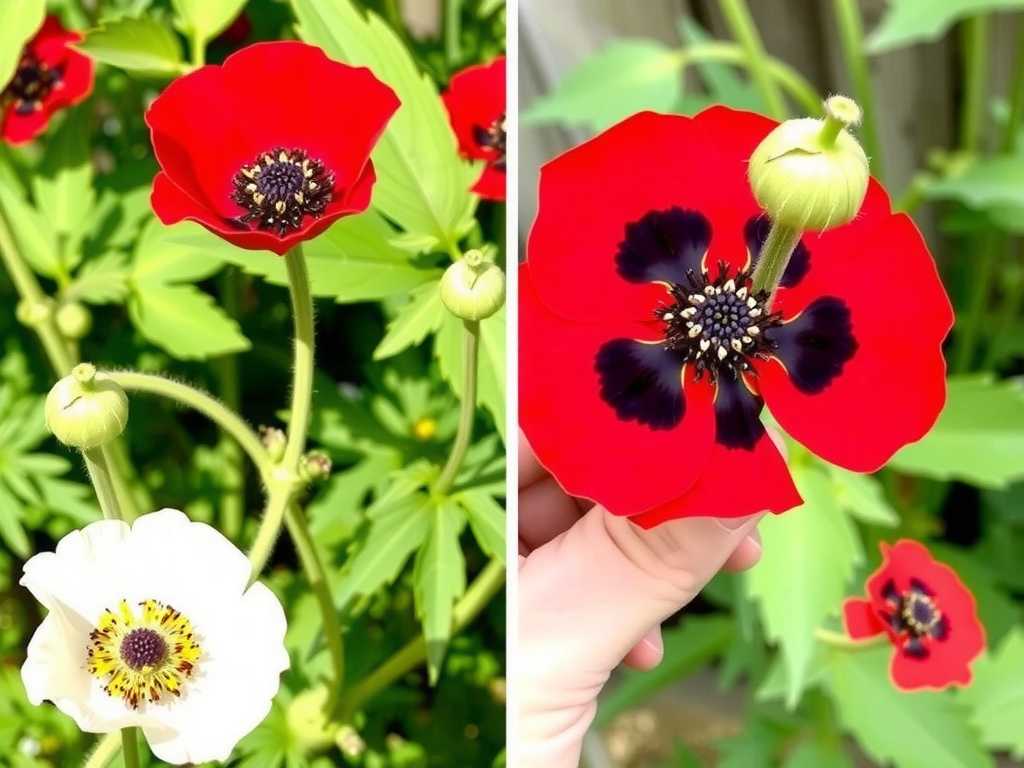
Floral Structure and Appearance A single-petal poppy bloom typically has four to six petals. These petals are often slightly crinkled, like crepe paper, and form an open, cup-shaped or saucer-shaped flower. The most defining feature is the central reproductive structure, which is prominently visible. You will clearly see a dark, rounded center (the stigma) surrounded by a ring of numerous black-tipped stamens. This open center is a key identifier. The petals themselves are usually arranged in a single, overlapping layer.
Common Examples and Characteristics Classic examples include the iconic 'Flanders Poppy' and varieties like 'American Legion.' They often come in brilliant red but also appear in shades of pink, white, and orange. These varieties are excellent for naturalistic plantings and meadows, as they closely resemble the wild type. They are also prolific self-seeders. As noted by botanist Dr. Eleanor Vance, "Single-petal Papaver rhoeas varieties are crucial for pollinators. Their exposed anthers and stigma provide easy access to nectar and pollen for bees and other insects."
Growth Habit and Foliage The plants usually have a slender, upright growth habit with wiry, hairy stems. The foliage is typically pinnately lobed, with leaves that are bristly and a medium green color. The overall impression is one of lightness and grace.
Identifying Double-Petal Papaver Rhoeas Varieties
Double-petal varieties are the result of selective breeding for a more ornate, garden-centric display. They offer a dramatically different look.
Floral Structure and Transformation The most striking difference is the flower's form. In double-petal poppies, the stamens have been transformed—through breeding—into additional petals. This process, called petalody, results in a bloom that is packed with layers of petals. There is no visible central disc of stamens; instead, the flower is a dense, often ruffled or frilly, pom-pom-like structure. The bloom may appear more ball-shaped and can be so heavy that the stem nods under its weight.
Common Examples and Characteristics Popular double varieties include the 'Shirley Poppy' series, which originated from a single mutant poppy found in a garden. These come in a breathtaking array of colors, often with picotee edges (a different colored edge) and subtle shades. Another example is the 'Angel's Choir' mix. Because the reproductive parts are absent or hidden, these varieties are often sterile or produce very little seed, which can be an advantage for controlled garden design but a drawback for those seeking self-sowing displays.
Growth and Foliage Nuances While the foliage is similar to single-petal types, the stems of double varieties may need more support due to the weight of the flowers. The plants might be slightly shorter and bushier, bred for container or border use. The focus is entirely on the spectacular, long-lasting floral display.

Side-by-Side Comparison: Your At-a-Glance Guide
Let's crystallize the differences with a direct comparison.
Visual Cue: The Flower Center This is the fastest way to tell. Single-petal: Clearly visible black center with a ring of stamens. Double-petal: No visible center; a mass of petals fills the entire bloom.
Petal Count and Arrangement Single-petal: One layer of 4-6 petals. Double-petal: Multiple layers, often with dozens of petals in a dense arrangement.
Pollinator Activity Observe the bees. Single-petal varieties will be actively visited by pollinators buzzing around the center. Double-petal varieties will often see little to no pollinator activity, as nectar access is blocked.
Seed Pod Formation After flowering, single-petal poppies develop the classic, rounded seed pod (capsule) with a crown-like top, filled with seeds. Double-petal poppies may form a small, misshapen pod or none at all.
Practical Tips for Gardeners and Buyers
When selecting seeds or plants, always check the variety name and description. Terms like "single," "wild type," or "Flanders" indicate single-petal forms. Words like "double," "ruffled," "peony-flowered," or "Shirley" point to double-petal forms. Examine seed packet photos closely for the tell-tale center. If you're buying plants in bloom, apply the central-disc test immediately.
Can a single-petal poppy plant produce a double flower, or vice versa? No, this is a fixed genetic trait. A plant grown from a seed of a true single-petal variety will produce only single flowers. The double-petal trait is carefully bred and maintained through controlled seed saving. You might see variation in petal number, but a true double form will not spontaneously appear from a single variety seed stock.
Are double poppies harder to grow than single poppies? Not necessarily harder, but they have different needs. Both types prefer full sun and well-drained soil. Double varieties may require staking to support their heavy blooms. The main difference is propagation: single poppies readily self-seed, while double poppies often require intentional seed saving (if they produce any) or repurchasing seeds each season.
Which type is better for a wildlife-friendly garden? For supporting pollinators like bees, single-petal Papaver rhoeas varieties are unequivocally the better choice. Their accessible pollen and nectar provide vital food sources. Double varieties, while beautiful, are primarily ornamental and offer little ecological value to insects. For a cottage garden that self-sows and buzzes with life, choose singles. For a curated, dramatic floral display in a border, choose doubles.
Mastering the identification of single-petal and double-petal Papaver rhoeas varieties empowers you to make perfect choices for your garden's aesthetic and ecological goals. Remember to look first for the presence or absence of the dark, stamen-ringed center. Embrace the simple, pollinator-friendly charm of the single-petal forms, or indulge in the lavish, romantic appeal of the doubles. With this knowledge, you can confidently cultivate these symbols of remembrance and beauty, knowing exactly the kind of poppy spectacle you will create.