bluename
 How to Recognize Multi-Color Lupin Varieties and Single-Color Lupin Varieties?
Have you ever stood before a stunning display of lupins, captivated by their vibrant spires, yet found yourself unsure if you're looking at a multi-color lupin variety or a sophisticated single-color planting scheme? You're not alone. Distinguishing between these two types can be tricky for gardeners and flower enthusiasts. This guide will provide you with the clear, actionable knowledge you need to confidently identify multi-color and single-color lupin varieties, helping you make informed choices for your garden or simply deepen your appreciation for these magnificent plants.
Understanding the Lupin's Basic Structure
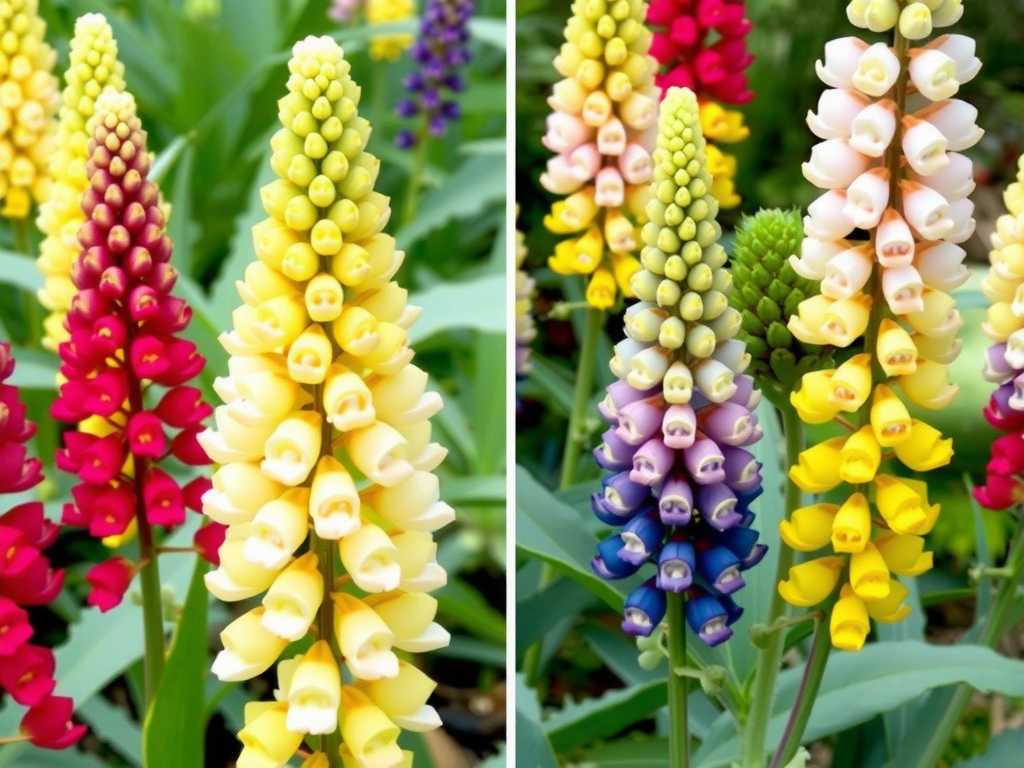
Before diving into color distinctions, let's establish a common understanding of the lupin flower. The iconic bloom is a dense, upright spike, or raceme, composed of many individual pea-like flowers. This structure is key to observation. Each small flower on the spike can have its own color characteristics, which is the fundamental basis for our identification.
The Hallmarks of Multi-Color Lupin Varieties
True multi-color lupin varieties, often referred to as "bicolor" or "tricolor" types, display two or more distinct colors on a single flower spike. This is a genetic trait bred into specific cultivars.
Look for the Color Transition on Individual Flowers. The most reliable indicator is on the individual florets themselves. In a classic bicolor lupin, the standard (the large upper petal) and the wings (the two side petals) are often different colors. A common pattern is a white or light-colored standard with vividly colored wings in deep purple, pink, or red. The keel (the bottom two petals) may introduce a third accent color. This contrast happens on every flower, creating a spectacular, confetti-like effect across the entire spike.

Observe the Overall Spike Pattern. Because each floret carries multiple colors, the entire flower spike presents a complex, intermingled tapestry. From a distance, a multi-color lupin spike might look like a blend of hues, but up close, the repeating pattern on each small flower becomes clear. Popular series like the 'Russell Hybrids' are famous for their wide range of these bicolor and tricolor combinations, from 'The Governor' (blue and white) to 'Chandelier' (yellow and orange).
Check the Cultivar Name and Description. Nurseries and seed catalogs are your best friends. Cultivars known for multi-color displays are often explicitly named or described as such. Terms like "Harlequin," "Mixed," "Confetti," "Bicolor," or specific color-pair names (e.g., 'Popsicle Mix', 'Tutti-Frutti') are strong clues. As noted by horticulturist Dr. Eleanor Green in The Modern Perennial Garden, "The stability of the bicolor trait in modern lupin hybrids has allowed for an explosion of predictable yet stunning multi-hued varieties."
The Characteristics of Single-Color Lupin Varieties
Single-color, or solid-color, lupin varieties exhibit a uniform hue across the entire flower spike. This creates a bold, architectural statement in the garden.
Seek Uniformity Across the Florets. On a true single-color lupin, every part of every individual floret—standard, wings, and keel—is the same color. A 'Noble Maiden' lupin, for instance, displays pure, creamy white on all petals. A 'Persian Slipper' spike is consistently a rich sapphire blue. There is no contrasting "eye" or differently colored standard. The effect is one of solid, majestic color from the bottom to the top of the spike.
Appreciate the Subtle Gradations. It's important to note that "single-color" does not always mean "flat color." Some varieties may exhibit slight, natural tonal gradations, such as a deeper shade at the tip of the standard or a faint veining. However, these are nuances of the same base color family, not introductions of a second, contrasting color. The overall impression remains solidly monochromatic.
Rely on Cultivar Specifics. Breeders have developed incredibly pure single-color strains. Cultivars with names like 'Blushing Bride' (pink), 'Desert Sun' (yellow), 'Masterpiece' (deep red), and 'Polar Princess' (white) are bred specifically for their solid, unwavering color presentation. Selecting these named varieties guarantees a uniform color outcome.
Side-by-Side Comparison and Common Scenarios
Let's apply this knowledge to clear up frequent points of confusion.
A Dense Planting of Single-Color Spikes vs. One Multi-Color Spike. This is a common mix-up. A gardener might plant several lupins, each a different solid color (e.g., one blue, one pink, one yellow), close together. From afar, the bed may look multi-colored. The key is to isolate one spike: if that single spike contains only blue flowers, it's a single-color variety planted in a mixed scheme. A true multi-color variety packs all those colors onto one plant.
The "Eye" or "Banner" Spot. Some single-color lupins, particularly species or older varieties, may have a very small white or pale spot on the standard petal. This is not the same as the dramatic two-tone effect of a bicolor hybrid. If the spot is minimal and the rest of the flower is uniform, it is still classified primarily as a single-color type. The multi-color designation is reserved for strong, defining contrasts.
What is the most famous multi-color lupin series? The Russell Lupin series, developed by horticulturist George Russell, is arguably the most famous. It set the standard for the wide range of both clear single-color and spectacular bicolor lupins we see in gardens today. Many modern hybrids trace their lineage back to these plants.
Can a multi-color lupin plant produce a single-color spike? Rarely, and it's usually a sign of reversion or an unstable cultivar. True multi-color varieties are genetically programmed to produce the color pattern. If you purchase a named bicolor cultivar and it produces a solid spike, it could be a seed mix error or a spontaneous mutation. For reliability, propagate from divisions or purchase plants from reputable nurseries.
Which type is better for a formal garden design? Single-color lupin varieties often lend themselves better to formal or structured designs due to their clean, bold lines and uniform appearance. They can be planted in blocks or rows for dramatic effect. Multi-color varieties are perfect for cottage gardens, wildflower meadows, or informal borders where their vibrant, playful complexity can shine.
Recognizing the difference between multi-color and single-color lupin varieties empowers you as a gardener. It allows for precise planning, whether you seek the joyful riot of a bicolor 'Tequila Flame' or the serene, vertical elegance of a solid 'Blue Jacket'. By focusing on the color pattern of the individual florets on a single spike and supporting your observation with trusted cultivar names, you can navigate the beautiful world of lupins with confidence and expertise. Your garden, and your appreciation for its details, will be all the richer for it.