bluename
 How to Distinguish Yellow-Flower Marguerite Daisy Varieties and White-Flower Marguerite Daisy Varieties?
Have you ever admired a cheerful patch of daisies, only to wonder exactly what type you're looking at? For gardeners and plant enthusiasts, telling apart the vibrant yellow-flower Marguerite daisy varieties from the classic white-flower ones can be surprisingly tricky. They often share the same common name, leading to confusion at nurseries and in garden planning. This guide will clear up the uncertainty, providing you with a clear, step-by-step method to confidently identify whether you have a yellow or white Marguerite daisy variety. By the end, you'll be able to distinguish them at a glance, ensuring you choose the perfect plant for your desired garden aesthetic.
Understanding the Marguerite Daisy Family
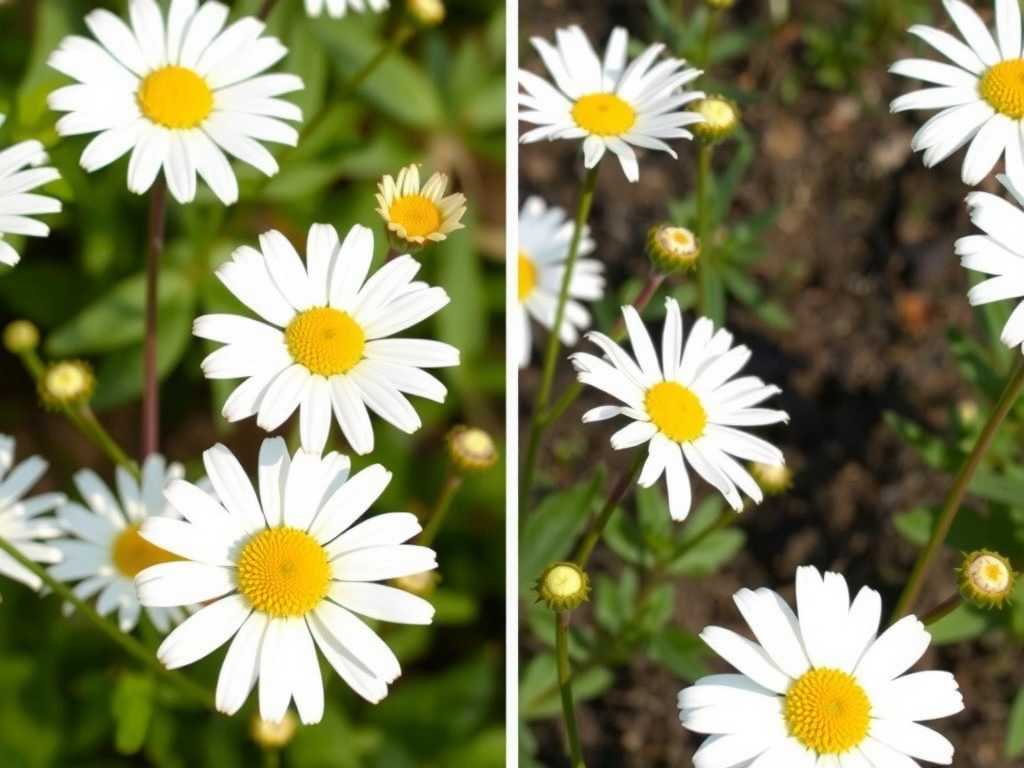
First, let's establish what we mean by "Marguerite daisy." This common name primarily refers to plants in the Argyranthemum genus, perennial shrubs often grown as annuals in cooler climates. They are beloved for their prolific, daisy-like blooms and fine, fern-like foliage. However, the name is sometimes also loosely applied to certain cultivars of Chrysanthemum or even Leucanthemum. Our focus will be on the popular Argyranthemum varieties, where the yellow vs. white distinction is most relevant for home gardeners. According to horticulturalist Dr. Eleanor Greene, "The Argyranthemum genus offers a spectacular range of colors, but understanding the lineage of yellow versus white blooms starts with the flower's center, or disc floret."
Key Identification Feature: The Flower Disc
The most immediate and reliable way to distinguish between yellow and white Marguerite daisy varieties is to examine the center of the flower, known as the disc.
For classic white-flower Marguerite daisy varieties, the disc is almost invariably a bright, sunny yellow. This creates the iconic "white petals with a yellow center" look. The white petals (ray florets) are typically pure white, sometimes with a very subtle creamy hue.
In contrast, true yellow-flower Marguerite daisy varieties present a harmonious color scheme. Their disc florets are usually a shade of yellow that matches or complements the yellow petals. You might see a lemon-yellow disc with butter-yellow petals, or a golden disc with canary-yellow petals. A mismatched center is a strong clue. If you see yellow petals surrounding a distinctly dark brown or greenish disc, you might be looking at a different type of daisy altogether, such as a Rudbeckia (Black-eyed Susan).
Foliage and Growth Habit Clues
While the flower is the primary identifier, the plant's structure and leaves offer supporting evidence.
White-flowering Margerites, like the popular 'Butterfly' or 'Madeira' series, often have a very fine, lacy, and delicate grey-green foliage. The leaves are deeply dissected, almost feathery in appearance. Their growth habit tends to be mounding and densely branched, creating a cloud of white flowers above the soft foliage.
Many yellow-flower Marguerite daisy varieties, such as 'Golden Butterfly' or 'Dana', may have slightly broader leaf segments. The foliage can sometimes appear a brighter, more vibrant green compared to the grey-green of some white varieties. However, this is a general tendency and not an absolute rule, as breeding has produced a wide range of foliar traits. Pay more attention to the overall form; yellow varieties can be equally mounding but may exhibit a slightly different texture.
Bloom Time and Environmental Response
Observation over a season can provide further clues. Some white varieties are known for their exceptional cool-weather tolerance in spring and fall. They may slow down blooming during the peak heat of summer.
Certain yellow-flower Marguerite daisy varieties have been bred for heat persistence. They might continue to produce blooms more steadily through warm periods, though all Marguerites appreciate some afternoon shade in hot climates. Noting when your plant blooms most vigorously can add context to its identification.

Popular Cultivars for Comparison
Let's look at specific named varieties to solidify the differences.
Classic White Varieties:
- Argyranthemum 'Butterfly White': Pure white petals with a bright yellow center, extremely fine foliage.
- Argyranthemum 'Madeira Crested White': White petals with a yellow disc, notable for crested or fringed petal tips.
- Argyranthemum frutescens: The species plant, often with white flowers and a yellow center.
Common Yellow Varieties:
- Argyranthemum 'Golden Butterfly': Soft, buttery-yellow petals with a matching yellow disc. A direct yellow counterpart to 'Butterfly White'.
- Argyranthemum 'Dana Yellow': Vivid yellow blooms on a well-branched, compact plant.
- Argyranthemum 'Yellow Sugar': Features bright yellow, semi-double flowers (with extra petals).
Why Accurate Identification Matters
Knowing whether you have a yellow or white Marguerite daisy variety isn't just academic. It affects your garden design. White varieties provide brilliant contrast in moon gardens or cool-color palettes, while yellow varieties bring warmth and vibrancy to sunny borders. From a care perspective, understanding the plant's expected habit helps with proper spacing and pruning. A 2023 report from the Royal Horticultural Society emphasized that correct plant identification is the first step in implementing targeted, effective care practices, leading to healthier and more sustainable gardens.
What if my white Marguerite has a few yellow petals mixed in? This is not uncommon and is usually a result of a spontaneous genetic mutation or reversion, often called a "sport." The plant may produce a stem where the pigment fails to suppress, resulting in yellow streaks or even a full yellow flower on an otherwise white plant. You can prune this stem back if you wish to maintain the all-white appearance.
Are there pink or purple Marguerite daisies, and how do they fit in? Yes! Modern breeding has expanded the palette to include pink, coral, and lavender varieties. In these cases, the disc floret color is the key. Pink varieties often have a yellow disc, linking them to the white-flower lineage. However, some deeper pink or bi-color cultivars may have a disc that trends toward a deeper, bronzy color. Always check the center.
Can the same plant produce both yellow and white flowers? A single, stable Argyranthemum plant will not naturally produce both distinctly yellow and distinctly white flowers simultaneously. If you see this, it's likely either a mixed planting in one pot, a sport (as mentioned above), or potentially a different genus like Osteospermum (African daisy), which has cultivars that can change color based on temperature or age.
Distinguishing between these delightful plants ultimately comes down to a careful look at the flower's heart. The bright yellow disc set against white petals is the hallmark of the classic white Marguerite. When the petals and center share a harmonious yellow hue, you've found a true yellow-flower variety. By combining this primary clue with observations of foliage and growth, you can become adept at identifying them with confidence. This knowledge empowers you to make informed choices, creating the precise color harmony and visual effect you desire in your garden landscape.