bluename
 How to Recognize Big-Flower Daisy Varieties and Small-Flower Daisy Varieties?
Have you ever admired a cheerful patch of daisies, only to wonder exactly what kind you’re looking at? The term “daisy” is a broad one, covering a wide array of plants that can differ dramatically in size, form, and care needs. For gardeners and flower enthusiasts, confusing a large-flowered Shasta daisy with a delicate, small-flowered English daisy can lead to planting mistakes and unmet expectations. This guide is designed to solve that exact problem. We will provide you with a clear, actionable framework to confidently distinguish between big-flower daisy varieties and small-flower daisy varieties, ensuring you choose and nurture the perfect daisies for your space.
Understanding the Daisy Family
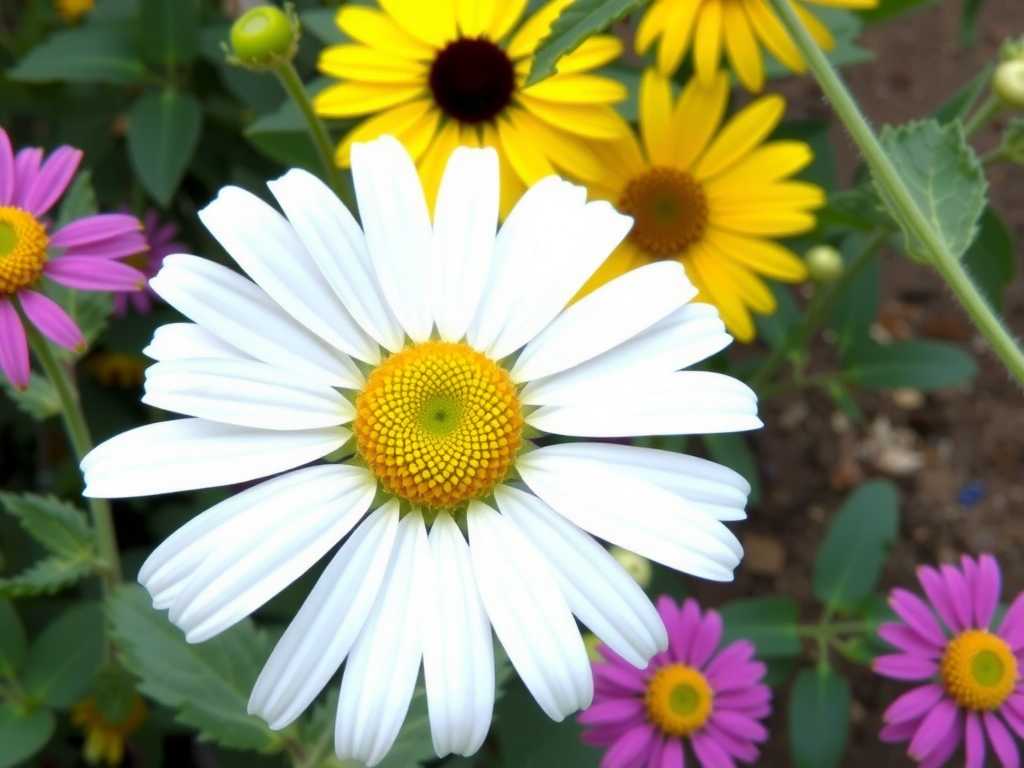
First, it’s helpful to know that “daisy” isn’t a single botanical species. It commonly refers to plants in the Asteraceae family, characterized by their composite flower heads—what we see as a single flower is actually a cluster of many tiny florets. This family includes everything from sunflowers to asters. When we talk about recognizing daisy types, we’re often distinguishing between different genera and species based on the size and structure of these composite heads.
Key Characteristics for Identification
You can accurately tell big-flower and small-flower daisies apart by examining a few specific traits. Focus on these aspects rather than just a quick glance at the bloom.
Flower Head Diameter This is the most obvious starting point. Take a ruler or even use your fingers for a rough estimate.
- Big-Flower Daisies: Typically have flower heads measuring 2 inches (5 cm) or more in diameter. Some popular varieties can reach 4 to 5 inches across.
- Small-Flower Daisies: Usually feature flower heads under 2 inches (5 cm) in diameter. Many are 1 inch or even smaller.
Plant Height and Habit The size of the bloom often correlates with the overall scale of the plant.
- Big-Flower Daisies: These tend to be taller, upright perennials or shrubs. They form substantial clumps and make a bold statement in borders.
- Small-Flower Daisies: These often grow lower to the ground. They may form spreading mats, work as edge plants, or even be used in lawn alternatives.
Foliage and Leaf Structure Don’t forget the leaves! Foliage provides crucial clues.
- Big-Flower Daisies: Often have broader, lance-shaped, or deeply lobed leaves that are coarser in texture. The foliage is robust to support the large blooms.
- Small-Flower Daisies: Frequently possess finer, more delicate leaves. They may be spoon-shaped, feathery, or form a dense basal rosette.
Profiles of Common Big-Flower Daisy Varieties
Let’s apply those characteristics to some well-known large-blooming daisies.
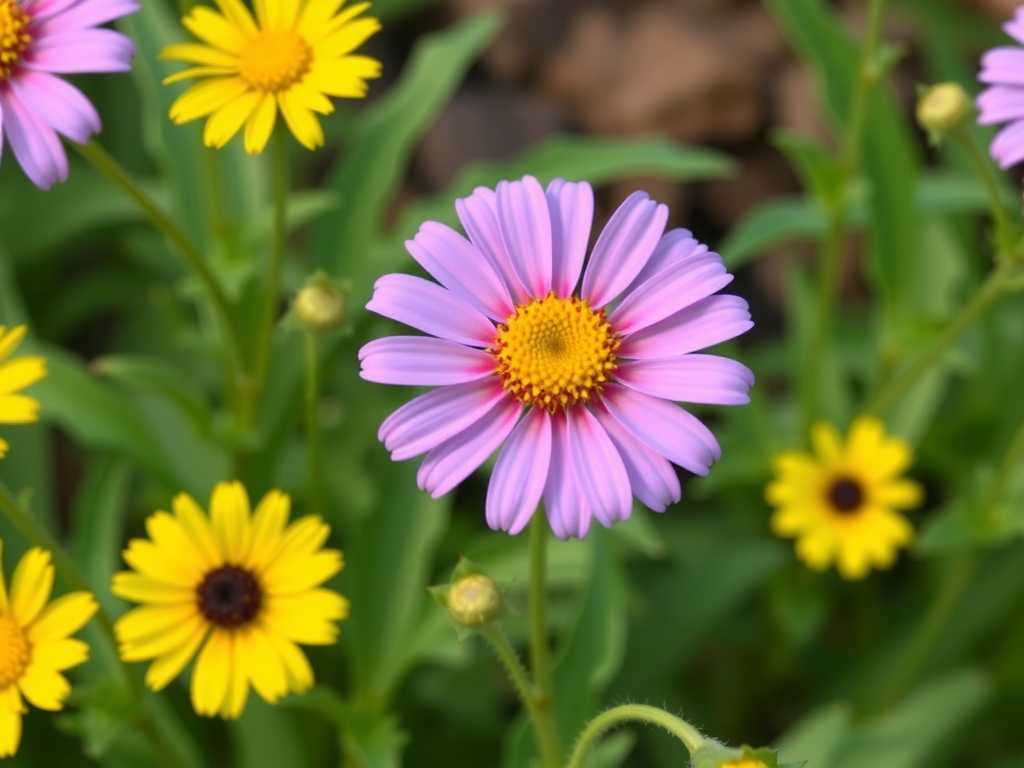
Shasta Daisy (Leucanthemum x superbum) The classic big, white daisy. Shastas are perennial garden staples.
- Flower: Pure white petals (ray florets) surrounding a bright yellow center (disk florets). Blooms range from 3 to 5 inches wide.
- Plant: Forms tall, sturdy clumps 2 to 4 feet high.
- Foliage: Dark green, lance-shaped, toothed leaves.
- Expert Tip: As noted by horticulturist and author Tracy DiSabato-Aust, deadheading Shasta daisies regularly promotes continuous blooming throughout the summer.
Oxeye Daisy (Leucanthemum vulgare) A wild ancestor of the Shasta, often found in meadows.
- Flower: Slightly smaller than Shastas, about 1.5 to 2.5 inches wide. White petals are often more spaced out.
- Plant: Grows 1 to 3 feet tall. It can be invasive in some regions.
- Foliage: Basal leaves are spoon-shaped, while stem leaves are deeply lobed.
Gerbera Daisy (Gerbera jamesonii) The iconic, vibrant daisy of the florist trade.
- Flower: Exceptionally large, up to 5 inches across. Comes in brilliant reds, pinks, oranges, yellows, and whites.
- Plant: A tender perennial, usually grown as an annual in cooler climates. Forms a low clump of leaves.
- Foliage: Large, lobed, or deeply toothed leaves that are often fuzzy underneath.
Profiles of Common Small-Flower Daisy Varieties
Now, let’s explore the charming world of smaller-flowered types.
English Daisy (Bellis perennis) The classic lawn daisy, beloved for its tiny, perfect form.
- Flower: Tiny heads, only 0.5 to 1 inch across. Colors include white, pink, and red, often with a yellow center.
- Plant: A low-growing perennial, rarely exceeding 6 inches in height. Forms a dense rosette.
- Foliage: Small, spoon-shaped leaves that form a tight base.
Fleabane (Erigeron species) A delicate, airy native wildflower that naturalizes easily.
- Flower: Numerous small daisies, about 0.5 to 1 inch wide, with very fine petals. Colors are often white, pink, or lavender.
- Plant: Height varies by species but typically 1 to 3 feet, with a wiry, branching habit.
- Foliage: Narrow, sometimes hairy leaves along the stems.
Livingstone Daisy (Dorotheanthus bellidiformis) A succulent ground-cover known for its dazzling colors.
- Flower: About 1 to 2 inches wide, but the plant’s miniature scale makes it fit here. Petals are iridescent in pinks, purples, oranges, and yellows.
- Plant: A low, spreading annual succulent, only 4 to 6 inches tall.
- Foliage: Fleshy, cylindrical leaves that store water.
Practical Application in Your Garden
Why does this distinction matter? Choosing the right type affects your garden design and maintenance.
- For Impact & Cutting Gardens: Big-flower daisy varieties like Shasta and Gerbera create focal points and provide long-stemmed cuts for vases.
- For Edging, Rockeries & Ground Cover: Small-flower daisy varieties like English Daisy or Livingstone Daisy are perfect for borders, crevices, and creating carpets of color.
According to a recent National Gardening Association survey, over 60% of home gardeners prioritize “right plant, right place” principles to reduce maintenance. Correctly identifying daisy types is a key part of this strategy. A towering Shasta daisy would overwhelm a rock garden, while a tiny English daisy would get lost in the back of a perennial border.
Can I grow big-flower and small-flower daisies together? Absolutely. This can create beautiful layered effects. Plant taller big-flower daisies as a backdrop, with clusters of small-flower daisies spilling out in front. Ensure both have similar sun and water requirements for best results.
Is the color a reliable way to tell them apart? No, it is not. While Gerbera daisies are famous for bright colors and Shastas for white, there are pink Shasta cultivars and white Gerberas. Always rely on the combination of flower size, plant structure, and leaf characteristics for accurate identification.
Which type is easier to grow for beginners? Small-flower daisy varieties like the English Daisy or Fleabane are often more adaptable and lower-maintenance. They typically require less staking and can tolerate a wider range of conditions. However, Shasta daisies are also very hardy perennials and a great choice for beginner gardeners looking for larger blooms.
Recognizing the difference between big and small daisy varieties unlocks a deeper understanding of your garden. By paying attention to the diameter of the flower head, the overall stature of the plant, and the details of its foliage, you can move beyond a generic label. Whether you’re drawn to the bold statement of a Gerbera or the delicate charm of a Bellis, you now have the knowledge to select, identify, and care for them with confidence. Your garden, and your bouquets, will be all the better for it.