bluename
 How to Identify Blue-Flower Cornflower Varieties and Purple-Flower Cornflower Varieties?
Have you ever admired a vibrant patch of cornflowers, only to wonder exactly what type you're looking at? Distinguishing between blue-flower cornflower varieties and purple-flower cornflower varieties can be surprisingly tricky for gardeners and nature enthusiasts. The classic "cornflower blue" is iconic, but the world of Centaurea cyanus offers a spectrum of hues, from true azure to deep violet and magenta. Misidentification can lead to incorrect care, mismatched garden designs, or simply a nagging curiosity left unsatisfied. This guide is designed to solve that problem. We will provide you with a clear, step-by-step framework to confidently identify these beautiful plants, focusing on visual cues, growth habits, and popular cultivars.
Understanding the Cornflower Basics
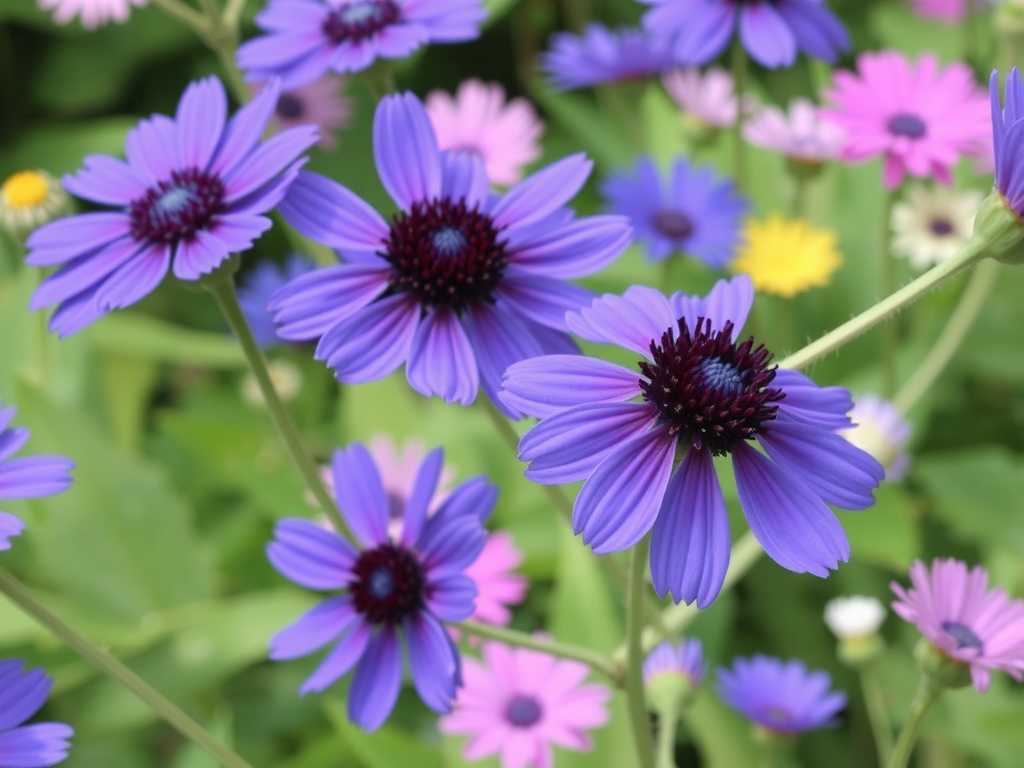
Before diving into color specifics, it's crucial to confirm you're indeed looking at a cornflower. Cornflowers, or bachelor's buttons, are annual flowering plants in the Asteraceae family. They typically feature slender, grey-green stems and narrow, lance-shaped leaves. The most distinctive feature is the flower head itself: it's composed of numerous tiny florets clustered together, surrounded by a crown of larger, fan-shaped ray florets that create the "petal" effect. This structure is key to separating them from other blue or purple flowers like salvias or delphiniums.
The Spectrum of Blue: Identifying Blue-Flower Cornflower Varieties
True blue flowers are a rarity in the plant kingdom, making blue cornflowers particularly prized. Identification goes beyond just noting a blue hue.
Focus on Hue and Tone Genuine blue cornflower varieties exhibit a clear, sky-to-sapphire blue color without strong reddish or pinkish undertones. Observe the flowers in natural morning light for the most accurate color assessment. The blue should appear vivid and saturated. According to horticulturist Dr. Eleanor Vance, "The classic 'cornflower blue' is a spectral hue with a hex code close to #6495ED. When identifying, look for this clean, cool blue that defines the species' wild form."
Examine the Flower Center In most classic blue varieties, the central disc florets are a contrasting dark purple or deep maroon. This dark center, surrounded by the bright blue rays, creates a striking bullseye pattern that is a hallmark of the traditional cornflower.
Consider Popular Blue Cultivars Knowing common cultivar names aids identification. 'Blue Boy' is perhaps the most famous heirloom variety, producing a profusion of intense, medium-blue flowers. 'Blue Diadem' offers larger, fully double flowers of a rich azure. 'Polka Dot' mixes colors but often includes a high proportion of deep, true blue blossoms. If the plant matches these descriptions, you're likely looking at a blue-flower cornflower variety.
The Range of Royalty: Identifying Purple-Flower Cornflower Varieties
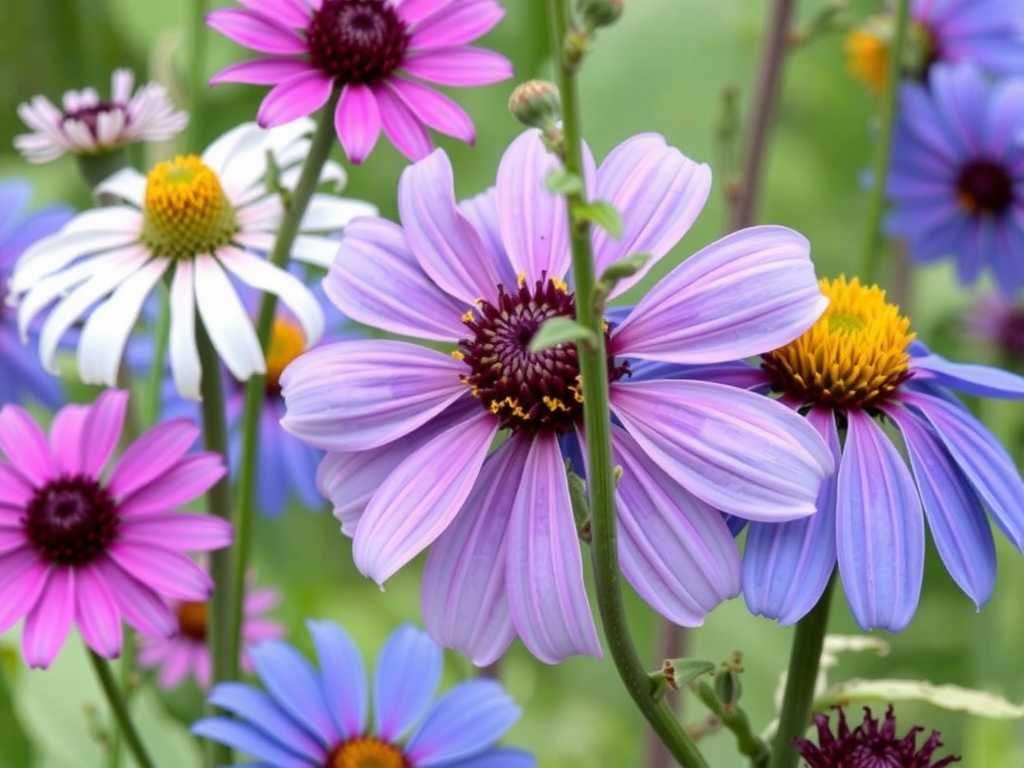
Purple cornflowers encompass shades from soft lavender to nearly burgundy. Their identification relies on detecting underlying color notes.
Look for Red or Pink Infusions Purple is essentially blue with red added. Therefore, purple-flower cornflower varieties will show hints of magenta, wine, or raspberry within the petals. Hold a bloom against a blue variety if possible; the difference in undertone becomes immediately apparent. The central disc may also be less contrasting, sometimes appearing in a similar tonal family as the rays.
Analyze the Color Saturation Some purple varieties can be quite deep, mimicking a dark blue. A good trick is to look at the flower in bright sunlight. True dark blues will retain their coolness, while deep purples will reveal warm, reddish flashes when the light hits them directly.
Recognize Key Purple Cultivars Specific cultivars are bred for their purple shades. 'Black Ball' is a standout, with flowers so deep a maroon-purple they appear almost black in bud. 'Red Boy' is another classic, despite its name, it typically produces flowers in a rich, velvety crimson-purple hue. 'Purple Heart' often shows a vibrant, medium purple color. The presence of these characteristic shades strongly indicates a purple-flower cornflower variety.
Beyond Color: Supporting Identification Factors
Color is the primary indicator, but these secondary traits will solidify your identification.
Plant Height and Form Some varieties have predictable growth habits. Traditional blue varieties often grow taller (60-90 cm) with a more open form. Many modern dwarf mixes, which frequently include purples and pinks, stay compact (20-30 cm). However, this is not a rigid rule, as breeding has diversified forms.
Foliage Characteristics While generally similar, some cultivars may have slightly fuzzier or more silvery foliage. This is more often linked to drought tolerance traits than flower color, but noting the overall plant appearance adds to your identification profile.
Seed Source and Context If you're in a garden setting, consider the source. A packet of seeds labeled "Classic Cornflower" or "Blue Mix" will lean toward blue varieties. Packets labeled "Jubilee Gem" or "Pastel Mix" are far more likely to contain purple, pink, and white flowers alongside the blues.
What is the most common mistake when identifying cornflower colors? The most frequent error is judging color in poor light, such as deep shade or harsh midday sun. Low light can make purples look blue, and intense glare can wash out subtle undertones. Always observe in soft, natural light for the most accurate color assessment.
Can a single cornflower plant produce both blue and purple flowers? Typically, no. A single plant from a pure, stable variety will produce flowers within a specific color range. However, if you have a plant from a mixed or hybrid seed packet, it's possible for that one plant to express an unexpected color, but it won't change from blue to purple on the same stem. Cross-pollination in previous generations can sometimes lead to surprising color expressions.
Are purple cornflowers natural or are they always bred? While the iconic wild cornflower is blue, purple variations do occur naturally in the wild due to genetic variation, though they are less common. The vast array of purple shades available to gardeners today—from lavender to deep wine—is the result of selective breeding to stabilize and enhance these naturally occurring color mutations. This breeding expertise, as noted in the Royal Horticultural Society's plant trials, has significantly expanded the color palette available to enthusiasts.
Successfully distinguishing between these varieties enriches your gardening experience and allows for more intentional design. Remember to prioritize observation in good light, examine the flower center, and consider the plant's context. Whether you're drawn to the timeless brilliance of the blue varieties or the regal depth of the purple ones, understanding these identifying features ensures you can always name the beauty in your garden or in the field. With this knowledge, the once-confusing spectrum of cornflowers becomes a clear and delightful map of diversity.