bluename
 How to Quickly Recognize Trailing Petunia Varieties and Upright Petunia Varieties?
Have you ever stood in a garden center, staring at rows of vibrant petunias, and felt completely unsure which ones will cascade beautifully from your hanging baskets and which ones will stand tall in your flower beds? You’re not alone. Distinguishing between trailing petunia varieties and upright petunia varieties is a common challenge for gardeners, but it’s crucial for achieving the garden design you envision. Choosing the wrong type can lead to sparse containers or ground-hugging plants where you wanted height. This guide will equip you with simple, visual cues and expert insights to make you a confident petunia pro in no time.
Understanding the Core Difference: Growth Habit
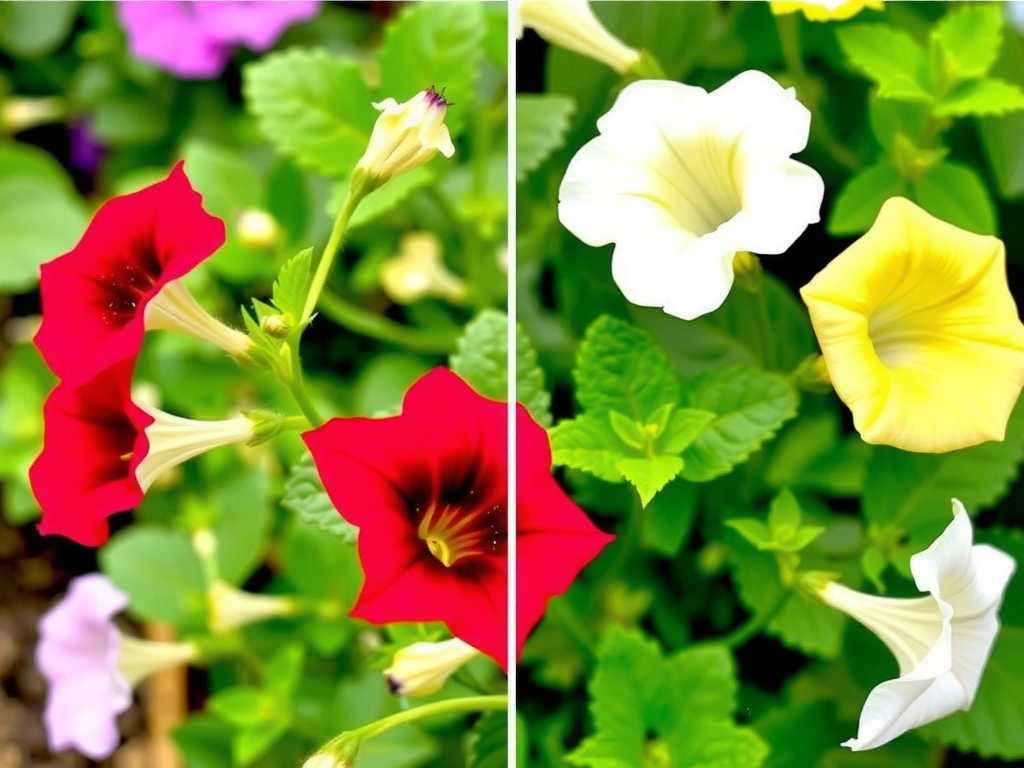
The fundamental difference lies in their growth habit, which dictates their entire form and best use. Trailing petunias, often called “spreading” or “wave” petunias, have long, flexible stems that grow outward and downward. They are natural cascaders, perfect for creating a “waterfall” of color. Upright petunias, sometimes referred to as “grandiflora” or “multiflora” types based on flower size, grow in a more compact, bushy fashion with stems that primarily reach upward. They are the classic petunia shape, ideal for adding volume and color at a specific height.

Key Visual Cues for Quick Identification
You don’t need to wait for them to mature. Look for these tell-tale signs right at the nursery.
Examine the Plant’s Shape and Stem Direction Start with the overall silhouette. A young trailing petunia will already show a tendency to sprawl. Its stems may be slightly longer and begin to bend or flop over the edge of the pot. An upright variety will look neater and more self-contained, with stems growing densely together in a mound shape, all pointing towards the sky. According to Dr. Alice Greenfield of the Horticultural Research Institute, “The pre-disposition for trailing is often visible in the seedling stage. Look for longer internodes—the spaces between leaves—on potential trailers, a sign they’re programmed to stretch out.”
Analyze the Leaf and Stem Structure Get a little closer. Trailing petunia stems are typically more supple and less rigid. They are built to be flexible as they cascade. Their growth nodes (the points where leaves and new stems emerge) are often spaced slightly farther apart along the stem. Upright petunias have sturdier, more self-supporting stems that need to hold their flowers aloft. The foliage is usually denser, with leaves and stems packed more tightly together to form that bushy appearance.
Check the Plant Tag or Series Name This is your cheat sheet. Breeders specifically name series to indicate growth habit. Common trailing series include: Supertunia®, Wave®, Surfinia®, Cascadia®, and Pretty Much Picasso®. Common upright/bushy series include: Dreams®, Daddy®, Storm®, Celebrity®, and Hurrah®. If the tag says “spreader,” “ground cover,” or “trailing,” it’s a clear indicator. Tags for upright types often mention “mounding,” “bushy,” or simply “upright habit.”
Practical Application: Choosing the Right Plant for the Right Place
Knowing how to recognize them is only half the battle. Applying this knowledge ensures gardening success.
Best Uses for Trailing Petunia Varieties Use their flowing nature to your advantage. They are the undisputed champions for hanging baskets, window boxes, and tall containers where their stems can gracefully spill over the edges. They are also excellent as fast-growing ground covers in sunny landscapes, creating a colorful carpet. Popular trailing varieties like ‘Purple Wave’ or ‘Supertunia Vista Bubblegum’ are bred specifically for vigorous, wide-spreading performance.
Best Uses for Upright Petunia Varieties These are your go-to for structured color. Plant them in garden beds and borders to create defined clumps of color. They excel in patio pots, urn planters, and mass plantings where you want a uniform, elevated display. Their bushier form makes them less prone to looking messy in windy areas compared to some long trailers. Upright varieties like the ‘Storm Lavender’ or ‘Dreams Neon Rose’ provide prolific, large flowers on tidy mounds.
Can I mix them? Absolutely! For a stunning “thriller, filler, spiller” container design, use one upright petunia as the central “thriller,” surround it with other bushy annuals as “filler,” and let a trailing petunia variety flow over the rim as the “spiller.” This combines the best of both growth habits.
Expert Tips for Ongoing Care and Confirmation
Sometimes, plants can surprise you. Here’s how to manage and confirm your identification as they grow.
Pruning and Pinching for Optimal Form Your care can enhance their natural shape. For upright petunias, regular deadheading and occasional light tip-pruning encourage more branching and an even denser, bushier form, preventing legginess. For trailing petunias, you may rarely need to deadhead (many are self-cleaning), but if they become too long and thin, a mid-season trim can promote fresh, vigorous growth from the base and make the plant fuller. A study by the National Gardening Association notes that proper early-season pinching of upright varieties can increase flower production by up to 25%.
Observing Mature Growth Patterns The most definitive confirmation comes with time. A mature trailing petunia can spread 3 to 4 feet or more from its center but may only be 6 inches tall. A mature upright petunia will typically form a mound 12 to 15 inches tall and wide. Watching this development will solidify your understanding and help you plan even better for next season.
I bought a petunia labeled as “mounding,” but it’s starting to trail. What happened? Many modern petunias, especially “mounding” types, can exhibit semi-trailing behavior as they mature and become heavy with blooms. This is normal. A true, dedicated trailing variety will start cascading much earlier and more aggressively. Your plant is likely performing as expected for a full, overflowing mound in a container.
Are there petunias that are neither fully trailing nor fully upright? Yes. The category of “spreading” or “ground cover” petunias, like the famous Wave® series, is a key example. They grow more horizontally than vertically but are not as pendulous as dedicated basket trailers like Supertunias. They are designed to cover soil quickly. Think of it as a spectrum: Upright (Bushy) -> Spreading (Mounding/Ground Cover) -> Trailing (Cascading).
Is flower size a reliable way to tell them apart? Not reliably. While large, ruffled “Grandiflora” flowers are often on upright plants, and many prolific, smaller-flowered “Multiflora” types are bushy, breeders have now placed all flower sizes on all habits. You can find small-flowered trailers and large-flowered, bushy types. Relying on growth habit cues and series names is a more accurate method than flower size alone.
Recognizing the difference between trailing and upright petunias transforms garden planning from a guessing game into a precise art. By focusing on the initial plant shape, stem flexibility, and those all-important series names on the tag, you can instantly match the plant to its perfect purpose. Whether you desire the dramatic cascade of a trailer or the cheerful, upright bouquet of a bush type, applying these simple identification tips ensures your containers and beds will flourish exactly as you imagined.