bluename
 How to Identify Cut Peony Varieties and Garden Peony Varieties?
You’ve fallen in love with the lush, romantic blooms of peonies, but now you’re faced with a delightful dilemma. You see a breathtaking bouquet at the florist and wonder, “What variety is this, and could I grow it in my own garden?” Or perhaps you’re browsing a nursery, captivated by a peony plant, but you’re unsure if its flowers will be suitable for cutting and bringing indoors. Understanding the differences between cut peony varieties and garden peony varieties is the key to making informed choices, whether you’re a floral designer, a gardening enthusiast, or simply someone who adores these iconic flowers. This guide will equip you with the knowledge to confidently identify and select the perfect peonies for every purpose.
The first and most crucial step is to understand the fundamental classification of peonies themselves. All peonies belong to the genus Paeonia, but they are primarily divided into three main types: herbaceous, tree, and intersectional (or Itoh). This distinction is the foundation for their use as either garden stars or cut flowers.
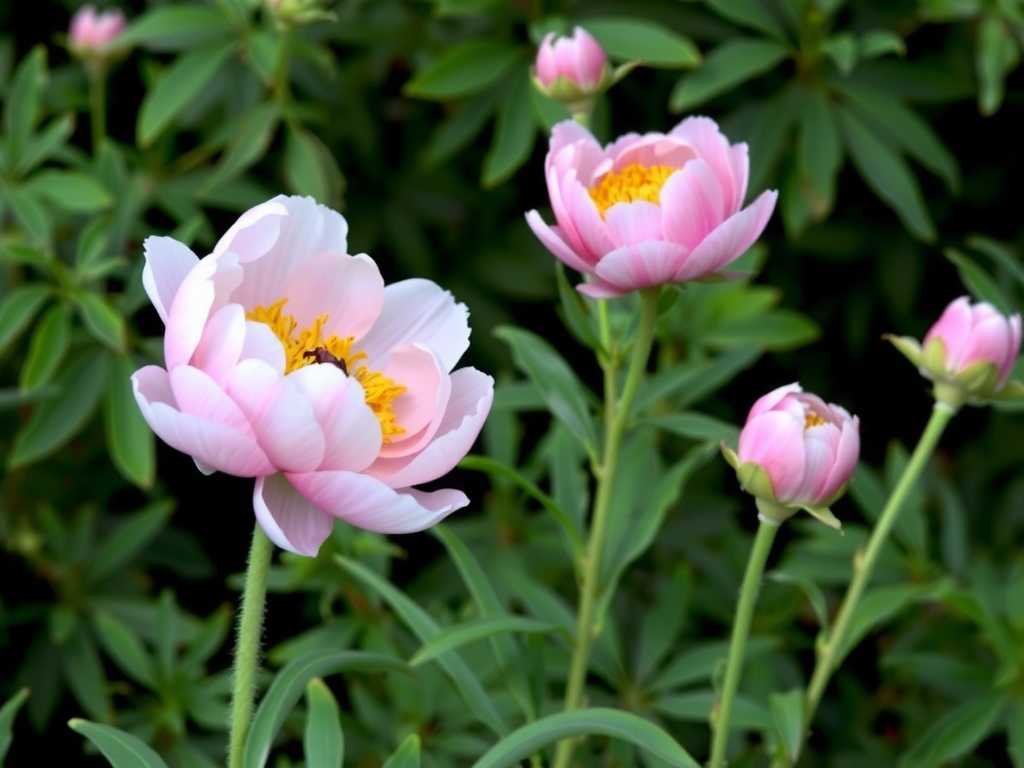
Herbaceous peonies are the classic perennial peonies that die back to the ground each winter. They are the backbone of both gardens and the cut flower industry. Tree peonies are woody shrubs that maintain a framework of branches year-round, prized in gardens for their large, often fragrant blooms and architectural form. Intersectional peonies are a hybrid between herbaceous and tree peonies, combining the robust stems and prolific blooming of the former with the unique colors and foliage of the latter. As noted by the American Peony Society, while all types can be cut, herbaceous and intersectional varieties are most commonly cultivated specifically for cutting due to their stem strength and prolificacy.
Key Characteristics of Garden Peony Varieties
When selecting a peony for your landscape, you are choosing a long-term companion—some plants can thrive for over 50 years. Therefore, identification focuses on the plant’s overall structure, longevity, and seasonal performance.
Start by examining the plant’s growth habit. Is it a herbaceous clump emerging from the ground in spring, or a woody shrub with permanent branches? This immediately tells you if you’re looking at a herbaceous/tree peony. For garden value, look beyond the flower. Assess the foliage: is it lush and green throughout the season, or does it become prone to mildew? A superior garden variety offers aesthetic foliage that provides a clean backdrop even after blooms fade.
Stem strength is a double-edged sword. In the garden, some varieties with slightly weaker stems may still be desirable for their flower form or color, as staking can provide support. The bloom time is also critical for garden planning. By planting a mix of early, mid, and late-season varieties, you can extend your peony display from late spring into early summer. Furthermore, many gardeners prioritize fragrance. A tree peony like ‘High Noon’ or a fragrant herbaceous double like ‘Festiva Maxima’ adds a sensory layer to the garden that is less critical for cut flowers destined for a vase.
Key Characteristics of Cut Peony Varieties
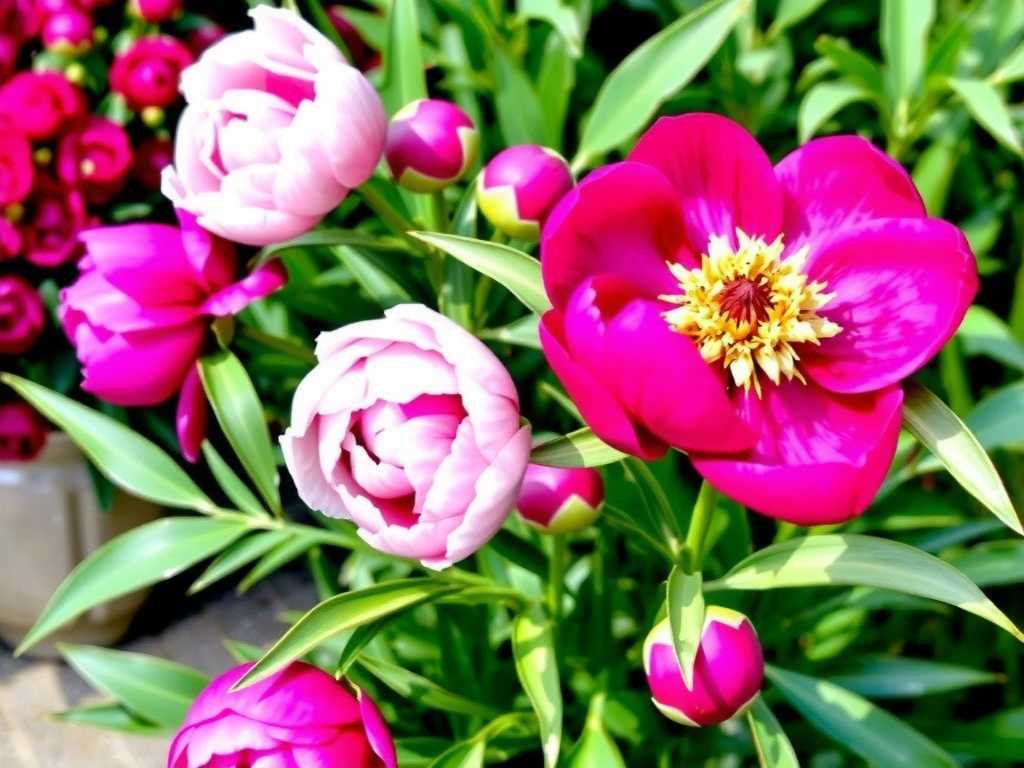
The criteria for an excellent cut peony variety are more specialized, honed by commercial growers and florists. The primary goal is a reliable, shippable, and long-lasting bloom.
The most important identifier is stem strength and length. A premier cut peony must have stout, rigid stems that can support the weight of a large, water-saturated bloom without bending. Varieties like ‘Sarah Bernhardt’ (herbaceous) or ‘Bartzella’ (intersectional) are renowned for their robust stems. The stem must also be sufficiently long for floral arrangements, typically emerging well above the foliage.
Next, evaluate the bud and its “vase life” performance. The bud should be firm and show color (“marshmallow stage”) when cut. It should then open reliably in the vase over several days. Some garden varieties may have stunning flowers but shatter quickly or refuse to open once cut. A top cut variety also features strong, non-shattering petals that hold their form. The flower’s form is a matter of market preference; dense double blooms, single forms, and bomb-types are all popular, but they must be durable. According to floral industry reports, consistency is king. Growers need a variety that produces a high number of uniform, marketable stems per plant each season.
Side-by-Side Comparison: A Practical Identification Guide
Let’s put this knowledge into practice with a direct comparison. Imagine you encounter two famous pink peonies.
First, the classic ‘Sarah Bernhardt’. As a cut variety, you’ll notice its very long, strong stems that stand upright without support. The silvery-pink double blooms are large, fragrant, and open predictably from well-formed buds. They have an excellent vase life. In the garden, this same plant is a reliable performer, but its stems may require support in rain or wind, and it blooms in the mid-season.
Now, consider the beloved ‘Kansas’. This vibrant red herbaceous peony is a garden champion. Its flowers are a brilliant, non-fading red. However, its stems can be shorter relative to the bloom size, making it less ideal for commercial cutting, though still beautiful in a home vase. In the garden, its intense color and vigor make it a standout border plant. This contrast shows how a variety can excel in one domain while being merely good in another.
For tree peonies, a variety like ‘Shima-nishiki’ offers stunning red and white bicolor flowers on a woody shrub. It’s a garden treasure and can be cut for dramatic, large arrangements, but it is not grown on a massive scale for the cut flower trade like herbaceous varieties.
How to Choose and Source the Right Type for Your Needs
Your identification journey should lead to informed sourcing. Always buy from reputable nurseries or growers who provide the full botanical name (Paeonia lactiflora ‘Sarah Bernhardt’) rather than just a color. For garden plants, look for “field-grown” or “landscape-ready” divisions with 3-5 eyes (growth buds). These will establish faster and bloom sooner than small, potted roots.
For cut flowers, if you wish to grow your own cutting garden, seek out suppliers that specifically label varieties as “good for cutting” or “stem strength: excellent.” Many specialty peony farms now offer collections curated for this purpose. If you are a florist purchasing cut stems, build relationships with growers who can tell you the specific varieties they cultivate and their expected availability windows throughout the peony season.
Is a peony that’s good for cutting also good for the garden? Generally, yes. A peony variety bred for cutting typically has strong stems, good form, and reliable blooming—all traits that also benefit the garden. The reverse is not always true; a spectacular garden peony may have weaker stems or flowers that don’t ship well, making it less suitable for commercial cutting.
Can I use tree peonies as cut flowers? Absolutely. Tree peonies make magnificent, large cut flowers with a unique, often delicate fragrance. Their stems are woody, so recutting them underwater and using floral preservative is crucial for maximum vase life. They are less common in mass-market bouquets due to their higher cost and shorter seasonal availability.
Why do some peonies sold at the grocery store never open? Those buds were likely cut too early, at the “hard bud” stage, to withstand shipping. To ensure your cut peonies open, purchase buds that are soft and showing color (like a marshmallow). Once home, cut the stems, place them in warm water with flower food, and keep them in a warm room to encourage blooming.
Whether your passion lies in creating stunning floral arrangements or cultivating a breathtaking backyard display, the world of peonies offers endless possibilities. By learning to identify the key traits of cut peony varieties and garden peony varieties, you move from simply admiring these flowers to truly understanding them. You can now select plants that will thrive for decades in your soil and choose stems that will unfold their beauty day by day in your vase. This knowledge connects the art of gardening with the art of floristry, ensuring you can enjoy the unparalleled splendor of peonies in every form.