bluename
 How to Care for Different Iris Varieties? Practical Care Guide
You’ve fallen in love with the stunning, architectural beauty of irises, but now you’re faced with a dilemma. Your bearded iris is thriving, while the Siberian iris in the corner looks sad, and the water iris you planted is simply not taking off. The challenge isn’t that irises are difficult; it’s that each major type has unique, non-negotiable needs. Treating them all the same is the fastest path to disappointment. This practical guide cuts through the confusion, offering clear, variety-specific advice to ensure every iris in your garden reaches its glorious potential.
Understanding the three primary iris categories is the essential first step to successful care. While they share the iconic name and flower form, their origins and requirements differ dramatically.
Bearded Irises: The Sun-Loving Showstoppers
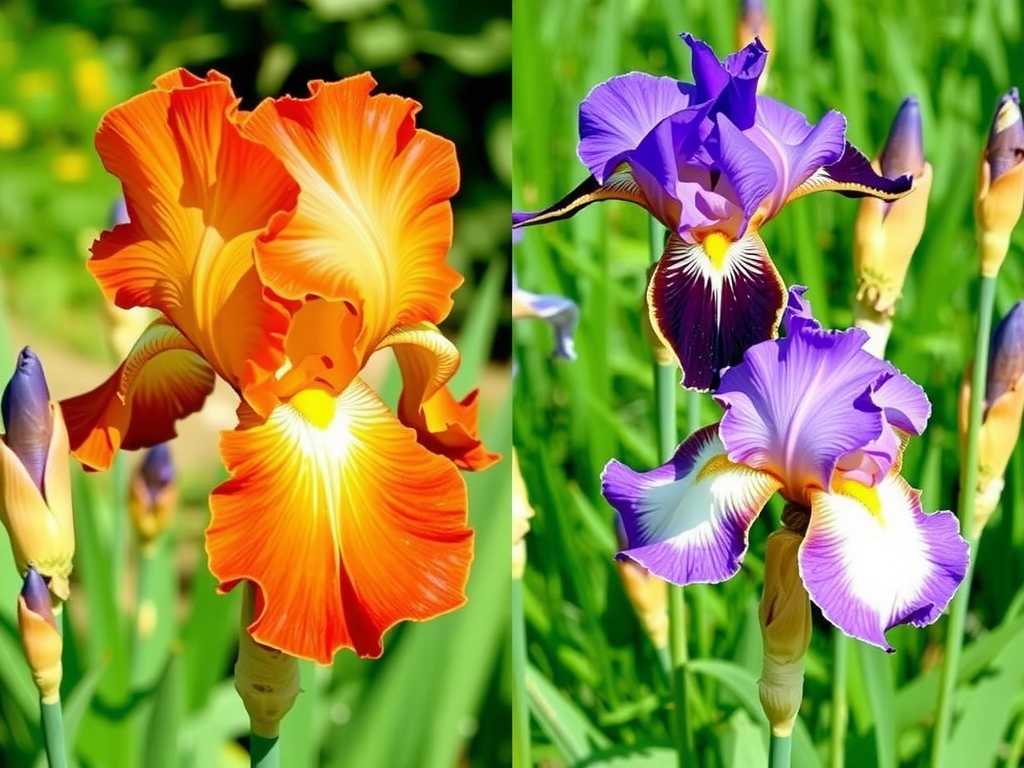
Bearded irises are the classic garden favorites, known for their fuzzy "beards" and incredible range of colors. They demand specific conditions to prevent rot and encourage prolific blooming.
Sunlight is non-negotiable. These irises require a minimum of 6 to 8 hours of direct, unfiltered sun daily. Less light leads to weak growth and few, if any, blooms. As the American Iris Society notes, "Maximum bloom is achieved in full sun."
Planting technique is critical. The rhizome—the thick, horizontal stem—must be planted partially exposed. Bury it completely, and it will rot. Find a well-draining spot, perhaps on a slope or in a raised bed. Place the rhizome on a small mound of soil, spread the roots downward, and cover only the roots and the very base. The top of the rhizome should bake in the sun.
Water wisely. Deeply water after planting to establish roots, but then rely on rainfall. Only water during extended droughts. Overwatering is a primary killer. After bloom, cut the flower stalk down, but leave the sword-like leaves to photosynthesize and feed the rhizome for next year’s show.
Siberian and Japanese Irises: The Moisture-Lovers
This group prefers consistently moist soil and can even tolerate brief periods of standing water, making them perfect for pond edges or rain gardens.
Siberian irises are incredibly tough and form dense, grass-like clumps. They thrive in full sun to partial shade and love fertile, moisture-retentive soil. While they tolerate more moisture than bearded types, they don’t want to be waterlogged year-round. A 2-inch layer of organic mulch helps retain that crucial soil moisture. Divide clumps every 3 to 4 years when the center becomes hollow and flowering declines.
Japanese irises take the moisture requirement further. They perform best in acidic, rich soil that is consistently damp or even wet in spring. They are ideal for the edges of water features. Unlike Siberians, they have specific pH needs; if your soil is alkaline, amend it with peat moss or sulfur. Provide afternoon shade in hot climates to prevent scorching.
Louisiana and Water Irises: The Bog Dwellers
These are the true aquatics of the iris world. Louisiana irises are native to the American Gulf Coast and are spectacularly colorful. They naturally grow in swamps, ditches, and along pond margins.
They require wet feet. The ideal setting is in shallow water (1-2 inches over the crown) or in constantly saturated soil at a pond's edge. They can adapt to regular garden beds only if you water them almost daily. They enjoy full sun but appreciate light shade in the hottest part of the day in southern climates.
They are heavy feeders. Apply a balanced, slow-release fertilizer in early spring as growth emerges. Allow their foliage to remain until it browns in late fall, as it protects the rhizomes. Division is needed every 3-4 years to maintain vigor, best done in late summer.
Essential Care Practices Across All Varieties
While their preferences differ, some universal principles apply.
Soil and Fertilization: All irises despise soggy, poorly drained soil. Amend garden beds with compost to improve texture. Use a low-nitrogen fertilizer (such as a 5-10-10 formula) in early spring. High nitrogen promotes soft, rot-prone foliage at the expense of blooms.
Pest and Disease Vigilance: The iris borer is the most destructive pest, tunneling through rhizomes. Remove all dead foliage in fall to eliminate overwintering eggs. If you see soft, smelly rhizomes, dig them up, cut out the rot, and let the rhizome dry before replanting. Good air circulation prevents fungal leaf spot.
Dividing for Health: Overcrowding is a common cause of poor flowering. Bearded iris rhizomes should be divided every 3-4 years, typically 6-8 weeks after blooming. Siberian and Louisiana clumps are divided when the center dies out. This rejuvenates the plant, gives you more to spread around, and is key to maintaining spectacular displays.
Frequently Asked Questions
My bearded iris has lush leaves but no flowers. What’s wrong? This is most often caused by insufficient sunlight (less than 6 hours), overcrowded rhizomes competing for resources, or planting the rhizome too deep. It can also result from excess nitrogen fertilizer. Check these conditions first.
Can I grow different types of irises together in the same bed? It is challenging and not generally recommended. Their differing water needs create an incompatible environment. A bearded iris will rot in the constant moisture a Louisiana iris craves. It’s better to group them by type in separate garden zones suited to their needs.
When is the absolute best time to plant or transplant irises? Timing is variety-specific. For bearded irises, the golden period is late summer through early fall (July to September). This gives the rhizome time to establish roots before winter. Siberian and Japanese irises are best divided and transplanted in early fall or very early spring. Louisiana irises are most successfully moved in late summer.
Success with irises comes from matching the plant to its preferred home. By respecting the fundamental divide between the dry-loving bearded types, the moisture-preferring Siberians, and the water-needing Louisianas, you work with their nature, not against it. Pay attention to their simple demands for sun, soil, and space, and you will be rewarded with one of the garden’s most reliable and breathtaking performances year after year.