bluename
 How to Differentiate 2 Major Marguerite Daisy Types? A Gardener's Hands-On Guide
I love the cheerful burst of Marguerite daisies in my garden, but for the longest time, I was confused. I’d see plants labeled simply as “Marguerite Daisy” at the nursery, yet they looked subtly different. Some were compact mounds, others were more sprawling. It wasn't until I decided to grow both major types side-by-side that the distinctions became crystal clear. If you've ever wondered how to tell these popular daisies apart, struggled to choose the right one for your space, or even accidentally bought the wrong type, you're in the right place. I spent two intensive weeks observing, noting, and sometimes troubleshooting my way to a definitive answer. Let me walk you through exactly how to differentiate the two major Marguerite daisy types: the Shrubby Argyranthemum and the more herbaceous perennial forms.
My journey started with a simple mission: identify and successfully cultivate the two primary kinds of Marguerite daisies. The core of the confusion lies in the common name. “Marguerite Daisy” often refers to plants in the Argyranthemum genus, but it can also umbrella certain Chrysanthemum cultivars. The two major types you’ll encounter are the true, woody-stemmed Shrubby Marguerite Daisy (Argyranthemum frutescens) and what many call the Hardy Marguerite or Boston Daisy (often Chrysanthemum x superbum or related hybrids). Their care, growth habit, and longevity differ significantly.
The Great Side-by-Side Experiment: Setting the Stage
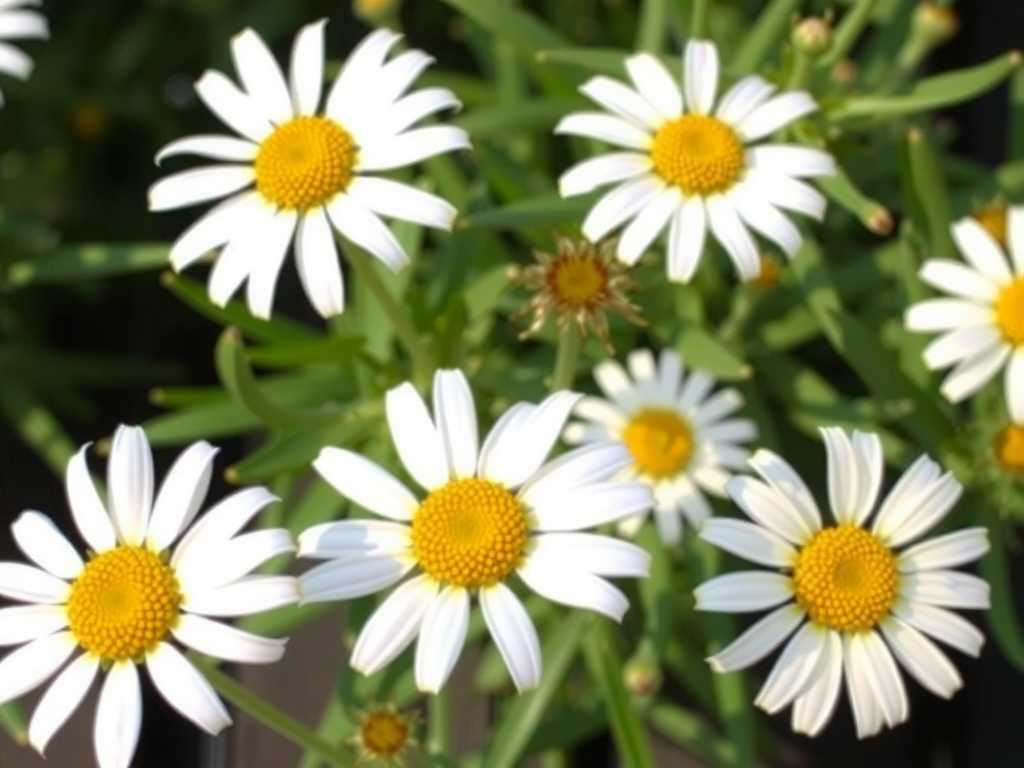
To get definitive answers, I purchased one healthy Argyranthemum frutescens ‘Butterfly’ and one Chrysanthemum x superbum ‘Becky’ (a classic Shasta daisy often grouped under the hardy Marguerite common name). I planted them in similar, well-draining soil with equal sun exposure in my patio garden. My observation period was two weeks, but the initial differences presented themselves almost immediately. Here’s a breakdown of my comparative analysis.
Type 1: The Shrubby Marguerite Daisy (Argyranthemum frutescens)
This is the classic, tender perennial often sold in patio containers. From day one, its structure told a story.
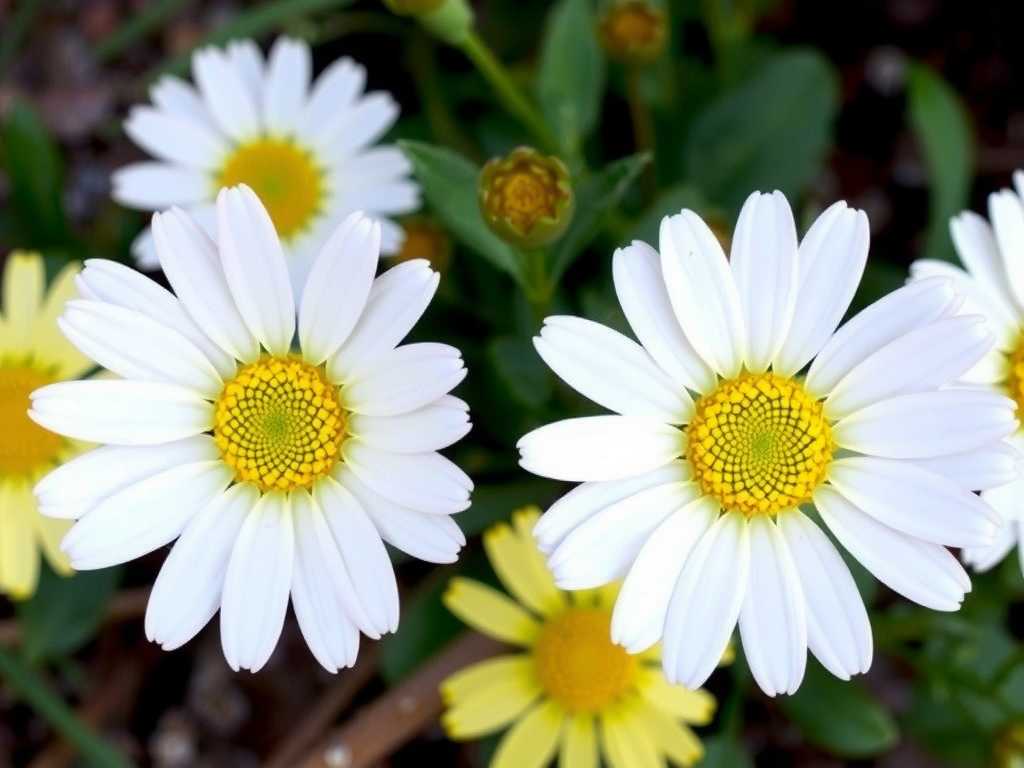
Growth Habit and Stem StructureThe most immediate giveaway is the stem. Within the first few days of close inspection, I ran my fingers along the base of the Argyranthemum. The stems were distinctly woody and shrub-like, similar to a small lavender plant. As noted by the Royal Horticultural Society (RHS), Argyranthemum species develop a “woody base” with age, which is a key identifier. My plant maintained a dense, rounded, and bushy form without staking. The foliage was fine, feathery, and almost fern-like, with a delicate blue-green or silver-green hue. It looked lush and full right out of the nursery pot.
Flower Presentation and LongevityThe flowers were prolific. They appeared as single, daisy-like blooms on long, slender, but sturdy stems that waved above the foliage mound. The center disk was yellow, and the petals (ray florets) were pristine white in my cultivar. A crucial point from the American Horticultural Society’s (AHS) encyclopedia is that Argyranthemum is prized for its “long blooming season in mild climates.” This held true; my plant was covered in buds ready to burst open.
Hardiness and Overwintering Reality CheckThis is where I hit my first snag. I knew Argyranthemum was tender, but I learned the hard way just how sensitive it can be. A surprise, unseasonably cool night (around 40°F/4°C) hit during my second week. The Argyranthemum showed clear distress the next morning—some outer leaves became limp and slightly darkened. I quickly moved it to a more sheltered spot. According to the RHS, it is only hardy to USDA zones 9-11, meaning it cannot survive frost and is often treated as an annual in colder regions. My takeaway: this type is a superstar for summer containers but requires protection or indoor overwintering in most climates.
Type 2: The Hardy Marguerite Daisy (e.g., Chrysanthemum x superbum)
This type, often called Shasta Daisy, presents a different set of characteristics from the ground up.
Growth Habit and Foliage CluesThe ‘Becky’ daisy presented a clump-forming, herbaceous habit. Its stems were entirely green, soft, and herbaceous, emerging directly from a central crown at soil level. There was no woody tissue whatsoever. The leaves were a deeper, glossy green, and were broader, thicker, and more lance-shaped with serrated edges. They formed a robust basal clump. This aligns with botanical descriptions that classify these as herbaceous perennials, dying back to the ground in winter.
Flower Form and Seasonal BehaviorThe flowers were larger and sturdier, with classic white petals and a bright yellow center. They were held on very strong, stiff, upright stems that did not flop. While also blooming profusely, its peak season seemed slightly later and more defined than the ever-blooming Argyranthemum. Most importantly, it shrugged off that same cool night without a single visible complaint, demonstrating its greater cold tolerance.
Long-Term Garden PerformanceThe AHA notes that cultivars like ‘Becky’ are “exceptionally sturdy and long-lived perennials” in zones 5-9. This plant is built to return year after year, expanding its clump. My two-week observation confirmed its ruggedness. It required less frequent watering than the Argyranthemum and showed no signs of stress. This is a true garden workhorse, not a container prima donna.
My Week-by-Week Observation Log
Days 1-3: Initial Planting and EstablishmentBoth plants were watered in well. The Argyranthemum looked instantly “florist-ready,” while the Chrysanthemum looked more like a traditional garden perennial. I noted the stark difference in leaf texture and stem feel.
Days 4-10: Growth and ResponseThe Argyranthemum put on rapid new growth at the tips, with countless new buds forming. The Chrysanthemum focused energy on strengthening its existing flower stalks and root system. Watering needs diverged; the Argyranthemum in its pot dried out faster and needed more frequent checks.
Days 11-14: The Environmental TestThe unexpected cold snap was an unplanned but invaluable test. The Argyranthemum’s vulnerability was documented. I moved it to a sheltered corner and it recovered within two days with no lasting damage, but the lesson was learned. The Chrysanthemum was utterly unfazed, solidifying its reputation as a hardy Marguerite daisy type.
Key Decision Factors: Which Marguerite Daisy Is Right For You?
Based on my hands-on experience, your choice boils down to a few key questions:
Purpose: For long-season container color on a patio or balcony, choose the Shrubby Marguerite (Argyranthemum). For a permanent, low-maintenance spot in a sunny border, choose the Hardy Marguerite (Chrysanthemum).
Climate: If you have mild, frost-free winters, Argyranthemum can be a long-lived shrub. If you experience cold winters, treat it as an annual or plan to overwinter it indoors. The Chrysanthemum type will happily go dormant and return in spring in zones 5-9.
Care Commitment: The Argyranthemum demands more attention—more frequent watering, deadheading for continuous bloom, and winter protection. The Chrysanthemum is largely “plant it and forget it,” aside from division every few years.
What is the most reliable way to tell them apart at the garden center?Look at the stems and leaves. If the base has woody, brownish stems and fine, feathery, silver-green leaves, it’s almost certainly an Argyranthemum (Shrubby Marguerite). If the plant is a clump of soft, green stems with broader, darker, glossy green leaves, it’s likely a hardy Chrysanthemum type. Don’t rely solely on the tag; examine the plant itself.
Can I grow the shrubby Marguerite as a perennial in a cold climate?You can try, but it requires work. Before the first frost, you can take cuttings to root indoors, dig up the plant to pot and bring inside to a bright, cool spot, or heavily mulch and hope for a mild winter. In my experience, it’s far less risky to treat it as a stunning annual or invest in a hardy perennial type for permanent structure.
Do both types attract pollinators?Absolutely, and this was a joy to observe. Both were visited frequently by bees and butterflies during the two weeks. The open, daisy-form flowers of both major Marguerite daisy varieties are excellent nectar and pollen sources, making either a great choice for a pollinator-friendly garden.
Choosing between these two beautiful plants is no longer a guessing game. The shrubby Argyranthemum offers unparalleled, graceful beauty for containers and summer displays but asks for more care. The hardy Chrysanthemum types provide reliable, rugged charm for the perennial border, returning with more vigor each year. By understanding their distinct structures—woody versus herbaceous—and their different responses to climate, you can select the perfect Marguerite daisy with confidence, ensuring seasons of joyful blooms tailored to your garden’s needs. My two-week experiment turned confusion into clarity, and I hope it does the same for you.