bluename
 How to Adjust the Proper Depth When Repotting Peonies and Herbaceous Peonies: A Gardener's Trial and Error
I’ve been there. You lovingly acquire a new peony, or decide it’s finally time to give your long-established herbaceous peony a new home, only to be met with that nagging question: “How deep do I plant this thing?” Get it wrong, and you might be waiting years for blooms, or worse, watching the plant struggle and decline. The proper planting depth for peonies isn't just a suggestion; it's the single most critical factor for their health and flowering. After a recent repotting project that spanned two weeks of careful observation and adjustment, I want to share the precise steps, the pitfalls I encountered, and the solutions that finally led to success.
Understanding the "Eyes": Your Key to Perfect Peony Depth
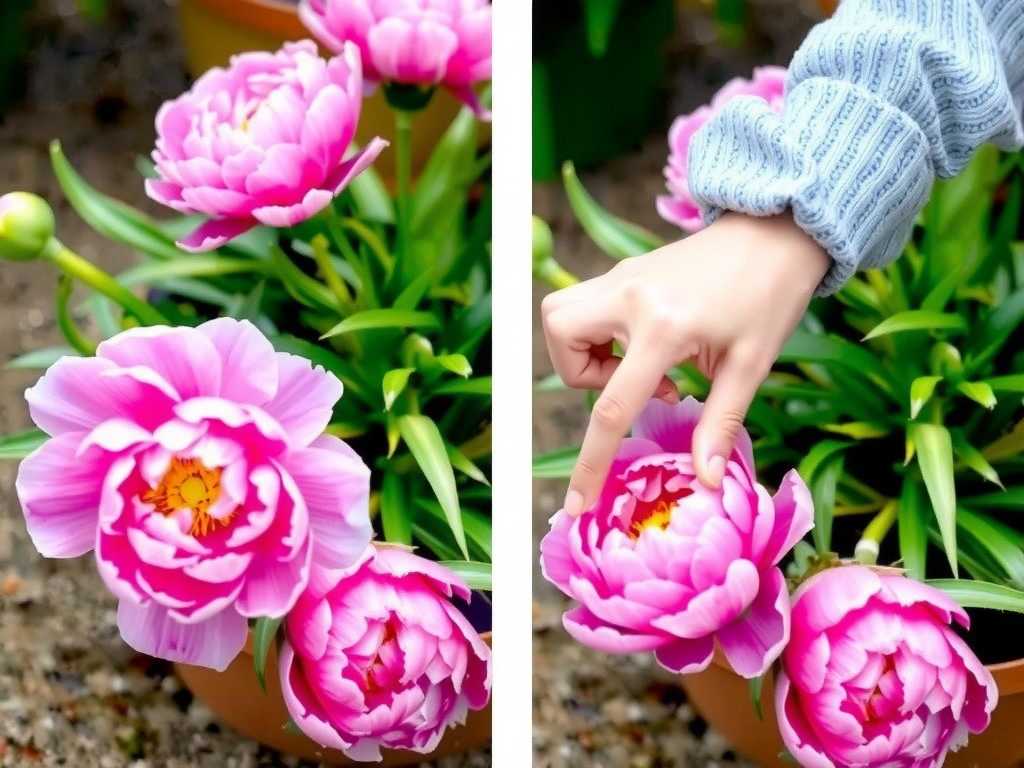
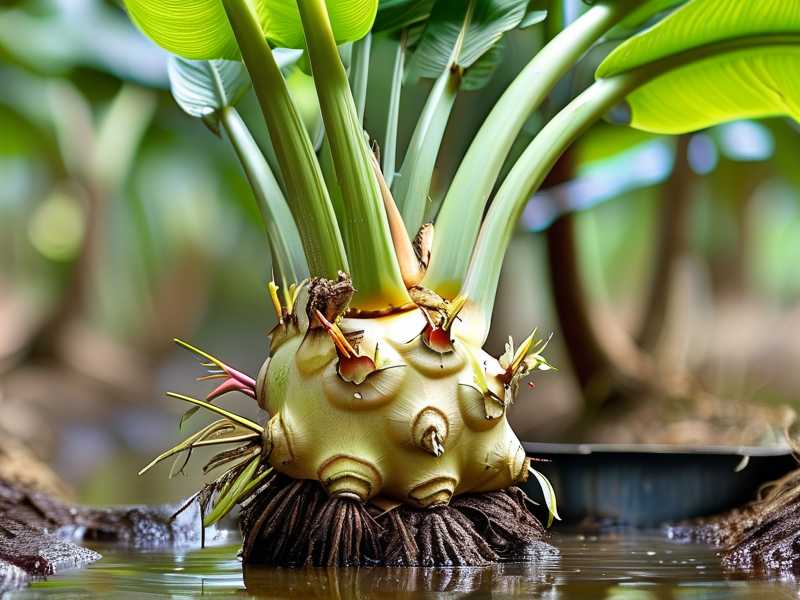
Before we even touch a shovel, we must understand the peony's growth structure, particularly the "eyes." These are the reddish or pinkish buds on the crown of the plant from which next year's stems will emerge. For herbaceous peonies, these eyes are the lifeline. The golden rule, consistently backed by the American Horticultural Society (AHS), is to position these eyes no more than 1 to 2 inches below the soil surface in most climates. In colder regions (USDA zones 2-4), a depth of 2 inches is safe. In warmer zones (5-8), aim for just 1 inch deep. Planting too deep is the primary reason peonies fail to bloom.
My recent project involved repotting a dormant 'Sarah Bernhardt' herbaceous peony from a crowded garden bed into a large, deep container. My core long-tail keyword focus here is "proper depth for repotting herbaceous peonies."
My Step-by-Step Repotting Process and Two-Week Vigil
Here is the exact process I followed, incorporating lessons from past mistakes.
Step 1: Timing and Preparation I chose early fall, the ideal time for dividing or repotting peonies, as it allows for root establishment before winter. I prepared a generous, well-draining pot with a mix of two-thirds garden soil and one-third compost, with a handful of bone meal mixed in the bottom layer for phosphorus, which supports root and bloom development.
Step 2: The Delicate Excavation Gently lifting the plant from its old location, I washed the soil from the roots with a gentle hose spray to clearly see the crown and the root structure. This revealed a tangled mass, but more importantly, it showed me the cluster of plump, pink eyes.
Step 3: Setting the Depth in the New Pot This is where precision matters. I placed my soil mix in the pot and created a mound in the center. I settled the peony crown on this mound, carefully spreading the roots downward. Then came the crucial adjustment. I laid a bamboo stick across the rim of the pot to act as a level guide. I measured from this guide down to the top of the eyes, adding and removing soil from the mound until the eyes sat exactly 1.5 inches below my guide line. This accounted for my zone 6 climate.
Step 4: Backfilling and Initial Care Holding the plant steady at that height, I gently backfilled the soil, firming it lightly to eliminate large air pockets. I then watered thoroughly to settle the soil. My final act was to add a thin, loose mulch layer of straw, being careful not to bury the crown further.
The Observation Period: Pitfalls and Corrections
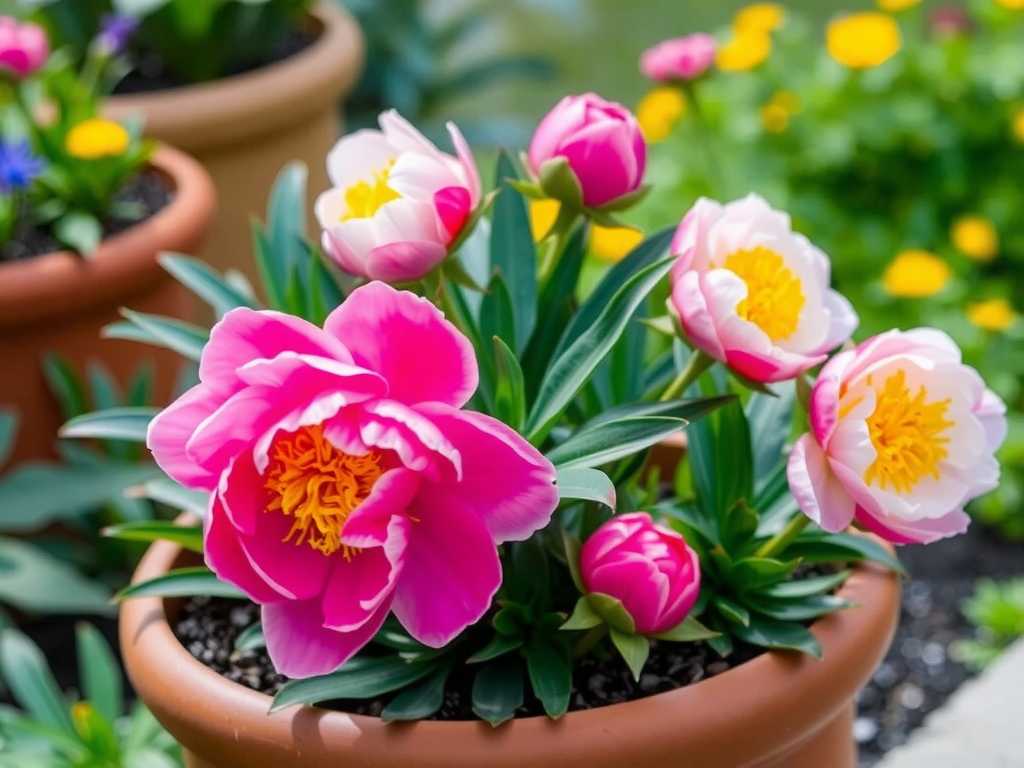
The first week was about monitoring moisture and stability. Here’s where I hit my first snag.
The Settling Soil Problem After three days and a moderate rain, I noticed the soil level had dropped nearly half an inch around the base of the plant. This is a common pitfall! If left uncorrected, my carefully set 1.5-inch depth would become a 2-inch depth, potentially delaying blooms. My solution was simple: I gently brushed away the mulch and added a thin layer of fresh soil mix to restore the original grade, ensuring the eyes were still at the proper, shallow level.
The Temptation to Over-Fertilize A week in, the plant looked dormant (as it should). The old gardener in me felt the urge to "feed" it to spur growth. This is a mistake. The Royal Horticultural Society (RHS) clearly advises against high-nitrogen fertilizers at planting, as they promote weak, leafy growth at the expense of roots and future blooms. I stuck with my initial bone meal amendment and watered only when the top inch of soil felt dry.
By the end of the two-week period, the plant was firmly settled, the soil level was stable, and there was no sign of rot or heaving. The eyes remained visibly in their correct, shallow position, ready for winter chilling.
Special Considerations for Tree Peonies and Intersectional Hybrids
While my focus was on herbaceous peonies, the principle of proper depth applies differently to tree peonies and Itoh (intersectional) hybrids. For tree peonies, the graft union (a noticeable bulge on the main stem) must be planted 4 to 6 inches below the soil surface. This encourages the scion (the desirable tree peony part) to develop its own roots. For intersectional peonies, treat them like herbaceous types, planting the eyes 1-2 inches deep. A key long-tail variation here is "planting depth for Itoh peonies in containers."
Why This Depth is Non-Negotiable: The Science Behind the Rule
Planting too deep forces the plant to expend immense energy sending shoots up to the surface before it can even leaf out properly, exhausting it and preventing bloom formation. Too shallow, and the eyes can dry out or be damaged by winter frost. The AHS reiterates that this depth guideline ensures the buds experience the necessary winter chill (vernalization) without being smothered. It’s a balance the plant has evolved for, and our job is to replicate it.
Frequently Asked Questions
My repotted peony didn’t bloom this spring. Did I plant it too deep? Likely, yes, especially if the foliage is healthy but no flower buds formed. The most common cause of "blind" peonies is excessive planting depth. You may need to carefully lift and replant it at the correct 1-2 inch depth next fall.
Can I repot a peony in the spring if I see it’s planted wrong? It’s risky. Spring repotting can severely disrupt growth. If you must, do it as early as possible, keep the root ball intact, and minimize disturbance. However, for depth correction, waiting until early fall is almost always the safer bet for the plant's long-term health.
How do I measure depth accurately in loose, fluffy potting mix? My bamboo stick method is effective. You can also use a ruler. The key is to measure from the final, settled soil surface to the top of the eyes. Account for soil settlement by initially planting a half-inch shallower than your target, or be prepared to top up the soil after the first watering as I did.
Getting the depth right when repotting peonies feels like a small detail, but it makes all the difference between years of frustration and a lifetime of spectacular blooms. By focusing on the eyes, accounting for soil settlement, and resisting the urge to bury the crown, you give your peony the foundation it needs to thrive. Patience is key; a properly planted peony may take a year or two to re-establish and bloom, but when it does, you’ll know your careful attention to that critical inch of depth was worth every moment.