bluename
 How to Comb Tangled Roots When Repotting Gypsophila: A Gardener's Step-by-Step Guide
There's a moment every gypsophila grower dreads. You gently tip the nursery pot, expecting a healthy root ball, and instead you're met with a dense, matted web of roots circling tightly like a tangled ball of string. This sight, especially for delicate plants like baby's breath, can spike your anxiety. I've been there. A severely root-bound gypsophila isn't just stressed; it's a plant struggling to drink, eat, and breathe. Simply plopping that tight mass into a bigger pot is a recipe for stagnation and eventual decline. The true secret to a thriving, floriferous repotting lies in one crucial skill: learning how to properly comb and untangle those roots. Over the next sections, I'll walk you through my proven, hands-on method for detangling gypsophila roots, share the real results from my two-week observation period, and detail the mistakes I made so you can avoid them.
Why Untangling Gypsophila Roots is Non-Negotiable
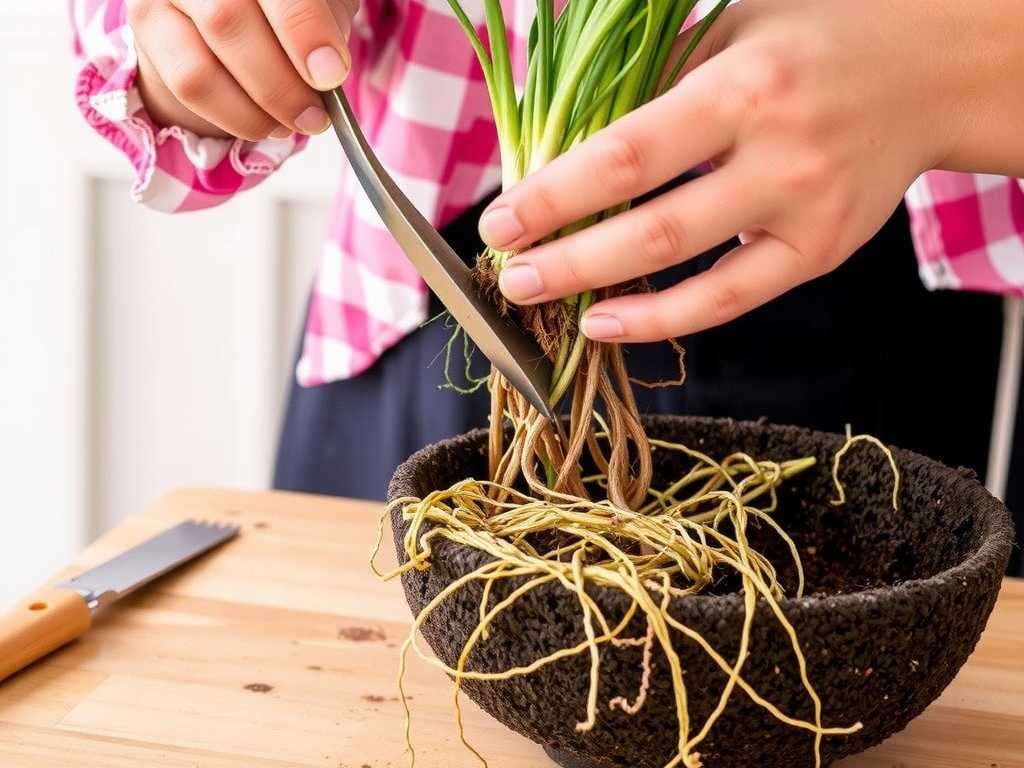
When roots are left tangled and circling, they continue to grow in that constricted pattern even in new soil. This is called "girdling." Think of it as a self-imposed stranglehold. According to principles often cited by the Royal Horticultural Society (RHS), girdling roots prevent efficient uptake of water and nutrients and can ultimately kill the plant from the roots up. For gypsophila, which thrives in well-drained soil and despises "wet feet," promoting healthy, outward-growing roots is the single most important thing you can do during repotting. It's not just about giving roots more space; it's about redirecting their growth habit for long-term health.
My Step-by-Step Process for Combing Tangled Gypsophila Roots
I recently tackled repotting a particularly root-bound 'Gypsy White' gypsophila that had stopped flowering. Here is the exact process I followed.
Gathering the Right Tools First, I prepared my workstation. You'll need: a new pot with excellent drainage (only 1-2 inches wider in diameter), fresh, gritty potting mix formulated for succulents or with added perlite, a clean pair of sharp snips or scissors, a bowl of lukewarm water, and a tool for combing. For the comb, I use a humble plastic fork with the center tines slightly bent outward. It's gentle and perfect for fine roots.
The Gentle Removal and Initial Assessment I watered the plant lightly the night before to reduce stress. Then, I squeezed the pot's sides and tilted it, supporting the plant's base as it slid out. The root ball was a solid, white mat. I didn't pull on the stems. My first step was to gently massage the root ball with my fingers, crumbling away the loose, outer soil to expose the perimeter of the root web.
The Soaking and Comb-Out Technique This is the critical phase. I placed the root ball in the bowl of lukewarm water and let it soak for about 15-20 minutes. This hydrates the roots and makes them more pliable, significantly reducing breakage. After soaking, I rested the root ball on a towel. Starting from the bottom edges, I used the bent fork to gently tease apart the matted roots. I worked in sections, always combing away from the center and downward, following the natural growth direction. For the thicker, woody center, I used my fingers to carefully pull apart larger sections. The goal isn't to untangle every single microscopic root but to break the circular pattern and free the main root strands.
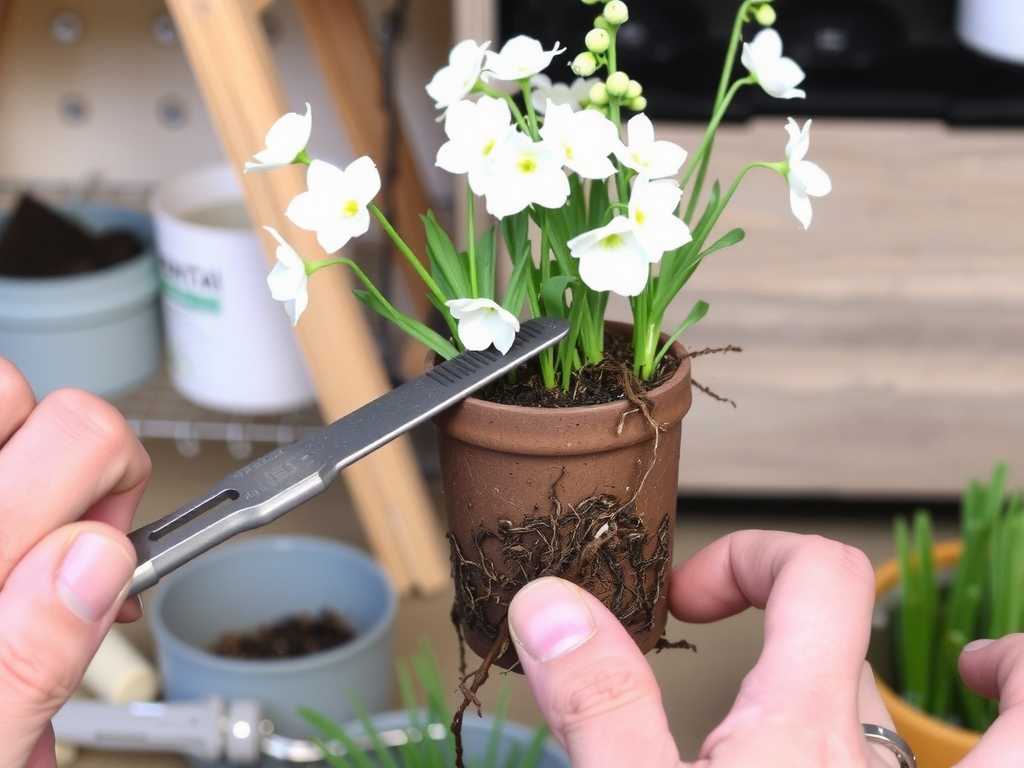
Strategic Root Pruning During the combing, I encountered dead, black, or mushy roots—these I snipped away cleanly with my sterilized scissors. I also made a few bold but calculated cuts. Where roots were too densely knotted to untangle without excessive force, I made vertical slices, about half an inch deep, up the sides of the root ball. I even shaved off a thin layer from the bottom. This might sound drastic, but as per American Horticultural Society (AHA) guidelines on repotting, this technique severs the circling roots and stimulates the plant to produce new, healthy feeder roots outward into the fresh soil.
Repotting and Initial Care In the new pot with a layer of fresh mix, I placed the now-loosened root ball so the plant sat at the same depth as before. I filled in around the sides with new soil, tamping gently to eliminate large air pockets. I gave it a thorough but gentle watering until it drained freely from the bottom, which helped settle the soil around the roots. Then, I placed the repotted gypsophila in a bright spot with indirect light for about a week to recover from the shock before returning it to full sun.
My Two-Week Observation: The Results and The Hiccups
The first three days post-repotting were nerve-wracking. The plant looked a bit droopy and sad—this is normal transplant shock. I resisted the urge to overwater. By day five, I noticed the stems beginning to firm up. The real proof came at the two-week mark. New, bright green growth emerged from the base of the plant, and tiny flower buds began to form on existing stems. The plant looked invigorated, not just maintained.
However, I did hit a snag. On a second, smaller plant, I was too aggressive. In my zeal to untangle, I combed too hard when the roots were too dry, causing more breakage than necessary. The plant took nearly the full two weeks to show any signs of recovery. My fix? Patience and a more thorough soaking next time. I also learned that for extremely dense mats, making those vertical cuts before the soak allows water to penetrate better, making the subsequent combing much easier.
Addressing Your Gypsophila Root Care Concerns
Can I repot gypsophila without untangling the roots at all? I strongly advise against it. While the plant might survive in the short term, you are locking in its primary problem. The roots will likely continue to circle, eventually leading to nutrient deficiency, waterlogging in the center of the root ball, and stunted growth. The repotting effort is largely wasted.
What is the best time of year for repotting and root pruning gypsophila? The ideal window is in early spring, just as new growth begins, or in early fall. This gives the plant a mild season to re-establish its root system without the extreme stress of summer heat or winter cold. Avoid repotting when the plant is in full, heavy bloom, as it directs energy to flowers, not roots.
My gypsophila roots seem thin and fragile. How can I avoid damaging them? The soaking step is your best friend here. It makes roots supple. Use a tool gentler than your fingers, like the modified fork or even a chopstick. Remember, your goal is to open the growth pattern, not to achieve perfect, individual separation. A little breakage of fine feeder roots is expected and can even stimulate new growth, but preserving the main root architecture is key.
Successfully repotting gypsophila hinges on transforming that tight root ball into a liberated system ready to explore new soil. The process of carefully combing tangled roots, while requiring a gentle touch and some patience, is what separates a simple pot change from a true plant revival. By following these steps—soaking, gentle combing, strategic pruning, and attentive aftercare—you give your baby's breath the foundation it needs for a season of lush, cloud-like blooms. The two-week wait for signs of new growth is a small price to pay for the long-term health and beauty of your plant.