bluename
 How to Properly Repot Hyacinths and Grape Hyacinths Separately: A Step-by-Step Guide
I love the vibrant, fragrant blooms of hyacinths and the charming, delicate clusters of grape hyacinths (muscari). But last spring, I faced a common problem: my potted bulbs had become overcrowded, leading to fewer flowers and weaker growth. I knew it was time to repot, but I quickly learned that how to properly repot hyacinths and grape hyacinths requires different approaches. Through trial, error, and careful observation over two weeks, I’ve perfected the process for each. Let me walk you through it, sharing the pitfalls I encountered and how I fixed them.
Understanding Your Bulbs: Why Separate Methods Matter
Before we dive into the steps for repotting hyacinths, it's crucial to understand the difference. Hyacinths (Hyacinthus orientalis) are larger, single bulbs that produce a dense flower spike. Grape hyacinths (Muscari armeniacum) are smaller, often forming tight clumps of many bulbs. Repotting them isn't just about moving soil; it's about respecting their distinct growth habits. The Royal Horticultural Society (RHS) notes that while both are spring-flowering bulbs, their propagation and division needs differ significantly. Treating them the same was my first mistake.
When Is the Right Time to Repot?
Timing is everything. The best period for repotting grape hyacinths and hyacinths is after their foliage has died back but before the ground freezes or the next growth cycle begins—typically late summer to early autumn. I attempted repotting some hyacinths in early summer while leaves were still green, hoping to get a head start. Big mistake. The bulbs were still gathering energy, and disturbing them led to rot. I lost two precious bulbs. The solution? Patience. Wait for the leaves to yellow and wither completely.
Gathering Your Supplies: A Prepared Gardener is a Successful One
Here’s what you’ll need:
- Well-draining potting mix (I use a blend of two parts potting soil, one part perlite, and one part compost).
- Pots with excellent drainage holes (clay or ceramic are my preference for breathability).
- Trowel and gardening gloves.
- A soft brush for cleaning bulbs.
- Fungicide powder (optional, but helpful for any cuts).
Step-by-Step: How to Repot Hyacinth Bulbs Correctly
Step 1: Gently Remove and Clean I carefully tipped the pot and eased out the entire root ball. For hyacinths, I found the mother bulb often surrounded by smaller offset bulbs. I gently separated the soil with my fingers, avoiding yanking on the stems. I then brushed off the dry soil. The American Horticultural Society (AHS) advises against washing bulbs, as excess moisture can encourage fungal disease. A dry brush is perfect.
Step 2: Inspect and Divide This is where proper hyacinth repotting technique is key. I inspected each large, firm bulb. Any that were soft or moldy, I discarded. I then carefully twisted off the healthy, marble-sized offsets. I let all bulbs air-dry in a shaded, cool spot for 24 hours. For any accidental cuts during separation, I dusted the wound with a bit of fungicide powder to prevent infection.
Step 3: Potting Up for Success I filled my new pots one-third full with my potting mix. The rule of thumb for planting depth is three times the height of the bulb. For a standard hyacinth bulb, this meant about 6 inches deep. I placed the bulb pointed-end up, filled around it, and gently firmed the soil. I left about an inch of space from the soil surface to the pot rim for watering. I labeled each pot—another step I initially skipped and later regretted!
Step 4: The Initial Watering and Placement I gave them a thorough initial watering until it drained from the bottom, settling the soil. Then, I moved the pots to a cool, dark place—my garage—to simulate winter dormancy. This chilling period is essential for spring flowering.
Step-by-Step: The Process for Repotting Grape Hyacinths
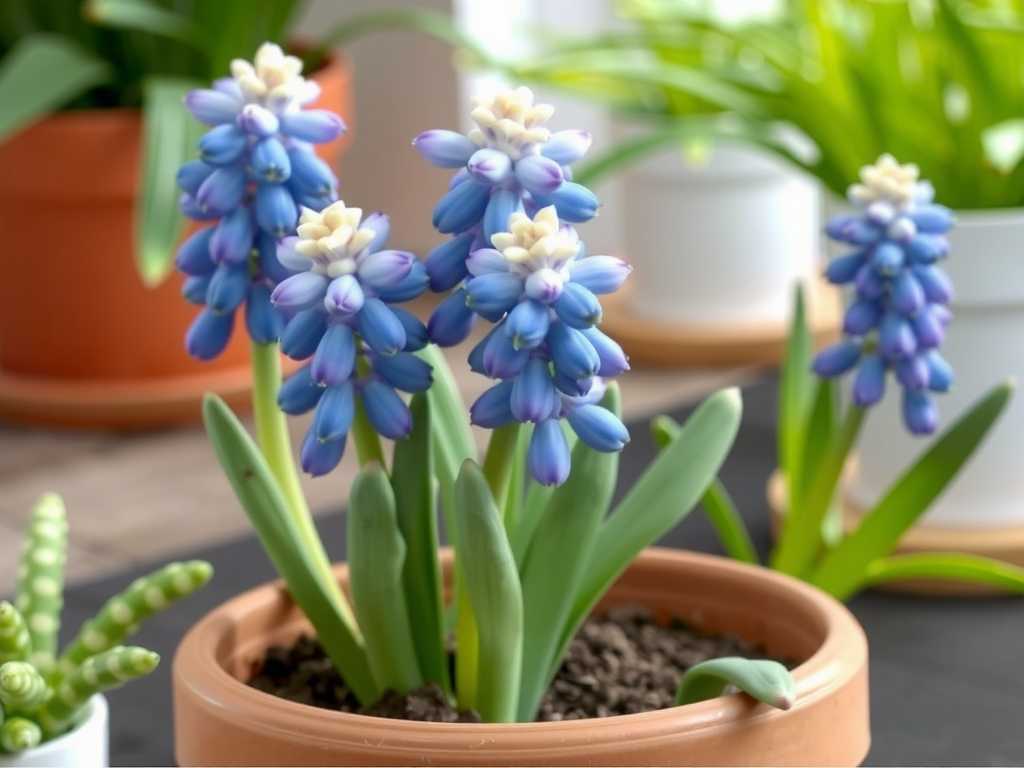
Step 1: Handling the Clump Repotting muscari bulbs is a different ballgame. When I removed the pot, I found a dense, intertwined mat of small bulbs and roots. Instead of pulling them apart immediately, I soaked the root ball in a bucket of water for an hour. This loosened the soil and made untangling the fibrous roots infinitely easier without breakage.
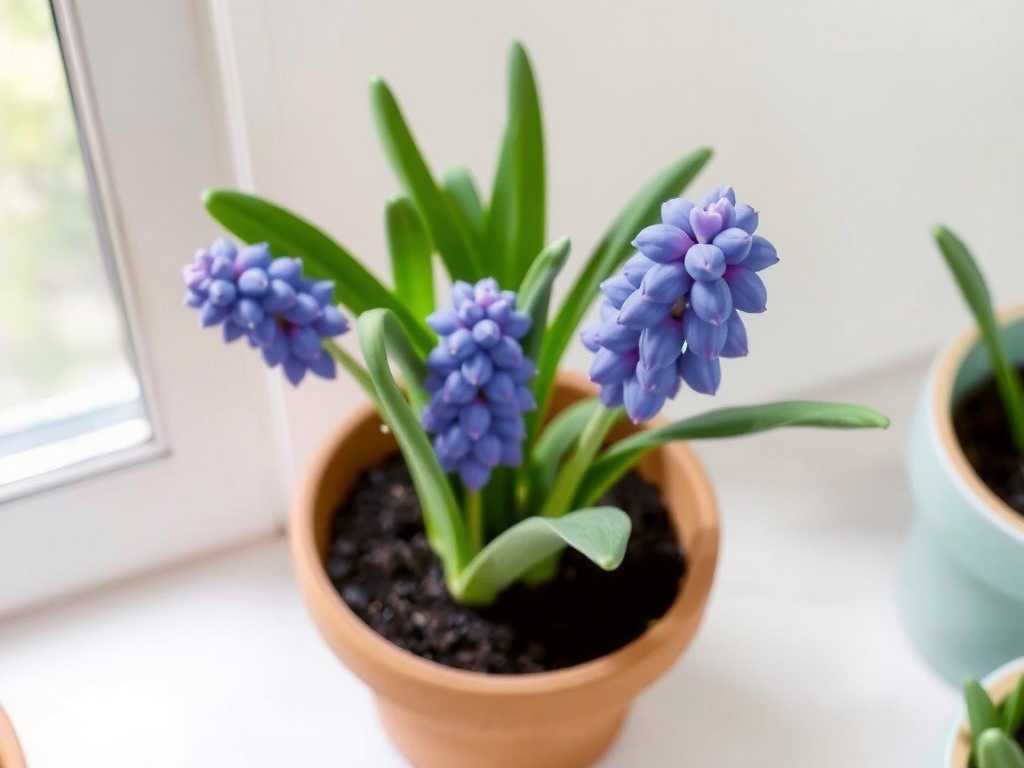
Step 2: Gentle Separation I lifted the clump and let the water run through it, gently teasing apart the individual bulbs. Unlike hyacinths, I didn’t aim for complete separation. Grape hyacinths thrive in small clusters. I divided the large mass into several smaller bunches of 5-7 bulbs each. Trying to separate every single bulb was tedious and unnecessary for good growth.
Step 3: Shallow and Group Planting Grape hyacinth bulbs are much smaller. I planted them at a depth of about 3-4 inches. Here, I made my second error: I planted them too far apart, like hyacinths. They looked sparse. I replanted them, placing each small cluster of bulbs about 2-3 inches apart. This encourages a natural, full look as they multiply.
Step 4: Post-Repotting Care After watering them in, I also placed these pots in the cool garage. Their chilling requirement is similar but crucial.
My Two-Week Observation Diary: What Actually Happened
Days 1-3: All pots were in the garage. No visible activity. Soil moisture remained from the initial watering. Days 4-7: I checked for signs of rot, a worry after my earlier overwatering fiasco. All was well. The soil surface was dry, but moisture was present an inch down—perfect. Days 8-14: By the end of the second week, the first signs of root establishment appeared. When I gently tilted a pot of each type, they offered slight resistance, indicating new root growth had begun to anchor the bulbs. No mold or pests were present. The key was the cool, stable environment and the well-draining soil mix.
Common Pitfalls and How I Solved Them
- Pitfall: Overwatering During Dormancy. My fear of drying out led me to water the pots in the garage once during the first week. The hyacinth pot showed a tiny spot of mold. Solution: I scraped off the mold, let the surface dry completely, and increased air circulation. I did not water again. The bulbs need moisture, but not wetness, during dormancy.
- Pitfall: Using the Wrong Soil. I initially used heavy garden soil for one pot. It compacted and drained poorly. Solution: I repotted that specific pot with my light, airy potting mix. The difference in drainage was immediate.
- Pitfall: Skipping the “Curing” Period. Not letting the bulbs dry after cleaning can introduce rot. Solution: The 24-hour air-drying period is non-negotiable for bulb health.
When Will They Bloom?
This is the most common question. After their required chilling period (12-16 weeks of cold), I’ll move the pots to a sunny, cool location in late winter. With regular watering as growth appears, the hyacinths should send up their iconic flower spikes, and the grape hyacinths their playful blue clusters, about 2-3 weeks later. Repotting in autumn sets the stage for this spring spectacle.
Can I repot hyacinths and grape hyacinths right after they flower? No, you should not. The post-bloom period is when the foliage is photosynthesizing and sending energy back to the bulb for next year’s bloom. Cutting back or disturbing the bulbs at this stage will weaken them significantly. Always wait until the leaves have completely yellowed.
How often should I repot these bulbs? For optimal flowering, consider repotting or dividing hyacinths every 2-3 years, as the main bulb diminishes and offsets form. Grape hyacinths are more vigorous and can become congested faster; dividing them every 2 years helps maintain their vitality and flower production.
Do I need to fertilize after repotting? Not immediately. The fresh potting mix with compost provides nutrients. I will apply a low-nitrogen, high-potassium bulb fertilizer when I see the first green tips emerge in spring, which supports strong stem and flower development.
Seeing those first green shoots push through the soil after the long wait is incredibly rewarding. By understanding the distinct needs of hyacinths and grape hyacinths—from the depth of planting to the way you divide their clumps—you give them the best foundation for success. Remember the golden rules: perfect timing, sharp drainage, a patient cold period, and learning from every little setback. Your efforts will be repaid tenfold with a breathtaking spring display that fills the air with fragrance and color. Happy potting