bluename
 How to Eliminate Soft Rot and Borers from Iris Plants: A Gardener's Battle-Tested Guide
There's nothing more disheartening for an iris enthusiast than watching your prized blooms succumb to unseen enemies. I've been there, staring at a once-vigorous clump now wilting with mushy bases or riddled with borer damage. If you're searching for a real, practical solution on how to eliminate soft rot and borers from iris plants, you've come to the right place. This isn't just theory; it's a chronicle of my two-week mission in my own garden, filled with trial, error, and ultimately, success. I'll walk you through every step I took, the mistakes I made, and the proven methods that brought my irises back to health.
Understanding Your Enemies: Iris Soft Rot and Borers
Before you can fight a problem, you need to know what you're up against. My initial mistake was confusing the symptoms, which led to using the wrong treatment.
Iris Soft Rot, often caused by the bacterium Pectobacterium carotovorum (formerly Erwinia), is a foul-smelling, wet decay that turns the rhizome into a mushy, slimy mess. It often enters through wounds or is exacerbated by overly wet conditions. The American Iris Society (AIS) notes that poor drainage and crowded plantings are primary contributors.
Iris Borers (Macronoctua onusta) are the larvae of a specific moth. They hatch from eggs laid on old foliage in fall, tunnel down into the leaves, and eventually into the rhizome, where they feast, causing rot and often introducing bacterial soft rot in their wake. The Royal Horticultural Society (RHS) describes the borer as "the most serious pest of iris," highlighting the dual destruction of direct feeding and disease transmission.
My Two-Week Rescue Protocol: A Step-by-Step Journal
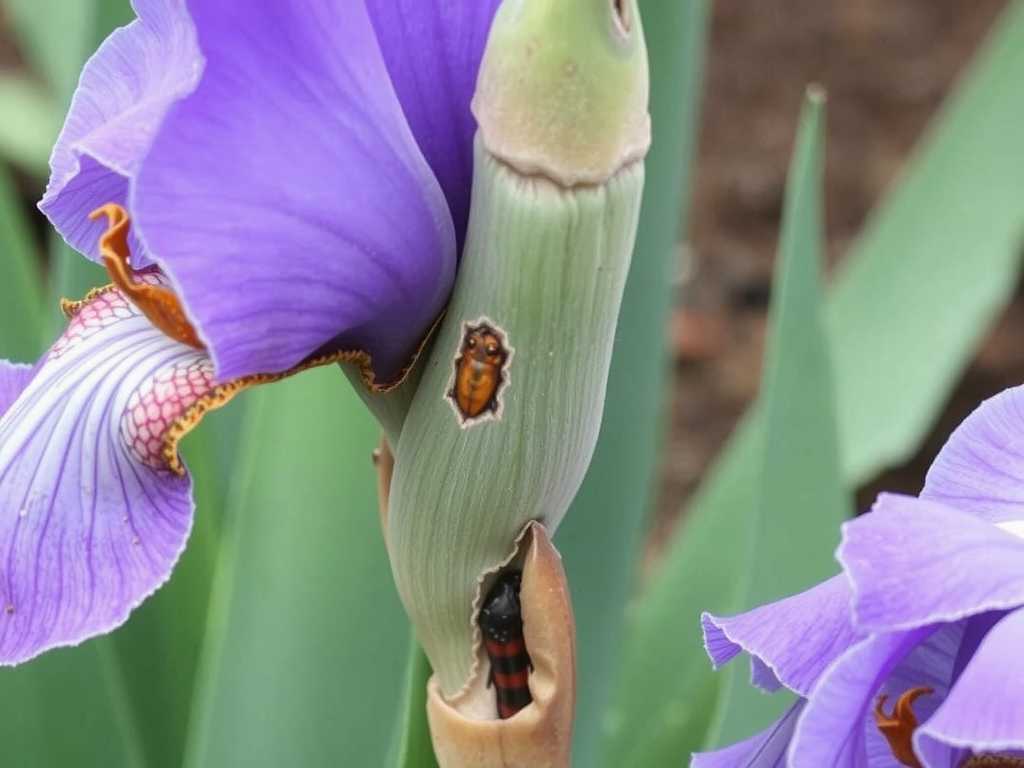
Week 1: Assessment and Immediate Action
Day 1-2: Diagnosis and Triage The first step in learning how to eliminate soft rot and borers is a brutal honesty garden audit. I put on gloves, grabbed a garden fork and a sharp knife, and carefully dug up the entire suspect clump. The sight wasn't pretty. Several rhizomes were soft, oozing, and had a distinct rotten smell—classic soft rot. On others, I saw telltale signs of borer infestation: ragged leaf tips, sawdust-like frass, and watery streaks on the foliage. I separated the plants into three piles: severely infected (mushy), moderately damaged (borer holes but firm rhizome), and seemingly healthy.
Here was my first "aha" moment and a common pitfall: I initially tried to salvage a rhizome that was only slightly soft on one end. Within two days, the rot had spread. The AIS guidance is unequivocal: when dealing with bacterial soft rot, you must cut back to completely clean, white, firm tissue. Any compromise invites failure.
Day 3: Surgical Removal and Sanitation For the moderately damaged plants, I performed "rhizome surgery." Using a knife sterilized between every cut with a 10% bleach solution, I cut away all damaged portions. I carved out every borer tunnel until I saw only healthy tissue. Each cut surface was then dusted with powdered sulfur, a trusted fungicide that helps dry and protect the wound. This step is critical for controlling iris borer damage and preventing subsequent rot.
The severely rotten rhizomes and all the old, infected foliage went straight into a sealed bag for the trash—not the compost pile. Composting may not kill these pathogens or borer eggs.
Day 4: The Bath and New Bed Preparation I gave the operated-on rhizomes a protective soak. I used a solution recommended by several expert sources: a 10-minute bath in a mixture of 1 part household bleach to 9 parts water. This kills any remaining surface bacteria or borer eggs. After the bath, I let them dry in the shade for a full day. Meanwhile, I prepared a new planting site with exceptional drainage. I raised the bed and amended the soil with coarse sand and compost. Good drainage is non-negotiable for preventing iris rhizome rot.
Week 2: Planting, Monitoring, and Preventative Strategy
Day 5: Strategic Replanting I replanted the treated rhizomes, setting them just at the soil surface so their tops could bask in the sun. I spaced them far apart to ensure excellent air circulation, another key factor in keeping rot at bay. I watered them in lightly and then resisted the urge to water again.
Day 6-12: The Observation Period This was the anxious phase. I inspected the plants daily for any new signs of wilting or softness. The key was to water only when the soil was dry an inch below the surface. By day 7, the treated rhizomes showed no further decay and were beginning to establish. The leaves on some looked stressed, but not progressively worse—a good sign.
Day 13-14: Introducing Preventative Care Confident the immediate crisis was over, I shifted to long-term prevention. I cleaned up all debris from around my entire iris patch, removing the overwintering sites for borer eggs. I applied a light, balanced fertilizer to support recovery. Most importantly, I made a note in my garden journal for late summer: apply a targeted biological control. I plan to use beneficial nematodes (Steinernema carpocapsae) that seek out and kill borer larvae in the soil, a method supported by integrated pest management research.
Key Takeaways and Lessons from the Trenches
My biggest mistake was waiting too long to act. Early intervention is everything. Sterilizing tools between cuts felt tedious but was absolutely vital to prevent cross-contamination. Furthermore, understanding the link between borers and rot was a game-changer; controlling one directly helps manage the other.
For anyone aiming to protect iris plants from these devastating issues, the formula is clear: perfect drainage, strict sanitation, vigilant fall clean-up, and the courage to make deep, clean cuts when necessary. It’s a combination of cultural practices and timely, direct intervention.
What is the best time of year to treat iris borers? The most effective time for control is in late summer or early fall, just as the eggs are hatching and the tiny larvae are moving down the leaves. This is the ideal window for applying beneficial nematodes to the soil or using targeted sprays before the borers enter the rhizome.
Can I use chemical pesticides to kill iris borers? While certain systemic insecticides can be effective, they also harm beneficial insects and pollinators. The RHS and other horticultural bodies increasingly recommend cultural and biological controls first. For severe infestations, consult a local extension service for the most targeted, responsible options in your area.
My iris rhizome feels firm but has a hole. What should I do? A clean hole without soft, mushy tissue is likely an old borer exit hole. The larva may already be gone. However, carefully probe the hole with a sterilized tool to ensure no active larva is inside. Dust the hole with sulfur to dry it and prevent bacterial entry, then monitor the plant closely. If the rhizome remains firm, it can often recover.