bluename
 How to Identify Cut Rose Varieties and Garden Rose Varieties: A Complete Visual and Practical Guide
Have you ever received a stunning bouquet of roses and wondered, “What kind of rose is this?” Or perhaps you’ve browsed a nursery, overwhelmed by the choices, unsure how to tell a florist’s hybrid tea from a hardy shrub rose meant for your backyard. Identifying cut rose varieties and garden rose varieties can feel like deciphering a secret floral code. The confusion is common: the rose you admire in a vase often differs drastically from the one thriving in a garden bed. This guide will demystify the process, giving you the confidence to name that rose and choose the perfect ones for any purpose.
The key to identification lies in understanding that roses are often bred and selected for two distinct worlds: the fleeting beauty of the cut flower industry and the enduring performance of the home garden.

Understanding the Fundamental Difference: Cut Roses vs. Garden Roses
At their core, all roses belong to the genus Rosa. However, decades of specialized breeding have created two parallel lineages with different priorities.
Cut roses, also known as florist roses, are bred almost exclusively for their performance after being severed from the plant. Primary traits include long, straight, and sturdy stems, high-centered and symmetrical blooms that open slowly, exceptional vase life (often 7-10 days or more), and vibrant, consistent colors. As noted by the Society of American Florists, these varieties are the product of meticulous selection for post-harvest durability and transportability.
Garden roses, conversely, are evaluated on their life on the plant. Breeders prioritize disease resistance, repeat blooming (or a spectacular once-a-year flush), fragrance, winter hardiness, and an overall attractive plant form—whether bushy, climbing, or trailing. Their blooms may be less formal but often possess a charming, multi-petaled, rosette shape and an intoxicating scent lost in many commercial cut varieties.
A Step-by-Step Guide to Identifying Cut Rose Varieties
When you have a single stem in a vase, your identification tools are specific to the bloom and stem characteristics.
Examine the Bloom Form and Structure Look closely at the shape as it opens. Classic hybrid tea types, which dominate the cut market, feature a high, pointed center with petals spiraling elegantly outward. Spray roses, like those in the ‘Sweet Avalanche’ series, produce clusters of smaller blooms on a single stem. The petal count is a major clue: many popular cut roses like ‘Freedom’ or ‘Vendela’ have a moderate count (30-45 petals), creating a dense, long-lasting bloom that holds its form.
Analyze the Stem and Foliage Cut roses are defined by their stems. They are typically very long (often 18-24 inches or more), remarkably straight, and have few lateral branches or thorns. The foliage is usually a deep, glossy green and tends to be sparse lower on the stem, focusing energy on the terminal bloom. “The stem is the unsung hero of the cut rose,” says a commercial grower’s report. “Its strength and hydraulic capacity directly determine vase life.”
Investigate Color and Fragrance While color can vary, cut rose colors are often intense and uniform—think brilliant reds, pure whites, deep yellows, and novel hues like lavender or bi-colors. Notably, many modern cut roses have had their fragrance bred out in favor of longevity and form, so a stunning but scentless rose is likely a dedicated cut variety. Popular examples you might encounter include the fiery red ‘Grand Gala’, the creamy white ‘White Naomi’, and the peach-pink ‘Akito’.
Utilize Practical Identification Tools Don’t hesitate to ask your florist; they often know their suppliers’ variety names. For the curious, mobile apps like PictureThis or PlantNet can offer suggestions based on a photo. Searching online floral wholesalers’ catalogs using color and form descriptors can also yield matches.
A Step-by-Step Guide to Identifying Garden Rose Varieties
Identifying a rose growing in the ground requires observing the entire plant’s habit and lifecycle.
Observe the Overall Plant Habit and Growth This is your first and most telling clue. Does the plant grow tall and rigid with one bloom per stem (Hybrid Tea)? Is it a dense, mounding shrub covered in blooms (Floribunda or Shrub Rose)? Does it send out long, flexible canes that need support (Climber/Rambler)? Or does it form a low, spreading mat (Groundcover)? For instance, the famous ‘Knock Out’ rose is instantly recognizable by its rounded, prolific shrub form.
Study the Bloom Form, Cluster, and Fragrance Garden rose blooms are diverse. You might see the classic hybrid tea shape, but also old-fashioned cupped blooms, pompons, or fully double rosettes with hundreds of petals. Note how flowers are borne: singly, in small clusters, or in massive, showy trusses. Critically, inhale deeply. A powerful, complex fragrance—from citrus to myrrh to classic rose—is a hallmark of many garden varieties like ‘David Austin’ English roses or the rugosa hybrid ‘Hansa’.
Inspect the Foliage and Disease Resistance Healthy, clean foliage in mid-summer is a major identifier of modern garden roses. Many older hybrid teas have sparse, disease-prone leaves. Newer shrub roses often boast lush, glossy, or textured foliage that remains spot-free. Thorns also vary widely, from the fierce hooks of some species roses to the nearly thornless canes of ‘Zephirine Drouhin’.
Check for Re-blooming and Hip Production Watch the plant over the season. Does it flower continuously from spring to frost (repeat-bloomer), or does it put on one magnificent show in early summer and then stop (once-bloomer)? Once-bloomers, like many old garden roses and ramblers, often produce decorative red or orange rose hips in the fall, a feature rarely seen in cut flower varieties.
Key Comparison Points: Side-by-Side Identification
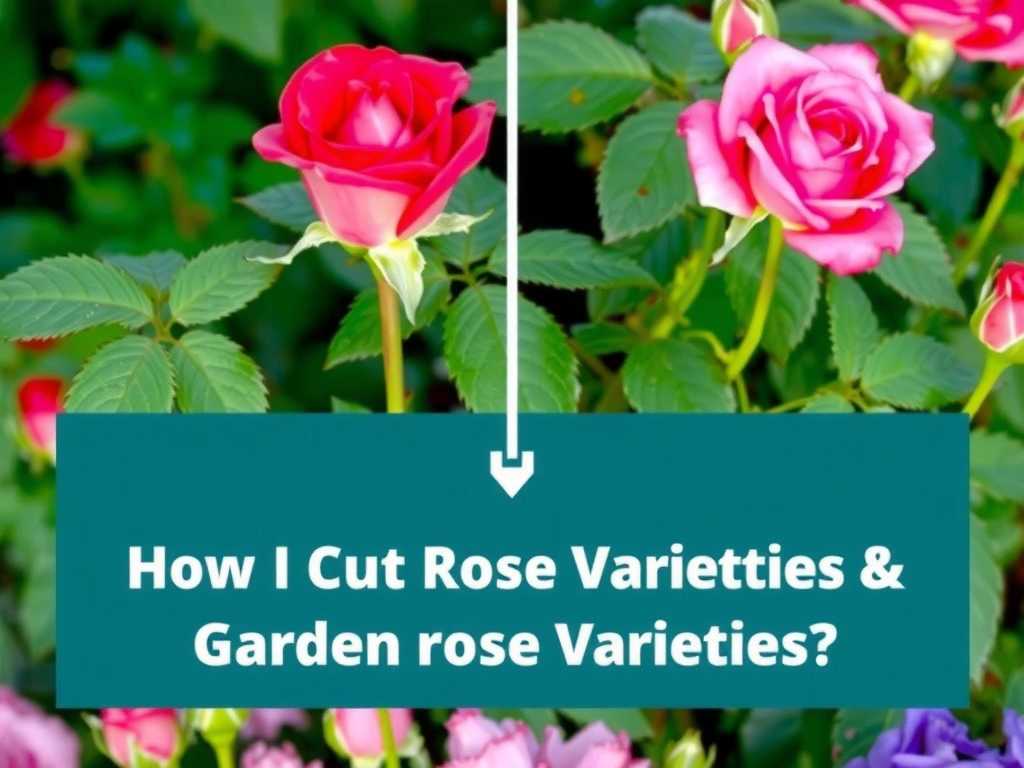
Let’s crystallize the differences. A cut rose variety like ‘Red Naomi’ presents a single, deep red, perfectly shaped bloom on a 60cm thornless, straight stem with glossy leaves; it may have little scent. The same plant in a garden would be less productive and more disease-prone.
A garden rose variety like the shrub ‘Bonica’ produces large clusters of soft pink, double blooms on a robust, bushy plant with matte green foliage; it flowers repeatedly, is highly disease-resistant, and survives freezing winters. Its stems are shorter, branched, and not suited for cutting.
Can You Grow Cut Rose Varieties in Your Garden?
This is a frequent question. Technically, yes, but with caveats. Varieties bred for cutting often require more meticulous care—regular fungicide and pesticide applications, perfect feeding, and precise pruning—to perform well in the garden. They may be less cold-hardy and more susceptible to black spot and powdery mildew. For most home gardeners, choosing a garden rose bred for beauty and resilience is a more rewarding path. However, some varieties, like the ‘Julia Child’ floribunda, successfully bridge both worlds, offering gorgeous, cuttable blooms on a tough plant.
Where to Buy True-to-Name Roses
Accurate identification starts with the source. For cut roses, ask your florist for the variety name. For garden roses, always purchase from reputable nurseries—either local or established online mail-order companies. They provide the correct Latinized cultivar name (e.g., Rosa ‘Peace’), not just a color description. Avoid generic “color mix” bags of bare-root roses from big-box stores if you want a specific, identifiable plant.
How can I find out the name of a rose I received in a bouquet? Start by taking clear photos of the bloom (side and top view), stem, and foliage. Ask the florist who arranged it, as they may have the invoice from the wholesaler. Use rose identification forums online, where enthusiasts can often pinpoint popular commercial varieties from an image. The combination of color, form, and any faint scent is your best evidence.
Why do my garden roses look different from the roses I buy at the flower shop? They are likely completely different cultivars, bred for different purposes. Your garden rose is engineered to be a whole-plant performer, surviving weather and pests. The cut rose is engineered for a brief, perfect life in a vase. The growing conditions also differ vastly: commercial cut roses are grown in optimized, controlled greenhouse environments, while your garden rose faces the full brunt of nature.
What is the easiest type of garden rose to grow and identify for beginners? Modern shrub roses, particularly the ‘Knock Out’, ‘Drift’, and ‘Easy Elegance’ series, are exceptionally beginner-friendly. They have a distinctive, consistent, bushy growth habit, excellent disease resistance, and continuous blooms. Their traits are so uniform that once you learn one, you can easily spot others in the same class. They remove much of the guesswork from both growing and identification.
Whether you’re admiring a single stem in a crystal vase or a blooming shrub in a summer garden, the world of roses becomes far richer when you can name and understand what you’re seeing. By focusing on the key distinctions of form, function, and habit—the straight stem versus the bushy plant, the symmetrical bloom versus the fragrant cluster—you can confidently navigate between the realms of the florist and the horticulturist. Let this knowledge enhance your appreciation, inform your purchases, and deepen your connection to one of the world’s most beloved flowers.