bluename
 How to Quickly Recognize Common Crassulaceae Succulent Varieties?
Have you ever found yourself staring at a beautiful succulent, completely stumped about what type it is? You’re not alone. With thousands of species, the Crassulaceae family can be overwhelming for beginners and even seasoned plant lovers. The challenge of identifying whether you have an Echeveria, a Sedum, or a Crassula is real, and knowing the difference is key to providing the right care. This guide will equip you with simple, visual techniques to quickly recognize common Crassulaceae succulent varieties, turning confusion into confidence.
Understanding the Crassulaceae Family
Before diving into specific types, it helps to know what ties this plant family together. Crassulaceae plants, often called "crassulas" in the broad sense, are renowned for their drought tolerance and succulent leaves. They share a special photosynthetic pathway called CAM (Crassulacean Acid Metabolism), which allows them to conserve water by opening their pores at night. Most varieties form attractive rosettes, but their leaf shapes, growth habits, and flowers offer distinct clues for identification.
The Rosette Masters: Identifying Echeveria
Echeverias are arguably the most popular and iconic group. They are the quintessential rosette-shaped succulents you often see in arrangements.
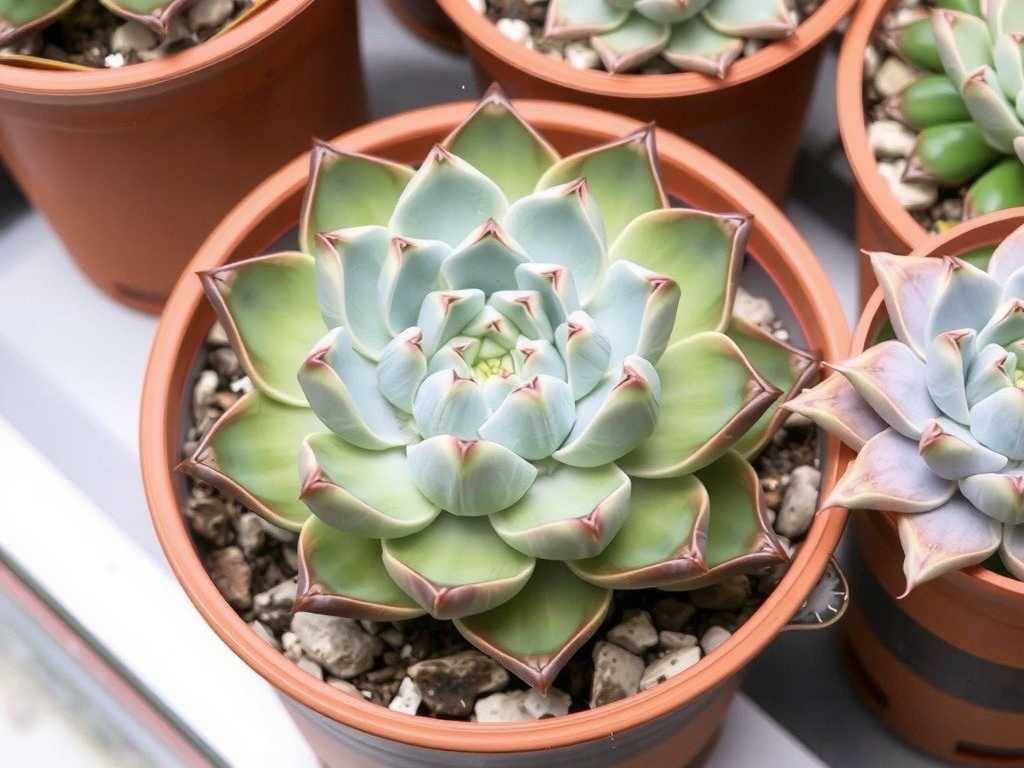
Look for a perfect, symmetrical rosette that grows from a single, central stem. The leaves are typically plump, smooth, and spoon-shaped, arranged in a stunning geometric pattern. Colors range from serene blues and greens to vibrant pinks and purples, often with delicate, colorful edges known as "margins."
A key identifier is the flower stalk. Echeverias produce bell-shaped, lantern-like flowers on arching stalks that emerge from the side of the rosette, not the very center. The flowers hang downwards, which is a distinctive trait.
Common examples include the dusty blue Echeveria 'Perle von Nurnberg', the frilly Echeveria 'Neon Breakers', and the classic green Echeveria 'Lola'.
The Ground Cover Champions: Spotting Sedum
Sedums, or stonecrops, are incredibly diverse. They are best recognized by their growth habit rather than a single leaf shape.
Many common Sedums are trailing or ground-covering plants. They spread readily, forming mats or cascading beautifully over pot edges. Their stems are often more visible and prolific than in a tight Echeveria rosette.
The leaves are usually small, cylindrical, or bean-shaped, and they grow in opposing pairs along the stem. They often look like a string of plump beads. Unlike Echeveria flowers, Sedum flowers are typically small, star-shaped, and cluster in tight groups at the ends of the stems.
Look for varieties like Sedum morganianum (Burro's Tail) with its long, trailing stems of tear-drop leaves, or Sedum rubrotinctum (Jelly Bean Plant) with its chunky, red-tipped leaves.
The Architectural Shrubs: Recognizing Crassula
Crassula plants offer some of the most unique and architectural forms. Their leaf arrangement is a major clue.
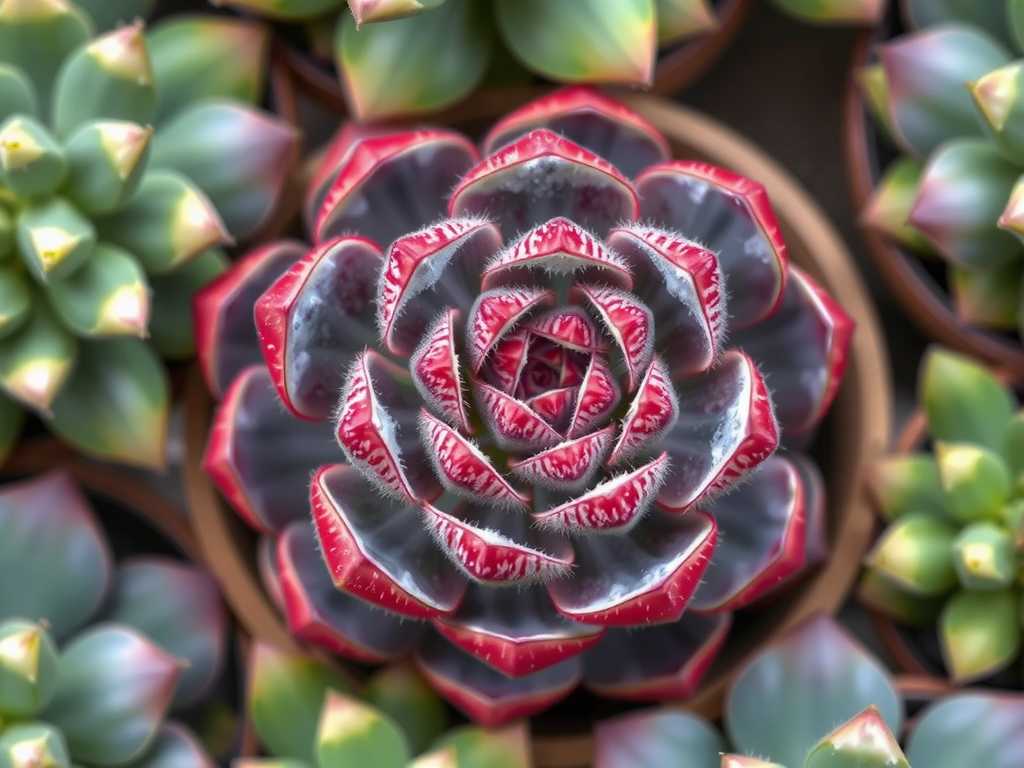
Many Crassulas have leaves that grow in distinctive, opposite pairs, each set at a 90-degree angle to the one below. This creates a fascinating, stacked appearance that looks almost square or cross-shaped when viewed from above. The leaves themselves can be triangular, oval, or even coin-shaped.
Their growth structure can vary from compact shrubs to small tree-like forms. The flowers are small, star-shaped, and usually appear in dense clusters, but they are less of a primary identification feature than the plant's structure.
The most famous is undoubtedly Crassula ovata, the Jade Plant, with its thick, glossy, oval leaves and woody stems. Another is the pagoda-like Crassula 'Buddha's Temple', with leaves tightly stacked around a vertical stem.
The Unique Offshoots: Kalanchoe and Sempervivum
Two other major genera in the family have very specific traits that make them easier to spot.
Kalanchoe plants often have leaves with scalloped or toothed edges. A defining feature for many is the production of tiny plantlets along the leaf margins, like the iconic Kalanchoe daigremontiana (Mother of Thousands). Their flowers are tubular and hang in clusters from a central stalk.
Sempervivum, or Hens and Chicks, are masters of cold tolerance. They form tight, spherical rosettes like Echeveria but are typically smaller, with more pointed leaves that may have cobweb-like hairs. Their most famous trait is prolific offsetting; they produce numerous "chicks" around the mother "hen" via above-ground stolons. Their flower stalk rises from the center of the rosette, which dies after flowering.
Quick Comparison Cheat Sheet
To summarize, here’s a fast-reference guide:
- Growth Form: Echeveria = single, symmetrical rosette. Sedum = trailing or mat-forming. Crassula = shrubby or stacked.
- Leaf Clue: Echeveria = smooth, plump spoons. Sedum = tiny cylinders or beans. Crassula = opposite, paired leaves.
- Flower Sign: Echeveria = dangling bells on a side stalk. Sedum = clusters of small stars. Crassula = clusters of tiny stars.
What is the easiest Crassulaceae variety for a beginner to identify? The Jade Plant (Crassula ovata) is one of the easiest. Its classic, glossy green, oval-shaped leaves on thick, brown, woody stems are unmistakable. It's a common houseplant, making it a great reference point as you learn other varieties.
My succulent has a rosette shape but produced many babies on long stems. Is it an Echeveria? It's more likely a Sempervivum (Hens and Chicks). While both form rosettes, Sempervivum are famous for producing offsets on long, horizontal stolons. Echeverias typically produce offsets closer to the base of the main stem. Furthermore, Sempervivum are cold-hardy, while Echeverias are frost-tender.
How important is flower color for identification? While flower color can vary even within a species, the structure of the flower is a critical identifier. Focus on whether the flowers are bell-shaped and hanging (Echeveria) or small, star-shaped, and upright in clusters (Sedum, Crassula). The flower stalk's origin—from the side or the center—is also a key diagnostic tool.
Recognizing common Crassulaceae varieties becomes straightforward once you know what to look for. Move beyond just the rosette shape and examine the leaf arrangement, growth habit, and flower structure. Start with the most distinct genera like the shrubby Jade Plant or the trailing Sedums to build your confidence. With this visual framework, you'll be able to walk through a nursery or browse online shops and name your favorite succulents with ease, ensuring you can give each unique plant the specific care it deserves.