bluename
 How to Distinguish Dwarf Sunflower Varieties from Tall Sunflower Varieties? A 2-Week Gardener's Diary
I used to stare at seed packets and nursery labels, utterly confused. “Dwarf,” “Tall,” “Intermediate”—what did it really mean for my small patio garden? I bought the wrong seeds once, dreaming of cheerful, knee-high blooms, only to end up with giants that shaded my entire herb plot. That frustration is real. If you’re trying to plan your garden space, containers, or visual layout, knowing how to accurately tell dwarf and tall sunflower varieties apart before they shoot up is crucial. Over the next sections, I’ll walk you through my hands-on, two-week investigation that turned my guesswork into a reliable identification system.
My Personal Experiment: From Seeds to Seedlings

I decided to run a side-by-side test. I selected three varieties known as dwarfs (‘Sunspot’, ‘Elf’, ‘Teddy Bear’) and three classic tall types (‘Mammoth Russian’, ‘American Giant’, ‘Skyscraper’). I planted them in identical starter trays with the same seed-starting mix, under the same grow lights, on the same day. My goal was to observe the earliest telling signs, not just the final height listed on the tag.
Week 1 Observations: The Subtle Signs Emerge
By day 5, the first true leaves (the ones that appear after the initial seed leaves) were telling a story. The dwarf sunflower seedlings generally had broader, slightly rounder true leaves that were closer together on the stem. The internode spacing—the gap between sets of leaves—was visibly more compact.
The tall sunflower varieties, in contrast, were already stretching. Their stems between leaves were longer, even at this infant stage, making the plant look lankier. The leaves themselves often appeared slightly more elongated. According to the Royal Horticultural Society (RHS), plant architecture, including internode length, is a fundamental and early indicator of a plant’s growth habit. I was seeing this principle in action.
The Critical Growth Spurt: Week 2 Reveals All
This was the week that erased all doubt. Between days 8 and 14, the tall varieties began what I can only describe as a “power surge.” Their growth rate was astonishing, sometimes adding over an inch in stem height per day. The dwarfs grew steadily but purposefully, focusing on leaf development and bud formation much earlier.
Here’s the key distinction I nailed down: Dwarf sunflowers initiate flower buds much sooner relative to their height. By the end of week two, my ‘Sunspot’ dwarfs were barely 6 inches tall but already showing tiny, distinct flower buds at the top. The tall varieties were over 12 inches tall, still putting all their energy into vertical growth with no sign of budding. This early flowering trait is a definitive marker for distinguishing dwarf sunflower types.
The Pitfalls I Encountered and How I Solved Them
My main mistake was overwatering early on, assuming all sunflowers had the same thirst. The dwarfs in their compact form showed signs of stress (slight yellowing of lower leaves) faster than the vigorous tall ones. I corrected this by adopting a “weight test” for the pots—watering only when the containers felt light—which proved more accurate than a schedule.
Another challenge was lighting. The rapid growth of the tall seedlings started to shade the dwarfs. I had to rearrange my setup daily to ensure equal light, a consideration crucial for anyone starting seeds indoors. It taught me that for a true comparison, you must actively manage their environment to avoid one type disadvantaging the other.
Beyond Height: Structural and Floral Differences
Height is the most obvious difference, but it’s not the only one. Through this observation, I confirmed other reliable markers for telling dwarf sunflowers apart from their taller cousins.
Stem thickness is a major clue. Dwarf varieties typically have sturdier, thicker stems relative to their height. This robust stem supports their proportionally large flower heads without needing stakes. Tall sunflowers, while eventually thick, have stems that are more slender and flexible during early and mid-growth, often requiring support later.
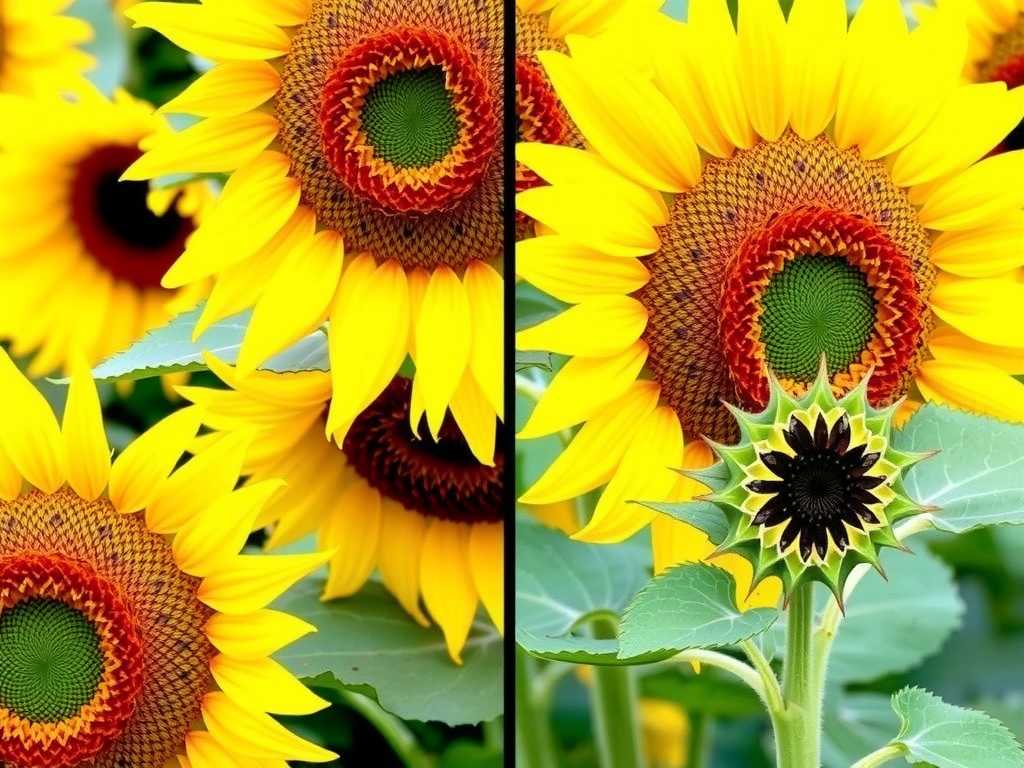
The flower head size relative to the plant is another giveaway. Dwarfs like ‘Teddy Bear’ produce massive, fully double blooms that can seem almost comically large for their short stature. Many tall varieties, while producing big seeds, may have a flower head that appears more proportional to the plant’s overall majestic size. The American Horticultural Society (AHA) notes that breeding for container gardens has often focused on creating dwarfs with “show-stopping” bloom-to-plant ratios.
Why This Distinction Matters for Your Garden
Understanding these differences isn’t just academic; it transforms your garden planning. Dwarf sunflower varieties are perfect for containers, front-of-border edging, or small-space gardens. Their strong stems resist wind and rain better than you might think.
Tall sunflower varieties create stunning backdrops, living screens, or classic farmyard appeal. They are the choice for a harvest of large seeds for roasting or for feeding birds. Planting them requires planning for their deep root systems and eventual need for support against summer storms.
Answers to Common Sunflower Selection Questions
Can I turn a tall sunflower into a dwarf one through pruning? No, you cannot change its fundamental genetics. Pruning a tall sunflower may bush it out slightly or delay flowering, but it will still attempt to reach its genetically programmed height, often resulting in a stressed, oddly shaped plant. It’s best to choose the right variety for your needs from the start.
Do dwarf sunflowers produce edible seeds? Yes, many do, though the seeds will be smaller than those from a ‘Mammoth’ type. Varieties like ‘Dwarf Sungold’ produce plump, small seeds perfect for snacks. If your primary goal is large seeds for roasting, stick with traditional tall varieties.
Which type is easier for beginners? Dwarf varieties are generally more forgiving for beginners. Their manageable size, earlier bloom time (offering quicker gratification), and lower need for staking make them an excellent and rewarding first choice. Tall varieties require more planning for space, wind protection, and a longer growing season commitment.
Choosing between dwarf and tall sunflowers boils down to your space, goal, and patience. My two-week journey from seed to budding seedling showed me that the signs appear early if you know what to look for: the compact internodes, the early bud set, and the sturdy stem of dwarfs versus the rapid, lanky vertical chase of the talls. By focusing on these growth habits in the first few weeks, you can confidently identify what you’re growing and situate it perfectly in your garden plan, ensuring a season of sunny success without any overshadowing surprises.